

Herbal Sciences and Technologies (Classe L-29)-Enrolled from 2014/15 Academic Year
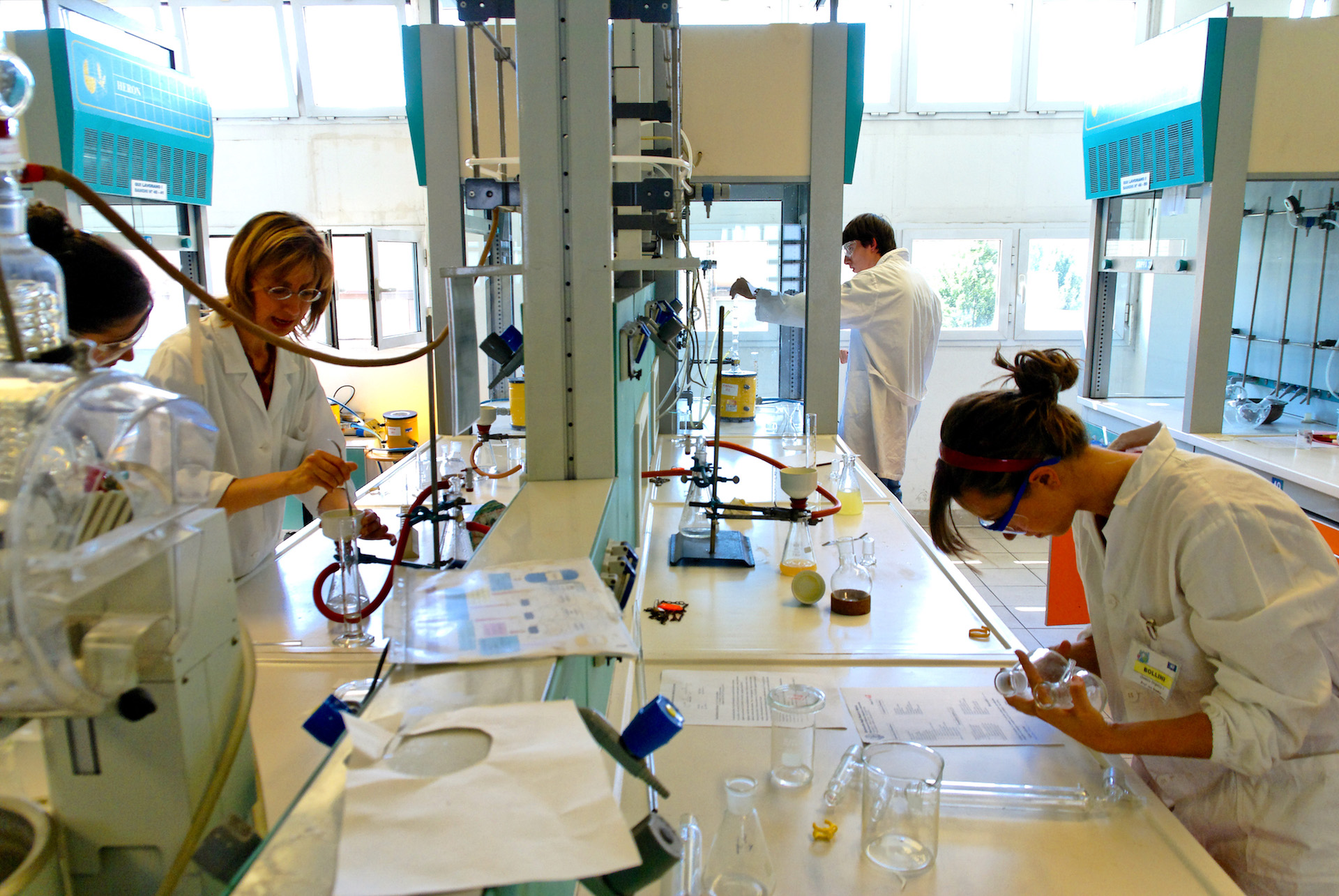
Graduates in Herbal Sciences and Technologies will have mastered the methods of investigation and experimentation, including data collection and communication of results, and will be able to understand and use advanced texts. They will have operational skills and will be able to carry out technical, managerial and professional tasks in the recognition and collection of medicinal plants and their transformation, in quality management, in the marketing of herbal drugs and their derivatives to be used in the preparation of medicinal products, health products, cosmetics or intended for food, ensuring compliance with the provisions of national and EU laws in force.
The degree course in Herbal Sciences and Technologies aims to train professionals as Technicians in popular medicine and Herbalists.
Graduates have the right to enrol in the National Herbalists Register managed by the Federation of Italian Herbalists (FEI).
The title is one of the requirements needed to access to the National Examination (Esame di Stato) for the Professional Register of Chemists, section B.
Graduates in Herbal Sciences and Technologies are also admitted to the National Examination for the profession of agrotechnical and graduate agrotechnicians.
Employment statistics (Almalaurea)
Graduates have the right to enrol in the National Herbalists Register managed by the Federation of Italian Herbalists (FEI).
The title is one of the requirements needed to access to the National Examination (Esame di Stato) for the Professional Register of Chemists, section B.
Graduates in Herbal Sciences and Technologies are also admitted to the National Examination for the profession of agrotechnical and graduate agrotechnicians.
Employment statistics (Almalaurea)
Admission requirements
Admission into the Bachelor's degree programme in Herbal Sciences and Technologies is subject to the possession of an upper secondary-school diploma, or other equivalent foreign diploma. Students must also have a skill set and knowledge base allowing them to successfully follow the study programme, including a good understanding of basic calculus and computer science, mastering the main laws of physics, and basic knowledge of cell biology and general chemistry. Admission requirements, as well as logic and reading comprehension skills, will be assessed through a mandatory, selective TOLC-AV test, to be taken before enrolment. TOLC-AV is an online test delivered by the Consortium of Inter-University Integrated Access Systems (CISIA - https://www.cisiaonline.it). You may sit for TOLC-AV at the University of Milan or any other venue among those listed in the test calendar available at https://tolc.cisiaonline.it/calendario.php
Additional learning requirements (OFA) and remedial activities
Students who have not achieved at least 4 points in the basic mathematics module of TOLC-AV will have to fulfil additional learning requirements (OFA). For this purpose, they will attend remedial activities organized by the University, and then take a remedial test to prove they have filled their gaps. Otherwise, they may not take the Mathematics exam.
Learn more at https://ste.cdl.unimi.it/it/studiare/le-matricole
Admission of transfer or graduate students
Transfer students from a degree programme of the University of Milan, or another university, and graduate students will be waived from the test only if admitted to years subsequent to the first. To this end, they will have to submit a specific request for prior assessment of their academic career using the online service stated in the call for applications. These candidates must provide a full transcript of records (listing exams, subject areas, credits, grades) and attach the course syllabi. For more details, please refer to the call for applications. Students admitted to the first year must take the test and register for the call.
Admission into the Bachelor's degree programme in Herbal Sciences and Technologies is subject to the possession of an upper secondary-school diploma, or other equivalent foreign diploma. Students must also have a skill set and knowledge base allowing them to successfully follow the study programme, including a good understanding of basic calculus and computer science, mastering the main laws of physics, and basic knowledge of cell biology and general chemistry. Admission requirements, as well as logic and reading comprehension skills, will be assessed through a mandatory, selective TOLC-AV test, to be taken before enrolment. TOLC-AV is an online test delivered by the Consortium of Inter-University Integrated Access Systems (CISIA - https://www.cisiaonline.it). You may sit for TOLC-AV at the University of Milan or any other venue among those listed in the test calendar available at https://tolc.cisiaonline.it/calendario.php
Additional learning requirements (OFA) and remedial activities
Students who have not achieved at least 4 points in the basic mathematics module of TOLC-AV will have to fulfil additional learning requirements (OFA). For this purpose, they will attend remedial activities organized by the University, and then take a remedial test to prove they have filled their gaps. Otherwise, they may not take the Mathematics exam.
Learn more at https://ste.cdl.unimi.it/it/studiare/le-matricole
Admission of transfer or graduate students
Transfer students from a degree programme of the University of Milan, or another university, and graduate students will be waived from the test only if admitted to years subsequent to the first. To this end, they will have to submit a specific request for prior assessment of their academic career using the online service stated in the call for applications. These candidates must provide a full transcript of records (listing exams, subject areas, credits, grades) and attach the course syllabi. For more details, please refer to the call for applications. Students admitted to the first year must take the test and register for the call.
The Bachelor's school in Herbal Sciences and Technologies offers to its students the opportunity to spend periods of study and training abroad through mobility programs mainly represented by Erasmus+. The geographical areas in which reside the European Universities partners of the international training program are mainly located in the European Union countries. Students may also apply for the destinations specified in the call of Agricultural Sciences and Technologies. Mobility is directed to the study (frequency to courses) and to a training period that may be the subject of the thesis. Universities with which Agreements were established offer courses and training periods in pharmacology, phytochemistry, microbiology and pathology. Each student is assisted by one of the teacher of the course as an internal tutor.
Recognition of study periods abroad:
Each student, depending on the period of time spent abroad, should propose a Learning Agreement providing an adequate number of credits for his/her study or training:
- An academic year: 60 credits;
- An academic semester: 30 credits;
- An academic quarter: 20 CFU
For study programs, students must acquire at least 70% of the credits specified in the Learning Agreement. For the training period the student must acquire all the credits specified by the Learning Agreement. Additional score to the degree mark will be added to students who have fulfilled the study or training programs. This score ranges from a minimum of 1 to a maximum of 3 points (depending on the duration of the training period, the amount of credits obtained and the overall result achieved) and will be proposed by the tutor to the Commission of the final exam.
Recognition of study periods abroad:
Each student, depending on the period of time spent abroad, should propose a Learning Agreement providing an adequate number of credits for his/her study or training:
- An academic year: 60 credits;
- An academic semester: 30 credits;
- An academic quarter: 20 CFU
For study programs, students must acquire at least 70% of the credits specified in the Learning Agreement. For the training period the student must acquire all the credits specified by the Learning Agreement. Additional score to the degree mark will be added to students who have fulfilled the study or training programs. This score ranges from a minimum of 1 to a maximum of 3 points (depending on the duration of the training period, the amount of credits obtained and the overall result achieved) and will be proposed by the tutor to the Commission of the final exam.
Attendance is mandatory for single-seat laboratory exercises.
Courses list
year
| Courses or activities | Max ECTS | Total hours | Language | SSD |
|---|---|---|---|---|
| Compulsory | ||||
| Human Physiology and Basic Anatomy | 9 | 72 | Italian | BIO/09 |
| Plant Biology and Pharmaceutical Botany | 12 | 112 | Italian | BIO/15 |
First semester
| Courses or activities | Max ECTS | Total hours | Language | SSD |
|---|---|---|---|---|
| Compulsory | ||||
| Biology | 6 | 48 | Italian | BIO/13 |
| General and Inorganic Chemistry | 6 | 56 | Italian | CHIM/03 |
| Mathematics and Informatics | 7 | 50 | Italian | INF/01 MAT/01 MAT/02 MAT/03 MAT/04 MAT/05 MAT/06 MAT/07 MAT/08 MAT/09 |
| - Informatics | 3 | 18 | INF/01,MAT/01,MAT/02,MAT/03,MAT/04,MAT/05,MAT/06,MAT/07,MAT/08,MAT/09 | |
| - Mathematics | 4 | 32 | INF/01,MAT/01,MAT/02,MAT/03,MAT/04,MAT/05,MAT/06,MAT/07,MAT/08,MAT/09 | |
Second semester
| Courses or activities | Max ECTS | Total hours | Language | SSD |
|---|---|---|---|---|
| Compulsory | ||||
| Chemical Toxicology Analysis | 7 | 72 | Italian | CHIM/08 |
| Organic Chemistry | 7 | 56 | Italian | CHIM/06 |
Open sessions
There are no specific sessions for these activities.
| Courses or activities | Max ECTS | Total hours | Language | SSD |
|---|---|---|---|---|
| Compulsory | ||||
| English Assessment B1 (3 ECTS) | 3 | 0 | Italian | NN |
year
| Courses or activities | Max ECTS | Total hours | Language | SSD |
|---|---|---|---|---|
| Compulsory | ||||
| Biochemistry and Human Nutrition | 12 | 96 | Italian | BIO/09 BIO/10 |
| - Biochemistry | 7 | 56 | BIO/10 | |
| - Food and human nutrition | 5 | 40 | BIO/09 | |
First semester
| Courses or activities | Max ECTS | Total hours | Language | SSD |
|---|---|---|---|---|
| Compulsory | ||||
| Chemistry of Natural Organic Compounds and Foods | 11 | 96 | Italian | CHIM/06 CHIM/10 |
| - Chemistry of healthy foods | 6 | 48 | CHIM/10 | |
| - Chemistry or natural organic compounds | 5 | 48 | CHIM/06 | |
| General Pathology and Pathophysiology | 6 | 48 | Italian | MED/04 |
Second semester
| Courses or activities | Max ECTS | Total hours | Language | SSD |
|---|---|---|---|---|
| Compulsory | ||||
| Agricultural Biochemistry and Physiology of Medicinal Plants | 6 | 48 | Italian | AGR/13 |
| Pharmacognosy 1 | 6 | 56 | Italian | BIO/15 |
| Pharmacology and Toxicology | 10 | 80 | Italian | BIO/14 |
| - Pharmacology | 6 | 48 | BIO/14 | |
| - Toxicology | 4 | 32 | BIO/14 | |
| Phytopharmaceuticals: Chemistry and Analysis | 8 | 80 | Italian | CHIM/08 |
year
| Courses or activities | Max ECTS | Total hours | Language | SSD |
|---|---|---|---|---|
| Compulsory | ||||
| Experimental Models and Use of Herbal Drugs | 11 | 88 | Italian | BIO/14 BIO/15 |
| - Models for studying the biological activity of natural substances | 6 | 48 | BIO/14 | |
| - Phytotherapy | 5 | 40 | BIO/15 | |
First semester
| Courses or activities | Max ECTS | Total hours | Language | SSD |
|---|---|---|---|---|
| Compulsory | ||||
| Advanced Analysis of Active Principles in Herbal Drugs | 8 | 80 | Italian | CHIM/08 |
| Formulation and Legislation of Cosmetic Products | 6 | 56 | Italian | CHIM/09 |
| Formulation and Legislation of Health Products | 6 | 56 | Italian | CHIM/09 |
| Optional | ||||
| Developing Soft Skills in Science: Case-Studies from Microbial Biotechnology | 6 | 56 | English | AGR/16 |
| Patenting and Technology Transfer | 6 | 48 | English | AGR/01 IUS/01 IUS/04 |
| Patenting and Technology Transfer | 6 | 48 | English | IUS/10 IUS/14 |
| The Instruments of Gender Equality | 3 | 24 | Italian | IUS/08 |
Second semester
| Courses or activities | Max ECTS | Total hours | Language | SSD |
|---|---|---|---|---|
| Compulsory | ||||
| Pharmacognosy 2 | 6 | 48 | Italian | BIO/15 |
| Optional | ||||
| Active Molecules from Natural Sources as Pharmacological Tools | 3 | 24 | Italian | BIO/14 |
| Aromatic and Medicinal Plant Cultivation | 3 | 24 | Italian | AGR/04 |
| Dietary Products | 3 | 24 | Italian | CHIM/10 |
| Equal Opportunities and Scientific Careers | 3 | 24 | Italian | SPS/09 |
| Ethnobotany | 3 | 24 | Italian | BIO/15 |
| Ethnopharmacology | 3 | 24 | Italian | BIO/14 |
| Fermentation Chemistry | 3 | 24 | Italian | CHIM/11 |
| Gender Based Violence: an Interdisciplinary Approach | 3 | 20 | Italian | IUS/08 |
| Medicinal Plants and Their Recognition | 3 | 24 | Italian | BIO/15 |
| Natural Antioxidants, Vitamins and Phytosterols | 3 | 24 | Italian | BIO/14 |
| Physiology of the Skin | 3 | 24 | Italian | BIO/09 |
| Phytotherapy for the Skin | 3 | 24 | Italian | BIO/14 |
| Poisonous Plants and Allergens | 3 | 24 | Italian | BIO/14 |
| Principles of Dietetics | 3 | 24 | Italian | BIO/09 |
| Teaching Workshop: the Ancient Hospital of Milan. How to Lead a Guided Tour of an Historical Monument | 3 | 20 | Italian | NN |
First trimester
| Courses or activities | Max ECTS | Total hours | Language | SSD |
|---|---|---|---|---|
| Optional | ||||
| Laboratory: Organized Crime and Research Methodology. | 3 | 20 | Italian | SPS/09 |
Second trimester
| Courses or activities | Max ECTS | Total hours | Language | SSD |
|---|---|---|---|---|
| Optional | ||||
| Comparative Law, Sustainability and Food Safety | 6 | 40 | Italian | IUS/02 |
| Laboratory: Art, Culture and Organized Crime | 3 | 20 | Italian | SPS/07 |
Third trimester
| Courses or activities | Max ECTS | Total hours | Language | SSD |
|---|---|---|---|---|
| Optional | ||||
| Laboratory "new Public Governance and Co-Production of Public Services" | 3 | 20 | Italian | SECS-P/10 |
| Laboratory:societies, Rights and Environmental Crime | 3 | 20 | Italian | SPS/07 |
| Laboratory:strategies for Managing Environmental Conflicts Through Participatory Mechanisms | 3 | 20 | Italian | IUS/10 |
| Workshop: Anti-Mafia Journalism | 3 | 20 | Italian | SPS/08 |
Open sessions
There are no specific sessions for these activities.
| Courses or activities | Max ECTS | Total hours | Language | SSD |
|---|---|---|---|---|
| Optional | ||||
| Constitution Education | 3 | 24 | Italian | IUS/08 |
Conclusive activities
There are no specific sessions for these activities.
| Courses or activities | Max ECTS | Total hours | Language | SSD |
|---|---|---|---|---|
| Compulsory | ||||
| Practical Training | 12 | 0 | Italian | NN |
| Final Exam | 3 | 0 | Italian | NN |
Study plan rules
- The number of CFU reserved for activities to be chosen by the student is 12. Notwithstanding the complete freedom of choice among all the teachings activated in University, provided it is consistent with the training project, the Manifesto will report a list of optional courses specially activated for this Bachelor.
| Courses or activities | Max ECTS | Total hours | Language | Lesson period | SSD |
|---|---|---|---|---|---|
| Active Molecules from Natural Sources as Pharmacological Tools | 3 | 24 | Italian | Second semester | BIO/14 |
| Aromatic and Medicinal Plant Cultivation | 3 | 24 | Italian | Second semester | AGR/04 |
| Dietary Products | 3 | 24 | Italian | Second semester | CHIM/10 |
| Ethnobotany | 3 | 24 | Italian | Second semester | BIO/15 |
| Ethnopharmacology | 3 | 24 | Italian | Second semester | BIO/14 |
| Fermentation Chemistry | 3 | 24 | Italian | Second semester | CHIM/11 |
| Medicinal Plants and Their Recognition | 3 | 24 | Italian | Second semester | BIO/15 |
| Natural Antioxidants, Vitamins and Phytosterols | 3 | 24 | Italian | Second semester | BIO/14 |
| Physiology of the Skin | 3 | 24 | Italian | Second semester | BIO/09 |
| Phytotherapy for the Skin | 3 | 24 | Italian | Second semester | BIO/14 |
| Poisonous Plants and Allergens | 3 | 24 | Italian | Second semester | BIO/14 |
| Principles of Dietetics | 3 | 24 | Italian | Second semester | BIO/09 |
Second semester
| Courses or activities | Max ECTS | Total hours | Language | SSD |
|---|---|---|---|---|
| Laboratory: Sustainability and Sustainable Development | 6 | 48 | Italian | AGR/01 AGR/13 IUS/01 NN SECS-P/01 SPS/04 |
| - Accesso al cibo; qualità del cibo; stili di vita | 1 | 8 | AGR/01 | |
| - Brainstorming session | 1 | 8 | NN | |
| - Diritti | 0.75 | 6 | IUS/01 | |
| - Impatto energetico | 1 | 8 | SECS-P/01 | |
| - Riciclo e bioeconomia | 0.75 | 6 | AGR/13 | |
| - Sostenibilità sociale , politica ed economica | 1.5 | 12 | SPS/04 | |
| Laboratory: Sustainability and Sustainable Development | 3 | 24 | Italian | AGR/01 AGR/13 IUS/01 NN SECS-P/01 SPS/04 |
| - Accesso al cibo; qualità del cibo; stili di vita | 0.5 | 4 | AGR/01 | |
| - Brainstorming session | 1 | 8 | NN | |
| - Diritti | 0.25 | 2 | IUS/01 | |
| - Diritti Sostenibilità sociale , politica ed economicaImpatto energetico | 0.75 | 6 | SPS/04 | |
| - Impatto energetico | 0.25 | 2 | SECS-P/01 | |
| - Riciclo e bioeconomiaAccesso al cibo; qualità del cibo; stili di vita | 0.25 | 2 | AGR/13 | |
| Laboratory: Sustainability and Sustainable Development | 4 | 32 | Italian | AGR/13 IUS/01 NN SECS-P/01 SPS/04 |
| - Brainstorming session | 1 | 8 | NN | |
| - Diritti | 0.25 | 2 | IUS/01 | |
| - Impatto energetico | 0.75 | 6 | SECS-P/01 | |
| - Riciclo e bioeconomia | 0.5 | 4 | AGR/13 | |
| - Sostenibilità sociale , politica ed economica | 1.5 | 12 | SPS/04 | |
COMPULSORY ATTENDANCE AND REQUIREMENT FOR ADMISSION TO THE EXAMINATIONS
Attendance at the General and Inorganic Chemistry course is compulsory, therefore students attending at least 75% of the lessons will be able to access the exam. In any case, personalized paths are provided for working students.
Since it is important that the students' training develops in an orderly manner, the preparatory courses have been established as detailed in the table below. Mandatory ones are binding. The recommended ones help the student to pass the exam more easily.
RULES FOR ACCESS TO THE SINGLE PLACE EXERCISES
Some courses provide credits after the compulsory frequency to some single place laboratories and will lead to registration of frequency signature. These laboratories are rationally distributed over the three years of study and have a progressive degree of complexity. Access rules have therefore been established as listed below:
1. Access to the laboratory of the Chemistry of natural organic substances which is the module of the integrated course of Chemistry of natural organic substances and food chemistry is subject to passing the general and inorganic chemistry exam.
2. Access to the laboratory of Phytopharmaceutical chemistry and analysis is subject to the signing of frequency of Chemical and toxicological analysis laboratory and overcome exams of general and inorganic chemistry and organic chemistry.
3. Access to Advanced analysis of active principles of vegetable drugs, is conditional on the acquisition of signature frequency of Phytopharmaceutical chemistry and analysis laboratory and passing Organic Chemistry.
4. Access to the laboratory of Formulation and Legislation of cosmetic products is subject to the acquisition of attendance signature of the laboratory of Formulation and Legislation of health products.
Attendance at the General and Inorganic Chemistry course is compulsory, therefore students attending at least 75% of the lessons will be able to access the exam. In any case, personalized paths are provided for working students.
Since it is important that the students' training develops in an orderly manner, the preparatory courses have been established as detailed in the table below. Mandatory ones are binding. The recommended ones help the student to pass the exam more easily.
RULES FOR ACCESS TO THE SINGLE PLACE EXERCISES
Some courses provide credits after the compulsory frequency to some single place laboratories and will lead to registration of frequency signature. These laboratories are rationally distributed over the three years of study and have a progressive degree of complexity. Access rules have therefore been established as listed below:
1. Access to the laboratory of the Chemistry of natural organic substances which is the module of the integrated course of Chemistry of natural organic substances and food chemistry is subject to passing the general and inorganic chemistry exam.
2. Access to the laboratory of Phytopharmaceutical chemistry and analysis is subject to the signing of frequency of Chemical and toxicological analysis laboratory and overcome exams of general and inorganic chemistry and organic chemistry.
3. Access to Advanced analysis of active principles of vegetable drugs, is conditional on the acquisition of signature frequency of Phytopharmaceutical chemistry and analysis laboratory and passing Organic Chemistry.
4. Access to the laboratory of Formulation and Legislation of cosmetic products is subject to the acquisition of attendance signature of the laboratory of Formulation and Legislation of health products.
Course location
Milan
Laboratories locations
Single-seat laboratory exercises take place in labs available to the Faculty of Pharmacy, according to the classes timetable. Each laboratory location is equipped with a workstation set up for students with motor disability.
Reference structures
Contacts
- ERASMUS+ programme coordinator: Profs. Antonella Casiraghi e Laura Fumagalli
Contatti: [email protected]; [email protected]
Ricevimento studenti: su prenotazione via e-mail - Deputy Chair of the Interdepartmental Academic Board Prof. Mario Dell'Agli
Via Balzaretti, 9 Milano
[email protected]
+3902 50318398
Ricevimento studenti: su prenotazione telefonica o via e-mail, c/o Dipartimento di Scienze Farmacologiche e Biomolecolari - Degree programme coordinator: Prof. Gelsomina Fico
Via Mangiagalli, 25 Milano
[email protected]
+3902 50319375
Ricevimento studenti: su prenotazione telefonica o via e-mail, c/o DISFARM, Via Mangiagalli 25, secondo piano, studio 2013 - ERASMUS+ area coordinator: Prof. Stefania Ceruti
Via Balzaretti, 9 Milano
[email protected]
+3902 50318261
Ricevimento studenti: su prenotazione telefonica o via e-mail - Secretary of the Interdepartmental Academic Board: Dr. Fiorella Meneghetti
Via Mangiagalli, 25 Milano
[email protected]
+3902 50319306
Ricevimento studenti: tutti i giorni previo appuntamento, c/o studio I piano stanza 1064 via Mangiagalli 25 - Student registrar
Sedi e orari: https://www.unimi.it/it/node/360 - Student registrar
Contatti: https://www.unimi.it/it/node/359
+3902 50325032 - Pharmacy course management
via Golgi 19 - Edificio 1, ingresso D - 20133 MILANO
https://informastudenti.unimi.it/saw/ess?AUTH=SAML
+3902 50314572
lun, merc, ven 9:30-11:30; mar e gio 13:30-15:30
A.Y. 2025/2026
A.Y. 2024/2025
A.Y. 2023/2024
A.Y. 2022/2023
A.Y. 2021/2022
A.Y. 2020/2021
Official documents