

Biotechnology (Class L-2)-Enrolled from 2019/20 Academic Year
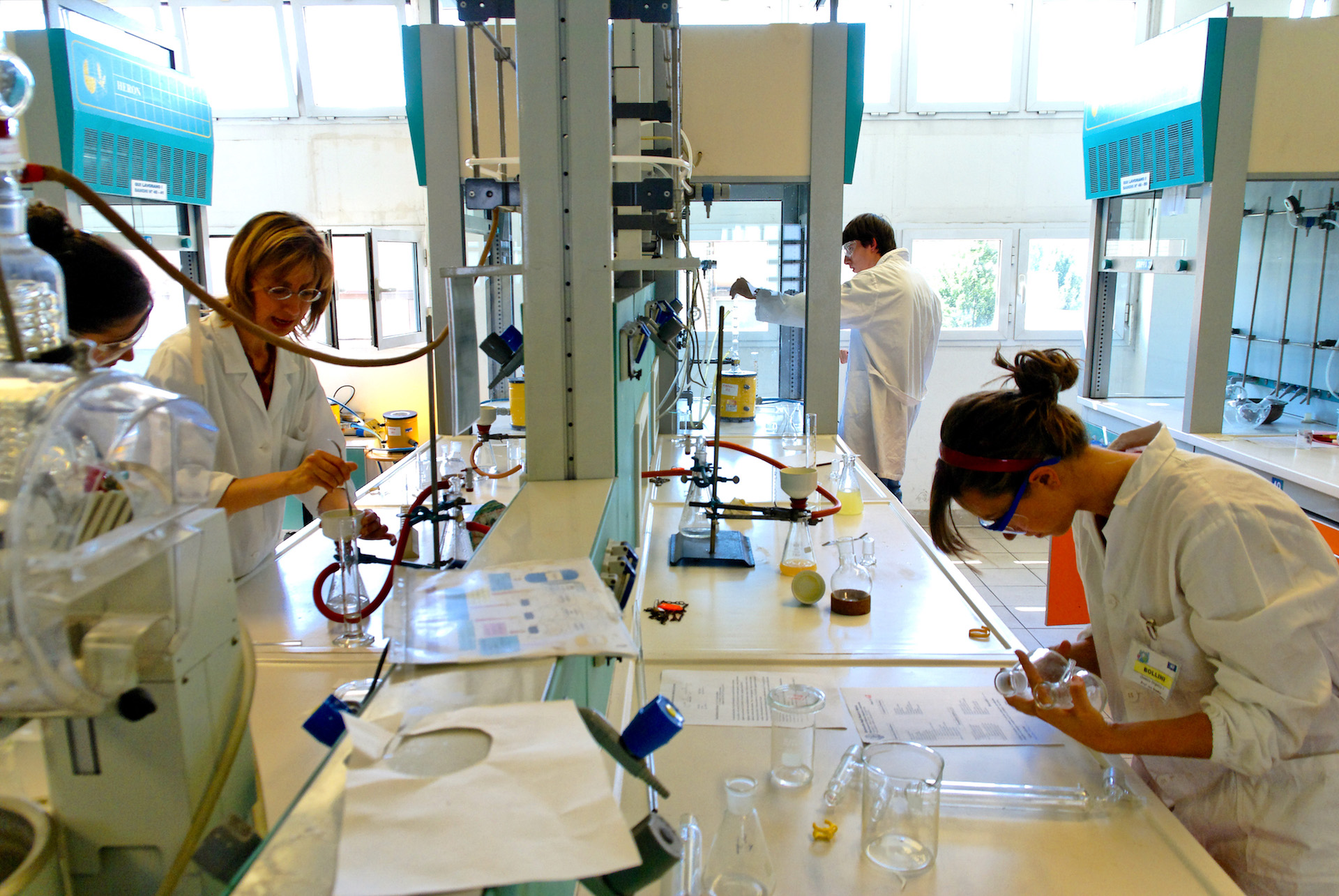
The Degree Course in Biotechnology aims to provide bachelor students with solid basic knowledge and practical skills in the different fields of biotechnology. The course will favour interdisciplinary approaches and propose the study of most of the modern molecular biotechnologies used in the agro-food, environmental, industrial, pharmaceutical and veterinary fields. Notions in bioethics, patenting and legislation, fundraising and management will be also provided. Innovation is the driving force of this course; being biotechnology an area of fast and active development, continuous and efficient updating is necessary to keep continuously updated with the rapid increase in scientific knowledge.
Biotechnology graduates will be able to work in numerous professional contexts including: the agri-food industry, the animal feed and plant production sector, the pharmaceutical industry, the chemical industry, the cosmetic industry and scientific information, the industry and services for environmental biotechnology, in reproductive biotechnology laboratories both in the medical and veterinary fields, biotechnological service centers for the applications of information technology to genomics and proteomics, universities and research laboratories of public and private institutions, certification bodies, structures of the National Health System, health regulatory agencies and national and international agencies for patent regulations for the exploitation of biotechnological products, including study centers for toxicological and environmental detection.
The specific roles and professions of the graduate in Biotechnology, based on the nomenclature and classification drawn up by ISTAT (2012), are identified by the following codes:
- Biochemical laboratory technicians
- Food technicians
- Agronomist and forestry technicians
- Veterinary laboratory technicians
- Zootechnicians
The degree course allows you to qualify for the following regulated professions:
- Agricultural biotechnologist (Agri-food curriculum)
- Junior biologist
- Medical-scientific informant (Pharmaceutical curriculum)
- The "Ordine dei Consulenti in Proprietà Industriale" (Italian Industrial Property Consultants Institute)
Employment statistics (Almalaurea)
The specific roles and professions of the graduate in Biotechnology, based on the nomenclature and classification drawn up by ISTAT (2012), are identified by the following codes:
- Biochemical laboratory technicians
- Food technicians
- Agronomist and forestry technicians
- Veterinary laboratory technicians
- Zootechnicians
The degree course allows you to qualify for the following regulated professions:
- Agricultural biotechnologist (Agri-food curriculum)
- Junior biologist
- Medical-scientific informant (Pharmaceutical curriculum)
- The "Ordine dei Consulenti in Proprietà Industriale" (Italian Industrial Property Consultants Institute)
Employment statistics (Almalaurea)
Admission requirements
Admission to the degree programme in Biotechnology is capped pursuant to Law no. 264 of 2 August 1999. Applicants must hold an upper secondary-school diploma or equivalent foreign qualification pursuant to Ministerial Decree no. 270 of 22 October 2004.
Candidates will be required to sit an admission test aimed at ascertaining their educational background and aptitude.
Admission assessment
The test required for admission to the degree programme in Biotechnology is TOLC-S, an online test delivered by the Consortium of Inter-University Integrated Access Systems (CISIA - https://www.cisiaonline.it/), which must be taken before enrolment.
The TOLC-S test is made up of four sections, with questions on Basic Mathematics, Reasoning and Problem Solving, Reading and Comprehension, and Basic Sciences, requiring a level of knowledge and skills as provided by an upper secondary school education.
Test structure and topics: https://www.cisiaonline.it/en/area-tematica-tolc-scienze/struttura-della-prova-e-syllabus/.
The TOLC test includes an additional English section. The score in this section is a self-assessment tool and does not affect the merit ranking, nor does it replace the for-credit assessment of English language proficiency required by the degree programme (see the language assessment section).
You may sit the TOLC-S at the University of Milan or any other venue among those listed in the test calendar available at https://tolc.cisiaonline.it/calendario.php.
Registration procedures and deadlines will be provided in the call for applications posted to the University website at https://biotecnologia.cdl.unimi.it/it/iscriversi.
Only students placing themselves high enough in the merit ranking will be eligible for enrolment in the degree programme in Biotechnology.
Additional learning requirements (OFA) and remedial activities
Students who have not achieved at least 11 points in the basic mathematics module of TOLC-S will be required to fulfil additional learning requirements (OFA). Students with additional learning requirements will have to carry out remedial activities organised by the University in the period between October-December, and then take a test to prove they have filled the gaps in their knowledge. Students may not sit any second-year exams before passing the compulsory Mathematics exam.
Learn more at https://biotecnologia.cdl.unimi.it/it/studiare/le-matricole.
Admission of transfer or graduate students
Transfer students from a degree programme of the University of Milan, or another university, and graduate students will be waived from the test requirements only if admitted to years subsequent to Year I. To this end, they will have to submit a specific request for prior assessment of their academic records using the online service as shown in the call for applications. These candidates must provide a full transcript of records (listing exams, subject areas, credits, grades) and attach the course syllabi. For more details, please refer to the call for applications.
Admission to the degree programme in Biotechnology is capped pursuant to Law no. 264 of 2 August 1999. Applicants must hold an upper secondary-school diploma or equivalent foreign qualification pursuant to Ministerial Decree no. 270 of 22 October 2004.
Candidates will be required to sit an admission test aimed at ascertaining their educational background and aptitude.
Admission assessment
The test required for admission to the degree programme in Biotechnology is TOLC-S, an online test delivered by the Consortium of Inter-University Integrated Access Systems (CISIA - https://www.cisiaonline.it/), which must be taken before enrolment.
The TOLC-S test is made up of four sections, with questions on Basic Mathematics, Reasoning and Problem Solving, Reading and Comprehension, and Basic Sciences, requiring a level of knowledge and skills as provided by an upper secondary school education.
Test structure and topics: https://www.cisiaonline.it/en/area-tematica-tolc-scienze/struttura-della-prova-e-syllabus/.
The TOLC test includes an additional English section. The score in this section is a self-assessment tool and does not affect the merit ranking, nor does it replace the for-credit assessment of English language proficiency required by the degree programme (see the language assessment section).
You may sit the TOLC-S at the University of Milan or any other venue among those listed in the test calendar available at https://tolc.cisiaonline.it/calendario.php.
Registration procedures and deadlines will be provided in the call for applications posted to the University website at https://biotecnologia.cdl.unimi.it/it/iscriversi.
Only students placing themselves high enough in the merit ranking will be eligible for enrolment in the degree programme in Biotechnology.
Additional learning requirements (OFA) and remedial activities
Students who have not achieved at least 11 points in the basic mathematics module of TOLC-S will be required to fulfil additional learning requirements (OFA). Students with additional learning requirements will have to carry out remedial activities organised by the University in the period between October-December, and then take a test to prove they have filled the gaps in their knowledge. Students may not sit any second-year exams before passing the compulsory Mathematics exam.
Learn more at https://biotecnologia.cdl.unimi.it/it/studiare/le-matricole.
Admission of transfer or graduate students
Transfer students from a degree programme of the University of Milan, or another university, and graduate students will be waived from the test requirements only if admitted to years subsequent to Year I. To this end, they will have to submit a specific request for prior assessment of their academic records using the online service as shown in the call for applications. These candidates must provide a full transcript of records (listing exams, subject areas, credits, grades) and attach the course syllabi. For more details, please refer to the call for applications.
The study opportunities within the ERASMUS+ Programme, the specific participation rules and the student selection criteria are described in the notice that the University generally publishes in January, and are illustrated during specific meetings advertised on the website of the Degree Course and that of the University. Agreements have been stipulated with various universities, distributed throughout Europe (for a total of 13 countries), mainly in Spain, Germany, France, Holland, Belgium and the United Kingdom, selected based on educational affinity with the course of study and relevance in specific scientific sectors. The activities that can be carried out abroad are, as a rule, related to the topics and areas of study covered in the various curricula on which the Degree Course is structured. The purpose of the mobility is to carry out training activities abroad to replace part of one's study plan, including carrying out the internship.
The definition of the study program (Learning Agreement, LA) must necessarily take place in collaboration with the Erasmus person in charge of the study course, both as regards the choice of exams and the organisation of internships. The program must include training activities for a number of credits proportional to the duration of the stay, in accordance with the general provisions of the University of Milan.
To carry out an experimental activity abroad as a part or all of the internship included in the study plan, a letter of consent will be required from a professor of the partner university to host the student in their laboratories and by a teacher of the Course of Studies who will act as tutor and/or speaker. These letters must be forwarded to the ERASMUS Coordinator.
All activities will be recognized in the student's career, provided they have been completed with positive results (achievement of at least 70% of the credits required by the LA) and certified by the host University at the end of the student's stay. The Interdepartmental Teaching Committee will decide on the recognition of credits and exam grades taken based on a predefined conversion scale. Furthermore, participation in Erasmus+ programs will be taken into consideration in defining the degree grade, depending on the duration and quality of the period spent abroad.
In addition, the Degree Course also offers its students for the academic year 2024-2025 the opportunity to participate, following a formal selection, in the "Biodiversity, sustainability in the agro-food system" project within the Alliance 4EU+. The topic is the biodiversity and the sustainability of food systems and their involvement in society. Participation to the project, if the activities are completely completed, may be recognized in the student's career among the free choice activities (6 CFU).
The definition of the study program (Learning Agreement, LA) must necessarily take place in collaboration with the Erasmus person in charge of the study course, both as regards the choice of exams and the organisation of internships. The program must include training activities for a number of credits proportional to the duration of the stay, in accordance with the general provisions of the University of Milan.
To carry out an experimental activity abroad as a part or all of the internship included in the study plan, a letter of consent will be required from a professor of the partner university to host the student in their laboratories and by a teacher of the Course of Studies who will act as tutor and/or speaker. These letters must be forwarded to the ERASMUS Coordinator.
All activities will be recognized in the student's career, provided they have been completed with positive results (achievement of at least 70% of the credits required by the LA) and certified by the host University at the end of the student's stay. The Interdepartmental Teaching Committee will decide on the recognition of credits and exam grades taken based on a predefined conversion scale. Furthermore, participation in Erasmus+ programs will be taken into consideration in defining the degree grade, depending on the duration and quality of the period spent abroad.
In addition, the Degree Course also offers its students for the academic year 2024-2025 the opportunity to participate, following a formal selection, in the "Biodiversity, sustainability in the agro-food system" project within the Alliance 4EU+. The topic is the biodiversity and the sustainability of food systems and their involvement in society. Participation to the project, if the activities are completely completed, may be recognized in the student's career among the free choice activities (6 CFU).
Attendance is mandatory for laboratory courses.
Courses list
course year not available
First semester
| Courses or activities | Max ECTS | Total hours | Language | SSD |
|---|---|---|---|---|
| Compulsory | ||||
| General and Inorganic Chemistry | 8 | 88 | Italian | CHIM/03 |
| General E Cellular Biology | 10 | 88 | Italian | BIO/13 |
| Mathematics for Biotechnology | 6 | 72 | Italian | MAT/01 MAT/02 MAT/03 MAT/04 MAT/05 MAT/06 MAT/07 MAT/08 MAT/09 |
Second semester
| Courses or activities | Max ECTS | Total hours | Language | SSD |
|---|---|---|---|---|
| Compulsory | ||||
| Informatics and Statistics for Biotechnologies (common) | 6 | 48 | Italian | FIS/07 INF/01 MAT/03 SECS-S/01 SECS-S/02 |
| Organic Chemistry | 8 | 88 | Italian | CHIM/06 |
| Physics | 6 | 60 | Italian | FIS/07 |
| Optional | ||||
| Genetics | 8 | 76 | Italian | AGR/07 BIO/18 |
| Genetics | 8 | 76 | English | AGR/07 BIO/18 |
Open sessions
There are no specific sessions for these activities.
| Courses or activities | Max ECTS | Total hours | Language | SSD |
|---|---|---|---|---|
| Compulsory | ||||
| English Assessment B1 (1 ECTS) | 1 | 0 | English | NN |
First semester
| Courses or activities | Max ECTS | Total hours | Language | SSD |
|---|---|---|---|---|
| Compulsory | ||||
| Biochemistry | 9 | 80 | Italian | BIO/10 |
| Fundamentals of Economy and Bioethics | 6 | 56 | Italian | AGR/01 IUS/01 IUS/04 MED/02 SECS-P/06 |
| General Microbiology | 9 | 80 | Italian | BIO/19 |
| Molecular Biology | 9 | 72 | Italian | BIO/11 |
Second semester
| Courses or activities | Max ECTS | Total hours | Language | SSD |
|---|---|---|---|---|
| Compulsory | ||||
| Applied Molecular Biotechnologies | 11 | 112 | Italian | BIO/10 |
| Botany and Cropping Systems | 9 | 84 | Italian | AGR/02 AGR/04 BIO/01 |
| Chemistry and Biochemistry of Agri-Food Molecules | 8 | 72 | Italian | BIO/10 CHIM/06 |
| Plant Physiology and Biochemistry | 7 | 64 | Italian | AGR/13 |
First semester
| Courses or activities | Max ECTS | Total hours | Language | SSD |
|---|---|---|---|---|
| Compulsory | ||||
| Biotechnology for Plant Protection | 10 | 96 | Italian | AGR/11 AGR/12 |
| In Vitro Plant Breeding | 5 | 44 | Italian | AGR/03 |
| Plant Genomics and Breeding | 11 | 96 | Italian | AGR/07 |
Second semester
| Courses or activities | Max ECTS | Total hours | Language | SSD |
|---|---|---|---|---|
| Compulsory | ||||
| Careers in Biotechnology | 2 | 16 | Italian | NN |
| Microbial Agrobiotechnology | 6 | 56 | Italian | AGR/16 |
| Optional | ||||
| Biodiversity, Sustainability in the Agro-Food System - 4eu+ Microcredentials | 6 | 56 | Italian | AGR/18 BIO/01 BIO/10 |
Conclusive activities
There are no specific sessions for these activities.
| Courses or activities | Max ECTS | Total hours | Language | SSD |
|---|---|---|---|---|
| Compulsory | ||||
| Lab Training | 8 | 0 | Italian | NN |
| Final Exam | 5 | 0 | Italian | NN |
Study plan rules
- Students will have to achieve 12 free-choice CFU.
The students have to successfully complete the propaedeutic exams listed in right column, before those listed in left column of the following table.
In the event that the list of propaedeutic exams changes, the students will have to comply with the list approved in the previous Academic Year
In the event that the list of propaedeutic exams changes, the students will have to comply with the list approved in the previous Academic Year
Prescribed foundation courses
| Learning activity | Prescribed foundation courses |
|---|---|
| Analytical Methods for Pharmaceutical Biotechnologies | Biochemistry (compulsory), General and Inorganic Chemistry (compulsory), Organic Chemistry (compulsory), Physics (compulsory) |
| Generale Pathology, Immunology and Medical Microbiology | Biochemistry (compulsory), General Microbiology (compulsory), Human Physiology and Basic Anatomy (compulsory) |
| Human Physiology and Basic Anatomy | General E Cellular Biology (compulsory) |
| Informatics and Statistics for Biotechnologies (common) | Mathematics for Biotechnology (compulsory) |
| Medicinal Chemistry and Bioprocesses | Biochemistry (compulsory), General and Inorganic Chemistry (compulsory), Organic Chemistry (compulsory) |
| Microbial Agrobiotechnology | General Microbiology (compulsory) |
| Molecular Genetics and Animal Models | Genetics (compulsory) |
| Organic Chemistry | General and Inorganic Chemistry (compulsory) |
| Pharmaceutical Technology and Legislation of Biotechnological Medicinal Products | General and Inorganic Chemistry (compulsory), Organic Chemistry (compulsory), Pharmacology (compulsory) |
| Pharmacological and Toxicological Biotechnology | Biochemistry (compulsory), Human Physiology and Basic Anatomy (compulsory), Pharmacology (compulsory) |
| Pharmacology | General E Cellular Biology (compulsory) |
| Plant Biology and Physiology | General E Cellular Biology (compulsory), General and Inorganic Chemistry (compulsory) |
course year not available
First semester
| Courses or activities | Max ECTS | Total hours | Language | SSD |
|---|---|---|---|---|
| Compulsory | ||||
| General and Inorganic Chemistry | 8 | 88 | Italian | CHIM/03 |
| General E Cellular Biology | 10 | 88 | Italian | BIO/13 |
| Mathematics for Biotechnology | 6 | 72 | Italian | MAT/01 MAT/02 MAT/03 MAT/04 MAT/05 MAT/06 MAT/07 MAT/08 MAT/09 |
Second semester
| Courses or activities | Max ECTS | Total hours | Language | SSD |
|---|---|---|---|---|
| Compulsory | ||||
| Informatics and Statistics for Biotechnologies (common) | 6 | 48 | Italian | FIS/07 INF/01 MAT/03 SECS-S/01 SECS-S/02 |
| Organic Chemistry | 8 | 88 | Italian | CHIM/06 |
| Physics | 6 | 60 | Italian | FIS/07 |
| Optional | ||||
| Genetics | 8 | 76 | English | AGR/07 BIO/18 |
| Genetics | 8 | 76 | Italian | AGR/07 BIO/18 |
Open sessions
There are no specific sessions for these activities.
| Courses or activities | Max ECTS | Total hours | Language | SSD |
|---|---|---|---|---|
| Compulsory | ||||
| English Assessment B1 (1 ECTS) | 1 | 0 | English | NN |
First semester
| Courses or activities | Max ECTS | Total hours | Language | SSD |
|---|---|---|---|---|
| Compulsory | ||||
| Biochemistry | 9 | 80 | Italian | BIO/10 |
| Fundamentals of Economy and Bioethics | 6 | 56 | Italian | AGR/01 IUS/01 IUS/04 MED/02 SECS-P/06 |
| General Microbiology | 9 | 80 | Italian | BIO/19 |
| Molecular Biology | 9 | 72 | Italian | BIO/11 |
Second semester
| Courses or activities | Max ECTS | Total hours | Language | SSD |
|---|---|---|---|---|
| Compulsory | ||||
| Animal Physiology and Assisted Reproduction | 9 | 96 | Italian | VET/02 VET/10 |
| Comparative and Laboratory Animal Pathology | 7 | 64 | Italian | VET/03 |
| Development, Morphology and Function of Organs and Systems | 8 | 92 | Italian | VET/01 |
| Veterinary Microbiology and Immunology | 6 | 64 | Italian | VET/05 |
year
| Courses or activities | Max ECTS | Total hours | Language | SSD |
|---|---|---|---|---|
| Compulsory | ||||
| Biotechnology Applied to Animal Nutrition and Animal Origin Food | 12 | 136 | Italian | AGR/18 VET/04 |
| - Animal nutrition | 6 | 72 | AGR/18 | |
| - Food of animal origin | 6 | 64 | VET/04 | |
First semester
| Courses or activities | Max ECTS | Total hours | Language | SSD |
|---|---|---|---|---|
| Compulsory | ||||
| Infectious and Parasitic Diseases | 10 | 96 | Italian | VET/05 VET/06 |
| Veterinary Pharmacology and Biotechnology Law | 9 | 88 | Italian | VET/07 VET/08 |
Second semester
| Courses or activities | Max ECTS | Total hours | Language | SSD |
|---|---|---|---|---|
| Compulsory | ||||
| Molecular Genetics and Animal Models | 8 | 88 | Italian | AGR/17 AGR/20 |
| Optional | ||||
| Biodiversity, Sustainability in the Agro-Food System - 4eu+ Microcredentials | 6 | 56 | Italian | AGR/18 BIO/01 BIO/10 |
Conclusive activities
There are no specific sessions for these activities.
| Courses or activities | Max ECTS | Total hours | Language | SSD |
|---|---|---|---|---|
| Compulsory | ||||
| Lab Training | 8 | 0 | Italian | NN |
| Final Exam | 5 | 0 | Italian | NN |
Study plan rules
- Students will have to achieve 12 free-choice CFU.
The students have to successfully complete the propaedeutic exams listed in right column, before those listed in left column of the following table.
In the event that the list of propaedeutic exams changes, the students will have to comply with the list approved in the previous Academic Year
In the event that the list of propaedeutic exams changes, the students will have to comply with the list approved in the previous Academic Year
Prescribed foundation courses
| Learning activity | Prescribed foundation courses |
|---|---|
| Analytical Methods for Pharmaceutical Biotechnologies | Biochemistry (compulsory), General and Inorganic Chemistry (compulsory), Organic Chemistry (compulsory), Physics (compulsory) |
| Generale Pathology, Immunology and Medical Microbiology | Biochemistry (compulsory), General Microbiology (compulsory), Human Physiology and Basic Anatomy (compulsory) |
| Human Physiology and Basic Anatomy | General E Cellular Biology (compulsory) |
| Informatics and Statistics for Biotechnologies (common) | Mathematics for Biotechnology (compulsory) |
| Medicinal Chemistry and Bioprocesses | Biochemistry (compulsory), General and Inorganic Chemistry (compulsory), Organic Chemistry (compulsory) |
| Microbial Agrobiotechnology | General Microbiology (compulsory) |
| Molecular Genetics and Animal Models | Genetics (compulsory) |
| Organic Chemistry | General and Inorganic Chemistry (compulsory) |
| Pharmaceutical Technology and Legislation of Biotechnological Medicinal Products | General and Inorganic Chemistry (compulsory), Organic Chemistry (compulsory), Pharmacology (compulsory) |
| Pharmacological and Toxicological Biotechnology | Biochemistry (compulsory), Human Physiology and Basic Anatomy (compulsory), Pharmacology (compulsory) |
| Pharmacology | General E Cellular Biology (compulsory) |
| Plant Biology and Physiology | General E Cellular Biology (compulsory), General and Inorganic Chemistry (compulsory) |
course year not available
First semester
| Courses or activities | Max ECTS | Total hours | Language | SSD |
|---|---|---|---|---|
| Compulsory | ||||
| General and Inorganic Chemistry | 8 | 88 | Italian | CHIM/03 |
| General E Cellular Biology | 10 | 88 | Italian | BIO/13 |
| Mathematics for Biotechnology | 6 | 72 | Italian | MAT/01 MAT/02 MAT/03 MAT/04 MAT/05 MAT/06 MAT/07 MAT/08 MAT/09 |
Second semester
| Courses or activities | Max ECTS | Total hours | Language | SSD |
|---|---|---|---|---|
| Compulsory | ||||
| Informatics and Statistics for Biotechnologies (common) | 6 | 48 | Italian | FIS/07 INF/01 MAT/03 SECS-S/01 SECS-S/02 |
| Organic Chemistry | 8 | 88 | Italian | CHIM/06 |
| Physics | 6 | 60 | Italian | FIS/07 |
| Optional | ||||
| Genetics | 8 | 76 | English | AGR/07 BIO/18 |
| Genetics | 8 | 76 | Italian | AGR/07 BIO/18 |
Open sessions
There are no specific sessions for these activities.
| Courses or activities | Max ECTS | Total hours | Language | SSD |
|---|---|---|---|---|
| Compulsory | ||||
| English Assessment B1 (1 ECTS) | 1 | 0 | English | NN |
First semester
| Courses or activities | Max ECTS | Total hours | Language | SSD |
|---|---|---|---|---|
| Compulsory | ||||
| Biochemistry | 9 | 80 | Italian | BIO/10 |
| Fundamentals of Economy and Bioethics | 6 | 56 | Italian | AGR/01 IUS/01 IUS/04 MED/02 SECS-P/06 |
| General Microbiology | 9 | 80 | Italian | BIO/19 |
| Molecular Biology | 9 | 72 | Italian | BIO/11 |
Second semester
| Courses or activities | Max ECTS | Total hours | Language | SSD |
|---|---|---|---|---|
| Compulsory | ||||
| Analytical Methods for Pharmaceutical Biotechnologies | 7 | 64 | Italian | CHIM/01 CHIM/08 |
| Human Physiology and Basic Anatomy | 10 | 80 | Italian | BIO/09 |
| Methods in Cell Biology and Biochemistry | 7 | 84 | Italian | BIO/10 BIO/13 |
| Pharmacology | 8 | 64 | Italian | BIO/14 |
First semester
| Courses or activities | Max ECTS | Total hours | Language | SSD |
|---|---|---|---|---|
| Compulsory | ||||
| Generale Pathology, Immunology and Medical Microbiology | 11 | 96 | Italian | MED/04 MED/07 |
| Medicinal Chemistry and Bioprocesses | 10 | 80 | Italian | CHIM/08 CHIM/11 |
| Pharmacological and Toxicological Biotechnology | 10 | 88 | Italian | BIO/14 |
Second semester
| Courses or activities | Max ECTS | Total hours | Language | SSD |
|---|---|---|---|---|
| Compulsory | ||||
| Pharmaceutical Technology and Legislation of Biotechnological Medicinal Products | 6 | 56 | Italian | CHIM/09 |
| Optional | ||||
| Biodiversity, Sustainability in the Agro-Food System - 4eu+ Microcredentials | 6 | 56 | Italian | AGR/18 BIO/01 BIO/10 |
Conclusive activities
There are no specific sessions for these activities.
| Courses or activities | Max ECTS | Total hours | Language | SSD |
|---|---|---|---|---|
| Compulsory | ||||
| Lab Training | 8 | 0 | Italian | NN |
| Final Exam | 5 | 0 | Italian | NN |
Study plan rules
- Students will have to achieve 12 free-choice CFU.
The students have to successfully complete the propaedeutic exams listed in right column, before those listed in left column of the following table.
In the event that the list of propaedeutic exams changes, the students will have to comply with the list approved in the previous Academic Year
In the event that the list of propaedeutic exams changes, the students will have to comply with the list approved in the previous Academic Year
Prescribed foundation courses
| Learning activity | Prescribed foundation courses |
|---|---|
| Analytical Methods for Pharmaceutical Biotechnologies | Biochemistry (compulsory), General and Inorganic Chemistry (compulsory), Organic Chemistry (compulsory), Physics (compulsory) |
| Generale Pathology, Immunology and Medical Microbiology | Biochemistry (compulsory), General Microbiology (compulsory), Human Physiology and Basic Anatomy (compulsory) |
| Human Physiology and Basic Anatomy | General E Cellular Biology (compulsory) |
| Informatics and Statistics for Biotechnologies (common) | Mathematics for Biotechnology (compulsory) |
| Medicinal Chemistry and Bioprocesses | Biochemistry (compulsory), General and Inorganic Chemistry (compulsory), Organic Chemistry (compulsory) |
| Microbial Agrobiotechnology | General Microbiology (compulsory) |
| Molecular Genetics and Animal Models | Genetics (compulsory) |
| Organic Chemistry | General and Inorganic Chemistry (compulsory) |
| Pharmaceutical Technology and Legislation of Biotechnological Medicinal Products | General and Inorganic Chemistry (compulsory), Organic Chemistry (compulsory), Pharmacology (compulsory) |
| Pharmacological and Toxicological Biotechnology | Biochemistry (compulsory), Human Physiology and Basic Anatomy (compulsory), Pharmacology (compulsory) |
| Pharmacology | General E Cellular Biology (compulsory) |
| Plant Biology and Physiology | General E Cellular Biology (compulsory), General and Inorganic Chemistry (compulsory) |
course year not available
First semester
| Courses or activities | Max ECTS | Total hours | Language | SSD |
|---|---|---|---|---|
| Compulsory | ||||
| General and Inorganic Chemistry | 8 | 88 | Italian | CHIM/03 |
| General E Cellular Biology | 10 | 88 | Italian | BIO/13 |
| Mathematics for Biotechnology | 6 | 72 | Italian | MAT/01 MAT/02 MAT/03 MAT/04 MAT/05 MAT/06 MAT/07 MAT/08 MAT/09 |
Second semester
| Courses or activities | Max ECTS | Total hours | Language | SSD |
|---|---|---|---|---|
| Compulsory | ||||
| Informatics and Statistics for Biotechnologies (common) | 6 | 48 | Italian | FIS/07 INF/01 MAT/03 SECS-S/01 SECS-S/02 |
| Organic Chemistry | 8 | 88 | Italian | CHIM/06 |
| Physics | 6 | 60 | Italian | FIS/07 |
| Optional | ||||
| Genetics | 8 | 76 | English | AGR/07 BIO/18 |
| Genetics | 8 | 76 | Italian | AGR/07 BIO/18 |
Open sessions
There are no specific sessions for these activities.
| Courses or activities | Max ECTS | Total hours | Language | SSD |
|---|---|---|---|---|
| Compulsory | ||||
| English Assessment B1 (1 ECTS) | 1 | 0 | English | NN |
First semester
| Courses or activities | Max ECTS | Total hours | Language | SSD |
|---|---|---|---|---|
| Compulsory | ||||
| Biochemistry | 9 | 80 | Italian | BIO/10 |
| Fundamentals of Economy and Bioethics | 6 | 56 | Italian | AGR/01 IUS/01 IUS/04 MED/02 SECS-P/06 |
| General Microbiology | 9 | 80 | Italian | BIO/19 |
| Molecular Biology | 9 | 72 | Italian | BIO/11 |
Second semester
| Courses or activities | Max ECTS | Total hours | Language | SSD |
|---|---|---|---|---|
| Compulsory | ||||
| Animal Cell Biotechnology | 6 | 56 | Italian | BIO/13 BIO/17 |
| Chemical Methods for Biotechnology | 8 | 88 | Italian | CHIM/02 CHIM/06 |
| Fermentation Biotechnology | 6 | 56 | Italian | BIO/11 BIO/18 CHIM/11 |
| Plant Biology and Physiology | 8 | 72 | Italian | BIO/01 BIO/04 BIO/18 |
year
| Courses or activities | Max ECTS | Total hours | Language | SSD |
|---|---|---|---|---|
| Compulsory | ||||
| Biochemistry and Molecular Biology: Applications in Biotechnology | 12 | 112 | Italian | BIO/10 BIO/11 |
| - Methods in Biochemistry | 6 | 56 | BIO/10,BIO/11 | |
| - Methods in Molecular Biology | 6 | 56 | BIO/10,BIO/11 | |
| Bioinformatics and Computational Biology | 12 | 96 | Italian | BIO/10 BIO/11 INF/01 |
| - Bioinformatics | 6 | 48 | INF/01 | |
| - Computational Biology | 6 | 48 | BIO/10,BIO/11,INF/01 | |
First semester
| Courses or activities | Max ECTS | Total hours | Language | SSD |
|---|---|---|---|---|
| Compulsory | ||||
| Microbial Biotechnology | 6 | 56 | Italian | BIO/18 BIO/19 |
| Plant Industrial Biotechnology | 9 | 80 | Italian | AGR/07 BIO/18 |
Second semester
| Courses or activities | Max ECTS | Total hours | Language | SSD |
|---|---|---|---|---|
| Compulsory | ||||
| Careers in Biotechnology | 2 | 16 | Italian | NN |
| Optional | ||||
| Biodiversity, Sustainability in the Agro-Food System - 4eu+ Microcredentials | 6 | 56 | Italian | AGR/18 BIO/01 BIO/10 |
Conclusive activities
There are no specific sessions for these activities.
| Courses or activities | Max ECTS | Total hours | Language | SSD |
|---|---|---|---|---|
| Compulsory | ||||
| Lab Training | 8 | 0 | Italian | NN |
| Final Exam | 5 | 0 | Italian | NN |
Study plan rules
- Students will have to achieve 12 free-choice CFU.
The students have to successfully complete the propaedeutic exams listed in right column, before those listed in left column of the following table.
In the event that the list of propaedeutic exams changes, the students will have to comply with the list approved in the previous Academic Year
In the event that the list of propaedeutic exams changes, the students will have to comply with the list approved in the previous Academic Year
Prescribed foundation courses
| Learning activity | Prescribed foundation courses |
|---|---|
| Analytical Methods for Pharmaceutical Biotechnologies | Biochemistry (compulsory), General and Inorganic Chemistry (compulsory), Organic Chemistry (compulsory), Physics (compulsory) |
| Generale Pathology, Immunology and Medical Microbiology | Biochemistry (compulsory), General Microbiology (compulsory), Human Physiology and Basic Anatomy (compulsory) |
| Human Physiology and Basic Anatomy | General E Cellular Biology (compulsory) |
| Informatics and Statistics for Biotechnologies (common) | Mathematics for Biotechnology (compulsory) |
| Medicinal Chemistry and Bioprocesses | Biochemistry (compulsory), General and Inorganic Chemistry (compulsory), Organic Chemistry (compulsory) |
| Microbial Agrobiotechnology | General Microbiology (compulsory) |
| Molecular Genetics and Animal Models | Genetics (compulsory) |
| Organic Chemistry | General and Inorganic Chemistry (compulsory) |
| Pharmaceutical Technology and Legislation of Biotechnological Medicinal Products | General and Inorganic Chemistry (compulsory), Organic Chemistry (compulsory), Pharmacology (compulsory) |
| Pharmacological and Toxicological Biotechnology | Biochemistry (compulsory), Human Physiology and Basic Anatomy (compulsory), Pharmacology (compulsory) |
| Pharmacology | General E Cellular Biology (compulsory) |
| Plant Biology and Physiology | General E Cellular Biology (compulsory), General and Inorganic Chemistry (compulsory) |
Course location
Milano
Laboratories locations
The degree programme is laboratory-intensive. Laboratory courses are compulsory and must be attended in each relevant year. During laboratory practicals, students will learn the rules of safe behaviour.
Presidente del Collegio Didattico
ANGELO POLETTI
Docenti tutor
Tutor per l'orientamento
(gli studenti dovranno farvi riferimento in base al cognome)
A-C Dr. Fabio Forlani
D-F Prof.ssa Gabriella Tedeschi
G-L Prof. Paolo Landini
M-O Prof.ssa Elena Crotti
Q-S Prof. Maurizio Crestani
T-U Prof.ssa Maria Antonietta Vanoni
V-Z Prof. Luigi Sironi
Tutor per la mobilità internazionale e l'Erasmus
Prof.ssa Veronica Gregis (referente curriculum Molecolare-bioinformatico)
Dr. Fabio Forlani (referente curriculum Agroalimentare)
Prof.ssa Carlotta Giromini (referente curriculum Biotecnologia Animale Comparata)
Prof. Riccardo M. Cristofani (referente curriculum Farmaceutico)
Tutor per i piani di studio
Prof.ssa Marina Camera
Prof.ssa Paola Casati
Prof.ssa Daniela Maggioni
Dr.ssa Sarah Sertic
Dr.ssa Lisa Vallone
Tutor per stage e tirocini
Prof.ssa Sara Borin
Prof.ssa Gabriella Consonni
Prof. Lucio Conti
Prof.ssa Mariarita Galbiati
Prof.ssa Gabriella Tedeschi
Tutor per trasferimenti/riconoscimento crediti
Prof. Alberto Alzati
Prof.ssa Marina Camera
Prof.ssa Paola Casati
Prof.ssa Daniela Maggioni
Dr.ssa Sarah Sertic
Dr.ssa Lisa Vallone
Tutor per laboratori e altre attività
Prof.ssa Raffaella Gandolfi
Dr.ssa Chiara Magni
Prof.ssa Paola Rusmini
Prof.ssa Gabriella Tedeschi
(gli studenti dovranno farvi riferimento in base al cognome)
A-C Dr. Fabio Forlani
D-F Prof.ssa Gabriella Tedeschi
G-L Prof. Paolo Landini
M-O Prof.ssa Elena Crotti
Q-S Prof. Maurizio Crestani
T-U Prof.ssa Maria Antonietta Vanoni
V-Z Prof. Luigi Sironi
Tutor per la mobilità internazionale e l'Erasmus
Prof.ssa Veronica Gregis (referente curriculum Molecolare-bioinformatico)
Dr. Fabio Forlani (referente curriculum Agroalimentare)
Prof.ssa Carlotta Giromini (referente curriculum Biotecnologia Animale Comparata)
Prof. Riccardo M. Cristofani (referente curriculum Farmaceutico)
Tutor per i piani di studio
Prof.ssa Marina Camera
Prof.ssa Paola Casati
Prof.ssa Daniela Maggioni
Dr.ssa Sarah Sertic
Dr.ssa Lisa Vallone
Tutor per stage e tirocini
Prof.ssa Sara Borin
Prof.ssa Gabriella Consonni
Prof. Lucio Conti
Prof.ssa Mariarita Galbiati
Prof.ssa Gabriella Tedeschi
Tutor per trasferimenti/riconoscimento crediti
Prof. Alberto Alzati
Prof.ssa Marina Camera
Prof.ssa Paola Casati
Prof.ssa Daniela Maggioni
Dr.ssa Sarah Sertic
Dr.ssa Lisa Vallone
Tutor per laboratori e altre attività
Prof.ssa Raffaella Gandolfi
Dr.ssa Chiara Magni
Prof.ssa Paola Rusmini
Prof.ssa Gabriella Tedeschi
Reference structures
Contacts
- Erasmus tutor: Prof.ssa Veronica Gregis
Via Celoria, 26 - Corpo A
[email protected]
+3902503 15014
Ricevimento studenti: libero su appuntamento per e-mail - Representative for disability services and specific learning disabilities (SLD): Prof. Elena Crotti
Via Mangiagalli 25, Milano
[email protected]
+3902503 19122
Ricevimento studenti: su appuntamento c/o DeFENS, via Mangiagalli 25, Milano - stanza 3023 - Academic Committee: Prof.Marina Camera (Chair), Prof. Alberto Alzati, Prof. Paola Casati, Prof. Daniela Maggioni, Dr. Sarah Sertic, Dr. Lisa Vallone
[email protected]
Ricevimento studenti - Previo appuntamento c/o Segreteria Didattica Interdipartimentale Scienze del Farmaco e Biotecnologia, Via Golgi n. 19 - Student registrar
Via Celoria 18, Milano
https://www.unimi.it/it/node/359
+3902503 25032
https://www.unimi.it/it/node/360 - Biotechnology Academic Office
via Golgi 19 - Edificio 1, ingresso D - 20133 MILANO
https://informastudenti.unimi.it/saw/ess?AUTH=SAML
lun, merc, ven 9:30-11:30; mar e gio 13:30-15:30
A.Y. 2025/2026
A.Y. 2024/2025
A.Y. 2023/2024
A.Y. 2022/2023
A.Y. 2021/2022
A.Y. 2020/2021
Official documents