

Pharmacy (Classe LM-13)-Enrolled in 2022/23 Academic Year
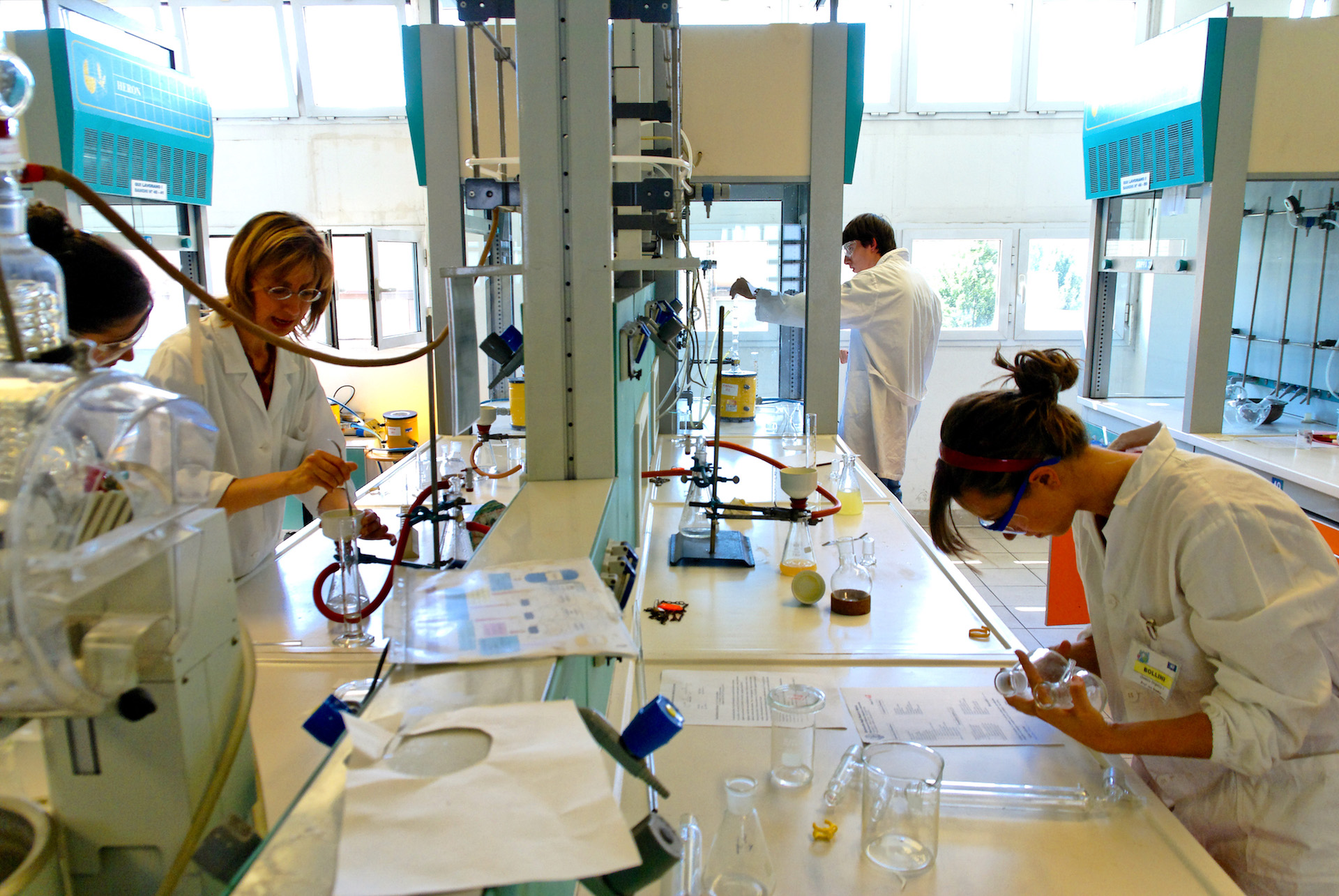
Single-cycle master
A.Y. 2025/2026
LM-13 - Farmacia e farmacia industriale (EN)
The aim of the Degree Course in Pharmacy is to provide a range of theoretical and practical knowledge in the biological, chemical, pharmaceutical, technological, pathophysiological, pharmacological and toxicological fields, which will allow graduates to deal with the entire sequence of the complex and multidisciplinary process that from structural design leads to the production, marketing and correct use of the prescription drug, according to codified standards. The Degree Course in Pharmacy also provides advanced scientific preparation in the healthcare field aimed at forming a professional figure of expert in the drugs and their use for therapeutic purposes. This specialized figure will be capable of serving as a fundamental element of connection between patient, doctor and public health structures, collaborating in monitoring the drug on the territory, the implementation of the therapy in both the local and hospital areas and will provide the patient and the doctor all the proper indications for a correct use of prescription drugs. On these bases, graduates from the Degree Course in Pharmacy will possess the scientific bases and the theoretical and practical knowledge necessary to exercise the profession of pharmacist and to operate as experts of drugs and health products (medical devices, medical-surgical devices, cosmetics, dietetics, food supplements, herbal products, in vitro diagnostics).
The professional profile of pharmacist generated will be of a healthcare professional who contributes to the achievement of the objectives set by the National Health Service in the context of his scientific and technological multidisciplinary skills, in order to adequately respond to the changing needs of the society in the health field.
With the achievement of the Degree in Pharmacy and the related professional qualification, graduates will carry out, in accordance with Directive 2005/36 / EC, and subsequent amendments, the profession of pharmacist and will be authorized to exercise the following professional activities:
- preparation of the pharmaceutical form of drugs;
- manufacture and control of drugs;
- control of drugs in control laboratories
- storage, conservation and distribution of drugs in the wholesale trade phase;
- preparation, control, storage and distribution of drugs in pharmacies open to the public;
- preparation, control, storage and distribution of drugs in hospitals (hospital pharmacies);
- dissemination of information and advice in the field of drugs use.
These activities fall within the minimum common field coordinated by this directive; the training course may also consider other professional activities carried out in the European Union in the field of drugs in order to allow equal employment opportunities in the European context.
Employment statistics (Almalaurea)
With the achievement of the Degree in Pharmacy and the related professional qualification, graduates will carry out, in accordance with Directive 2005/36 / EC, and subsequent amendments, the profession of pharmacist and will be authorized to exercise the following professional activities:
- preparation of the pharmaceutical form of drugs;
- manufacture and control of drugs;
- control of drugs in control laboratories
- storage, conservation and distribution of drugs in the wholesale trade phase;
- preparation, control, storage and distribution of drugs in pharmacies open to the public;
- preparation, control, storage and distribution of drugs in hospitals (hospital pharmacies);
- dissemination of information and advice in the field of drugs use.
These activities fall within the minimum common field coordinated by this directive; the training course may also consider other professional activities carried out in the European Union in the field of drugs in order to allow equal employment opportunities in the European context.
Employment statistics (Almalaurea)
Admission requirements
Admission to the single-cycle Master's degree programme in Pharmacy is capped pursuant to Law no. 264 of 2 August 1999. Applicants to the single-cycle Master's degree programme in Pharmacy must hold an upper secondary-school diploma or equivalent qualification obtained abroad, and adequate knowledge.
Admission assessment
Admission to the first Year of the single-cycle Master's degree programme in Pharmacy is subject to the candidate's taking the online multiple-choice TOLC-F test by CISIA (http://www.cisiaonline.it/). This selective test assesses the knowledge and skills required for attending the programme. The TOLC-F test consists of four sections, with questions on Biology, Chemistry, Mathematics, Physics, Logic and English (optional). The required knowledge level is equal to that achieved in upper secondary school. The schedule of TOLC-F tests held by our and other Italian universities is available at https://tolc.cisiaonline.it/calendario.php. Enrolment procedures and deadlines will be detailed in the call for applications to be posted on the University website at https://farmacia.cdl.unimi.it/it/iscriversi.
The required knowledge will be assessed through the admission test. In order to meet these requirements, candidates must achieve the minimum score set out in the call for applications. Admission is based on merit ranking, up to the number of places available.
Waivers from test requirements and admission to years subsequent to the first one are governed by the call for applications.
For information: https://farmacia.cdl.unimi.it/it/iscriversi.
Additional learning requirements (OFA) and remedial activities
Enrolled students who have not achieved at least 4 points in the basic mathematics module of TOLC-F will have to fulfil additional learning requirements (OFA). For this purpose, they will attend remedial activities organized by the University, and then take a remedial test to prove they have filled their gaps. Students with OFA may not take the Mathematics and Statistics exam before fulfilling said requirements.
Learn more at https://farmacia.cdl.unimi.it/it/studiare/le-matricole.
Candidates who took the test and were not admitted may enrol in a limited number of single courses (with up to 60 places available), as provided by academic regulations, to earn credits to be used for future enrolment in a degree programme, upon passing the admission test, if any.
Transfer students
In case of transfer from another degree programme or from another university, admission to years subsequent to Year I will be subjected to an assessment of the student's previous academic records by the Interdepartmental Academic Board. Please refer to the call for applications for further details.
Admission to the single-cycle Master's degree programme in Pharmacy is capped pursuant to Law no. 264 of 2 August 1999. Applicants to the single-cycle Master's degree programme in Pharmacy must hold an upper secondary-school diploma or equivalent qualification obtained abroad, and adequate knowledge.
Admission assessment
Admission to the first Year of the single-cycle Master's degree programme in Pharmacy is subject to the candidate's taking the online multiple-choice TOLC-F test by CISIA (http://www.cisiaonline.it/). This selective test assesses the knowledge and skills required for attending the programme. The TOLC-F test consists of four sections, with questions on Biology, Chemistry, Mathematics, Physics, Logic and English (optional). The required knowledge level is equal to that achieved in upper secondary school. The schedule of TOLC-F tests held by our and other Italian universities is available at https://tolc.cisiaonline.it/calendario.php. Enrolment procedures and deadlines will be detailed in the call for applications to be posted on the University website at https://farmacia.cdl.unimi.it/it/iscriversi.
The required knowledge will be assessed through the admission test. In order to meet these requirements, candidates must achieve the minimum score set out in the call for applications. Admission is based on merit ranking, up to the number of places available.
Waivers from test requirements and admission to years subsequent to the first one are governed by the call for applications.
For information: https://farmacia.cdl.unimi.it/it/iscriversi.
Additional learning requirements (OFA) and remedial activities
Enrolled students who have not achieved at least 4 points in the basic mathematics module of TOLC-F will have to fulfil additional learning requirements (OFA). For this purpose, they will attend remedial activities organized by the University, and then take a remedial test to prove they have filled their gaps. Students with OFA may not take the Mathematics and Statistics exam before fulfilling said requirements.
Learn more at https://farmacia.cdl.unimi.it/it/studiare/le-matricole.
Candidates who took the test and were not admitted may enrol in a limited number of single courses (with up to 60 places available), as provided by academic regulations, to earn credits to be used for future enrolment in a degree programme, upon passing the admission test, if any.
Transfer students
In case of transfer from another degree programme or from another university, admission to years subsequent to Year I will be subjected to an assessment of the student's previous academic records by the Interdepartmental Academic Board. Please refer to the call for applications for further details.
Thanks to mobility programs such as Erasmus +, Erasmus + Placement, and Erasmus Mundus, the Degree Course in Pharmacy offers its students the opportunity to spend training periods abroad. The Erasmus Placement Program also offers the possibility of carrying out a training internship abroad in companies as well as in other organizations or universities.
University and Institution partners involved in these programs mainly reside in Europe and the Balkan regions.
The locations, with whom Agreements have been established, offer the possibility of carrying out activities in a wide range of areas. During the mobility period, the student can:
- continue his/her studies by attending courses and the respective exams;
- carry out the thesis;
- carry out the internship in Hospital Pharmacies.
Each student is followed by a tutor identified within the Course.
Procedure for the recognition of study periods abroad: each student must propose a Learning Agreement regarding the training activities that lead to the recognition of a number of credits adequate for the period of stay abroad, namely:
- 60 credits for an academic year;
- 30 credits for an academic semester;
- 20 credits for an academic quarter;
- 15 credits for the internship period in the hospital pharmacy whose maximum duration is 3 months.
The study period abroad will be recognized as valid upon the acquisition of at least 70% of the credits specified in the learning agreement, while the thesis or internship activity will be considered valid only after acquisition of all credits.
For students who have satisfactorily accomplished the training program, the appropriate incentives, proposed by the teacher in charge, will be given by the Faculty's Commission during the graduation session.
University and Institution partners involved in these programs mainly reside in Europe and the Balkan regions.
The locations, with whom Agreements have been established, offer the possibility of carrying out activities in a wide range of areas. During the mobility period, the student can:
- continue his/her studies by attending courses and the respective exams;
- carry out the thesis;
- carry out the internship in Hospital Pharmacies.
Each student is followed by a tutor identified within the Course.
Procedure for the recognition of study periods abroad: each student must propose a Learning Agreement regarding the training activities that lead to the recognition of a number of credits adequate for the period of stay abroad, namely:
- 60 credits for an academic year;
- 30 credits for an academic semester;
- 20 credits for an academic quarter;
- 15 credits for the internship period in the hospital pharmacy whose maximum duration is 3 months.
The study period abroad will be recognized as valid upon the acquisition of at least 70% of the credits specified in the learning agreement, while the thesis or internship activity will be considered valid only after acquisition of all credits.
For students who have satisfactorily accomplished the training program, the appropriate incentives, proposed by the teacher in charge, will be given by the Faculty's Commission during the graduation session.
Attendance is mandatory for laboratory courses, and strongly recommended for lectures.
Courses list
course year not available
year
| Courses or activities | Max ECTS | Total hours | Language | SSD |
|---|---|---|---|---|
| Compulsory | ||||
| Human Anatomy | 9 | 72 | Italian | BIO/16 |
First semester
| Courses or activities | Max ECTS | Total hours | Language | SSD |
|---|---|---|---|---|
| Compulsory | ||||
| Animal Biology | 7 | 56 | Italian | BIO/13 |
| Calculus and Statistics | 6 | 56 | Italian | MAT/05 |
| General and Inorganic Chemistry and Stoichiometry | 10 | 96 | Italian | CHIM/03 |
Second semester
| Courses or activities | Max ECTS | Total hours | Language | SSD |
|---|---|---|---|---|
| Compulsory | ||||
| Analytical Chemistry | 8 | 80 | Italian | CHIM/01 |
| Physics | 6 | 56 | Italian | FIS/01 |
| Plant Biology and Pharmaceutical Botany | 8 | 80 | Italian | BIO/15 |
| - Pharmaceutical botany | 4 | 40 | BIO/15 | |
| - Plant Biology | 4 | 40 | BIO/15 | |
Open sessions
There are no specific sessions for these activities.
| Courses or activities | Max ECTS | Total hours | Language | SSD |
|---|---|---|---|---|
| Compulsory | ||||
| English Proficiency B2 (2 ECTS) | 2 | 0 | English | NN |
course year not available
year
| Courses or activities | Max ECTS | Total hours | Language | SSD |
|---|---|---|---|---|
| Compulsory | ||||
| Applied Microbiology, Virology and Hygiene | 10 | 80 | Italian | BIO/19 MED/42 |
| - Unità didattica: Igiene | 4 | 32 | BIO/19,MED/42 | |
| - Unità didattica: Microbiologia applicata | 4 | 32 | BIO/19,MED/42 | |
| - Unità didattica: Virologia | 2 | 16 | BIO/19,MED/42 | |
| General Pharmacology and Pharmacognosy | 10 | 80 | Italian | BIO/14 |
| - General Pharmacology | 4 | 32 | BIO/14 | |
| - Pharmacognosy | 6 | 48 | BIO/14 | |
| Organic Chemistry | 10 | 88 | Italian | CHIM/06 |
| Physiology | 11 | 96 | Italian | BIO/09 |
Not specified period
| Courses or activities | Max ECTS | Total hours | Language | SSD |
|---|---|---|---|---|
| Compulsory | ||||
| Inorganic Analysis of Substances Having Pharmaceutical Interest and Qualitative Analysis Laboratory | 7 | 72 | Italian | CHIM/08 |
| - Inorganic Analysis of Substances having Pharmaceutical Interest | 5 | 40 | CHIM/08 | |
| - Qualitative Analysis Laboratory | 2 | 32 | CHIM/08 | |
Second semester
| Courses or activities | Max ECTS | Total hours | Language | SSD |
|---|---|---|---|---|
| Compulsory | ||||
| General Biochemistry | 6 | 48 | Italian | BIO/10 |
course year not available
year
| Courses or activities | Max ECTS | Total hours | Language | SSD |
|---|---|---|---|---|
| Compulsory | ||||
| General Pathology and Pathophysiology | 11 | 88 | Italian | MED/04 |
| - General Pathology | 4 | 32 | MED/04 | |
| - Pathophysiology | 7 | 56 | MED/04 | |
| Medicinal Chemistry 1 | 10 | 80 | Italian | CHIM/08 |
| Nutrition Physiology and Pharmacology, and Dietetic Products | 10 | 80 | Italian | BIO/09 BIO/14 CHIM/10 |
| - Dietetic products | 4 | 32 | CHIM/10 | |
| - Nutrition Pharmacology | 3 | 24 | BIO/14 | |
| - Nutrition Physiology | 3 | 24 | BIO/09 | |
First semester
| Courses or activities | Max ECTS | Total hours | Language | SSD |
|---|---|---|---|---|
| Compulsory | ||||
| Metabolic and Functional Biochemistry | 8 | 72 | Italian | BIO/10 |
Second semester
| Courses or activities | Max ECTS | Total hours | Language | SSD |
|---|---|---|---|---|
| Compulsory | ||||
| Pharmacology and Pharmacotherapy | 10 | 80 | Italian | BIO/14 |
| Principles of Quantitative Pharmaceutical Analysis and Laboratory for Quantitative Analysis | 8 | 80 | Italian | CHIM/08 |
| - Laboratory for quantitative analysis | 2 | 32 | CHIM/08 | |
| - Principles of quantitative pharmaceutical analysis | 6 | 48 | CHIM/08 | |
Open sessions
There are no specific sessions for these activities.
| Courses or activities | Max ECTS | Total hours | Language | SSD |
|---|---|---|---|---|
| Compulsory | ||||
| Computer Science Course | 3 | 30 | Italian | INF/01 |
Over several sessions
These activities are scheduled over several sessions. Please refer to course overviews for details.
| Courses or activities | Max ECTS | Total hours | Language | SSD |
|---|---|---|---|---|
| Compulsory | ||||
| Assays and Methods of Analysis of the Pharmacopoeias and Lab of Drug Identification | 12 | 128 | Italian | CHIM/08 |
| - Unità didattica: Laboratorio di identificazione dei farmaci | 4 | 64 | CHIM/08 | |
| - Unità didattica: Saggi e metodologie analitiche delle farmacopee | 8 | 64 | CHIM/08 | |
| Medicinal Chemistry 2 | 10 | 80 | Italian | CHIM/08 |
year
| Courses or activities | Max ECTS | Total hours | Language | SSD |
|---|---|---|---|---|
| Compulsory | ||||
| Pharmaceutical Technology and Legislation I and Laboratory of Pharmaceutical Technology I | 12 | 120 | Italian | CHIM/09 |
| - Laboratory of Pharmaceutical Technology I | 3 | 48 | CHIM/09 | |
| - Pharmaceutical Technology and Legislation I | 9 | 72 | CHIM/09 | |
| Optional | ||||
| Drugs and Innovation | 8 | 64 | Italian | BIO/14 |
| - Personalized pharmacological Therapy | 4 | 32 | BIO/14 | |
| - Pharmacology and special populations | 4 | 32 | BIO/14 | |
| Pharmaceutical Market and Regulatory Aspects of Health Products | 8 | 64 | Italian | CHIM/09 |
| - Pharmaceutical market | 4 | 32 | CHIM/09 | |
| - Regulatory aspects of health products | 4 | 32 | CHIM/09 | |
| Phytopharmacy | 8 | 64 | Italian | BIO/14 |
| - COMPLEMENTARY AND ALTERNATIVE MEDICINES | 4 | 32 | BIO/14 | |
| - THERAPEUTIC ACTIVITY OF PLANTS | 4 | 32 | BIO/14 | |
First semester
| Courses or activities | Max ECTS | Total hours | Language | SSD |
|---|---|---|---|---|
| Compulsory | ||||
| Chemotherapy and Biological Drugs | 8 | 64 | Italian | BIO/14 |
| Optional | ||||
| Drug Development and Scientific Communication | 8 | 64 | Italian | BIO/14 |
| - Clinical Pharmacology | 4 | 32 | BIO/14 | |
| - Drug scientific communication | 4 | 32 | BIO/14 | |
| Hormones/phytohormones and Metabolic Diseases | 8 | 64 | Italian | MED/13 |
| - Modulo: Ormoni/fitormoni | 4 | 32 | MED/13 | |
| - Modulo: Patologie metaboliche | 4 | 32 | MED/13 | |
Second semester
| Courses or activities | Max ECTS | Total hours | Language | SSD |
|---|---|---|---|---|
| Compulsory | ||||
| Toxicology | 10 | 80 | Italian | BIO/14 |
| Optional | ||||
| Cosmetic Products | 8 | 64 | Italian | CHIM/09 |
| - Decorative cosmetics | 4 | 32 | CHIM/09 | |
| - Dermocosmetics | 4 | 32 | CHIM/09 | |
Open sessions
There are no specific sessions for these activities.
| Courses or activities | Max ECTS | Total hours | Language | SSD |
|---|---|---|---|---|
| Optional | ||||
| Experimental Laboratory | 8 | 0 | Italian | NN |
Conclusive activities
There are no specific sessions for these activities.
| Courses or activities | Max ECTS | Total hours | Language | SSD |
|---|---|---|---|---|
| Compulsory | ||||
| Professional Training in Pharmacy (first part) | 10 | 0 | Italian | NN |
Study plan rules
1 - Nel IV anno la studentessa o lo studente dovrà acquisire 8 CFU in attività formative scelte liberamente fra quelle attivate dall'Ateneo, purché coerenti con il suo percorso formativo e previa approvazione del Collegio Didattico Interdipartimentale. A questo scopo, il corso di laurea rende disponibili alcuni insegnamenti, ciascuno dei quali è costituito da due moduli di 4 CFU. Non è possibile optare per due moduli di insegnamenti opzionali diversi.
In base a modalità che di anno in anno verranno comunicate sul sito di Scienze del Farmaco, nel periodo giugno-luglio, la studentessa o lo studente iscritto al terzo anno di corso, potrà esprimere la propria scelta per uno degli insegnamenti di seguito riportati (pari a 8 CFU).
Gli insegnamenti verranno attivati se scelti da almeno 6 studentesse e/o studenti.
La valutazione degli insegnamenti a scelta verrà effettuata con votazione espressa in trentesimi.
Le studentesse e gli studenti sono pregati di verificare le propedeuticità relative agli insegnamenti a scelta nella tabella delle propedeuticità.
A partire dall'AA 2017-18, qualora si decidesse di svolgere una tesi sperimentale, si potrà conseguire gli 8 CFU, optando per l'attività a scelta "Laboratorio sperimentale". Tale opzione non è obbligatoria.
In base a modalità che di anno in anno verranno comunicate sul sito di Scienze del Farmaco, nel periodo giugno-luglio, la studentessa o lo studente iscritto al terzo anno di corso, potrà esprimere la propria scelta per uno degli insegnamenti di seguito riportati (pari a 8 CFU).
Gli insegnamenti verranno attivati se scelti da almeno 6 studentesse e/o studenti.
La valutazione degli insegnamenti a scelta verrà effettuata con votazione espressa in trentesimi.
Le studentesse e gli studenti sono pregati di verificare le propedeuticità relative agli insegnamenti a scelta nella tabella delle propedeuticità.
A partire dall'AA 2017-18, qualora si decidesse di svolgere una tesi sperimentale, si potrà conseguire gli 8 CFU, optando per l'attività a scelta "Laboratorio sperimentale". Tale opzione non è obbligatoria.
| Courses or activities | Max ECTS | Total hours | Language | Lesson period | SSD |
|---|---|---|---|---|---|
| Drugs and Innovation | 8 | 64 | Italian | year | BIO/14 |
| Pharmaceutical Market and Regulatory Aspects of Health Products | 8 | 64 | Italian | year | CHIM/09 |
| Phytopharmacy | 8 | 64 | Italian | year | BIO/14 |
| Drug Development and Scientific Communication | 8 | 64 | Italian | First semester | BIO/14 |
| Hormones/phytohormones and Metabolic Diseases | 8 | 64 | Italian | First semester | MED/13 |
| Cosmetic Products | 8 | 64 | Italian | Second semester | CHIM/09 |
| Experimental Laboratory | 8 | 0 | Italian | Open sessions | NN |
be activated by the A.Y. 2026/2027
year
| Courses or activities | Max ECTS | Total hours | Language | SSD |
|---|---|---|---|---|
| Compulsory | ||||
| Pharmaceutical Technology and Legislation Ii and Lab of Pharmaceutical Technology Ii Medical Devices and Cosmetic Prod | 12 | 120 | Italian | CHIM/09 |
| - Laboratory of Pharmaceutical Technology II | 3 | 48 | CHIM/09 | |
| - Medical Devices and Cosmetic Products | 3 | 24 | CHIM/09 | |
| - Pharmaceutical Technology and Legislation II | 6 | 48 | CHIM/09 | |
First semester
| Courses or activities | Max ECTS | Total hours | Language | SSD |
|---|---|---|---|---|
| Compulsory | ||||
| Applied Pharmacology | 7 | 56 | Italian | BIO/14 |
| Toxicological Chemistry and Laboratory of Chemical and Toxicological Analysis | 6 | 56 | Italian | CHIM/08 |
| - Laboratory of Chemical and Toxicological Analysis | 1 | 16 | CHIM/08 | |
| - Toxicological Chemistry | 5 | 40 | CHIM/08 | |
Conclusive activities
There are no specific sessions for these activities.
| Courses or activities | Max ECTS | Total hours | Language | SSD |
|---|---|---|---|---|
| Compulsory | ||||
| Professional Training in Pharmacy (second part) | 20 | 0 | Italian | NN |
| Final Exam | 15 | 0 | Italian | NN |
The attendance at the laboratory courses is mandatory and it is mandatory the enrollment to such laboratories. For the modality and timing of the enrollment in laboratory courses, students must carefully consult the website of the Degree Course https://www.unimi.it/it/corsi/corsi-di-laurea/farmacia-ciclo-unico, and the Ariel website of the teachers, who is responsible for the specific laboratory.
ADMISSION TO LABORATORIES
The admission to the LABORATORY QUALITATIVE OF ANALYSIS is subordinate to passing the exam of GENERAL AND INORGANIC CHEMISTRY, AND STOICHIOMETRY, by February 28 of the academic year of attendance of the laboratory itself.
The admission to the LABORATORY OF QUANTITATIVE ANALYSIS is subordinate to the attendance (not to passing the exam) of the LABORATORY QUALITATIVE OF ANALYSIS. Since the LABORATORY OF QUANTITATIVE ANALYSIS is dispensed in the second semester, the laboratory of qualitative analysis can be attended in the first semester of the same academic year.
The admission to the LABORATORY OF DRUG IDENTIFICATION is subordinate to passing the exam of the PHARMACEUTICAL AND TOXICOLOGICAL CHEMISTRY I by January 31st and to the attendance (not to passing the exam) of the LABORATORY OF QUANTITATIVE ANALYSIS.
The admission to the LABORATORY OF PHARMACEUTICAL TECHNOLOGY I is subordinate to passing the exam of ORGANIC CHEMISTRY and to the attendance (not passing the exam) of the LABORATORY OF QUANTITATIVE ANALYSIS.
The admission to the LABORATORY OF PHARMACEUTICAL TECHNOLOGY II is subordinate to the attendance (not passing the exam) of the LABORATORY OF PHARMACEUTICAL TECHNOLOGY I.
The admission to the LABORATORY OF CHEMICAL AND TOXICOLOGICAL ANALYSIS is subordinate to the attendance (not the passing of the exam) of the LABORATORY OF DRUG IDENTIFICATION.
PREREQUISITES TO EXAMS
Concerning the prerequisites for the exams, students can take the exams listed in the left column of the table below only after having passed the exams reported in the right column.
Removal of prerequisites to exams - If an exam is not included in the right column of the Student Information Booklet, but it was reported in the Student Information Booklets of previous academic years, the removal of this prerequisite is extended to all students, regardless of their year of enrollment.
Addition of prerequisites to exams - If new prerequisites to exams are inserted in the Student Information Booklets, students must respect them if they are present in the Student Information Booklets of the academic year preceding the one in which they take the exam.
ADMISSION TO LABORATORIES
The admission to the LABORATORY QUALITATIVE OF ANALYSIS is subordinate to passing the exam of GENERAL AND INORGANIC CHEMISTRY, AND STOICHIOMETRY, by February 28 of the academic year of attendance of the laboratory itself.
The admission to the LABORATORY OF QUANTITATIVE ANALYSIS is subordinate to the attendance (not to passing the exam) of the LABORATORY QUALITATIVE OF ANALYSIS. Since the LABORATORY OF QUANTITATIVE ANALYSIS is dispensed in the second semester, the laboratory of qualitative analysis can be attended in the first semester of the same academic year.
The admission to the LABORATORY OF DRUG IDENTIFICATION is subordinate to passing the exam of the PHARMACEUTICAL AND TOXICOLOGICAL CHEMISTRY I by January 31st and to the attendance (not to passing the exam) of the LABORATORY OF QUANTITATIVE ANALYSIS.
The admission to the LABORATORY OF PHARMACEUTICAL TECHNOLOGY I is subordinate to passing the exam of ORGANIC CHEMISTRY and to the attendance (not passing the exam) of the LABORATORY OF QUANTITATIVE ANALYSIS.
The admission to the LABORATORY OF PHARMACEUTICAL TECHNOLOGY II is subordinate to the attendance (not passing the exam) of the LABORATORY OF PHARMACEUTICAL TECHNOLOGY I.
The admission to the LABORATORY OF CHEMICAL AND TOXICOLOGICAL ANALYSIS is subordinate to the attendance (not the passing of the exam) of the LABORATORY OF DRUG IDENTIFICATION.
PREREQUISITES TO EXAMS
Concerning the prerequisites for the exams, students can take the exams listed in the left column of the table below only after having passed the exams reported in the right column.
Removal of prerequisites to exams - If an exam is not included in the right column of the Student Information Booklet, but it was reported in the Student Information Booklets of previous academic years, the removal of this prerequisite is extended to all students, regardless of their year of enrollment.
Addition of prerequisites to exams - If new prerequisites to exams are inserted in the Student Information Booklets, students must respect them if they are present in the Student Information Booklets of the academic year preceding the one in which they take the exam.
Prescribed foundation courses
| Learning activity | Prescribed foundation courses |
|---|---|
| Applied Microbiology, Virology and Hygiene | Animal Biology (compulsory), Human Anatomy (compulsory) |
| Applied Pharmacology | Pharmacology and Pharmacotherapy (compulsory) |
| Assays and Methods of Analysis of the Pharmacopoeias and Lab of Drug Identification | Medicinal Chemistry 1 (compulsory), Principles of Quantitative Pharmaceutical Analysis and Laboratory for Quantitative Analysis (compulsory) |
| Chemotherapy and Biological Drugs | Applied Microbiology, Virology and Hygiene (compulsory), Pharmacology and Pharmacotherapy (compulsory) |
| Cosmetic Products | Pharmacology and Pharmacotherapy (compulsory) |
| Drug Development and Scientific Communication | Pharmacology and Pharmacotherapy (compulsory) |
| Drugs and Innovation | General Pharmacology and Pharmacognosy (compulsory) |
| General Biochemistry | Animal Biology (compulsory), General and Inorganic Chemistry and Stoichiometry (compulsory) |
| General Pathology and Pathophysiology | General Biochemistry (compulsory), Physiology (compulsory) |
| General Pharmacology and Pharmacognosy | Animal Biology (compulsory), Human Anatomy (compulsory), Plant Biology and Pharmaceutical Botany (compulsory) |
| Hormones/phytohormones and Metabolic Diseases | General Pathology and Pathophysiology (compulsory) |
| Inorganic Analysis of Substances Having Pharmaceutical Interest and Qualitative Analysis Laboratory | Analytical Chemistry (compulsory), General and Inorganic Chemistry and Stoichiometry (compulsory) |
| Medicinal Chemistry 1 | Organic Chemistry (compulsory), Physiology (compulsory) |
| Medicinal Chemistry 2 | Medicinal Chemistry 1 (compulsory) |
| Metabolic and Functional Biochemistry | General Biochemistry (compulsory) |
| Nutrition Physiology and Pharmacology, and Dietetic Products | General Biochemistry (compulsory), General Pharmacology and Pharmacognosy (compulsory), Physiology (compulsory) |
| Organic Chemistry | General and Inorganic Chemistry and Stoichiometry (compulsory) |
| Pharmaceutical Market and Regulatory Aspects of Health Products | Pharmacology and Pharmacotherapy (compulsory) |
| Pharmaceutical Technology and Legislation I and Laboratory of Pharmaceutical Technology I | Medicinal Chemistry 1 (compulsory), Pharmacology and Pharmacotherapy (compulsory), Physiology (compulsory) |
| Pharmaceutical Technology and Legislation Ii and Lab of Pharmaceutical Technology Ii Medical Devices and Cosmetic Prod | Chemotherapy and Biological Drugs (compulsory), Medicinal Chemistry 2 (compulsory), Pharmaceutical Technology and Legislation I and Laboratory of Pharmaceutical Technology I (compulsory) |
| Pharmacology and Pharmacotherapy | General Biochemistry (compulsory), General Pharmacology and Pharmacognosy (compulsory), Physiology (compulsory) |
| Physiology | Animal Biology (compulsory), Calculus and Statistics (compulsory), General and Inorganic Chemistry and Stoichiometry (compulsory), Human Anatomy (compulsory), Physics (compulsory) |
| Phytopharmacy | Pharmacology and Pharmacotherapy (compulsory) |
| Principles of Quantitative Pharmaceutical Analysis and Laboratory for Quantitative Analysis | Inorganic Analysis of Substances Having Pharmaceutical Interest and Qualitative Analysis Laboratory (compulsory) |
| Toxicological Chemistry and Laboratory of Chemical and Toxicological Analysis | Assays and Methods of Analysis of the Pharmacopoeias and Lab of Drug Identification (compulsory) |
| Toxicology | Pharmacology and Pharmacotherapy (compulsory) |
Course location
Milano
Presidente del Collegio Didattico
PAOLA CONTI
Docenti tutor
Tutor per l'orientamento (suddivisione studentesse e studenti in base a cognome):
Primo biennio
A-C Prof. Valerio Magnaghi
D-F Dott.ssa Silvia Araneo
G-L Prof.ssa Valeria Crippa
M-R Prof. Alessandro Pedretti
S-Z Prof.ssa Roberta Manuela Moretti
Secondo triennio
A-D Prof. Stefano Bellosta
E-H Dott.ssa Alessandra Colciago
I-M Prof.ssa. Gabriella Roda
N-Q Prof.ssa Marina Montagnani Marelli
R-Z Prof. Angelo Sala
Referente studenti lavoratori, studenti con disabilità e DSA, studenti stranieri
Prof.ssa Irma Colombo
Tutor per la mobilità internazionale e l'Erasmus
Prof.ssa Stefania Maria Ceruti
Tutor per tirocinio professionale in Farmacia
Coordinatore Prof.ssa Paola Minghetti
Tutor accademici (suddivisione studentesse e studenti in base a cognome):
Silvia Araneo (A, D)
Chiara Grazia Milena Gennari (B)
Irma Colombo (C)
Carla Perego (F, L)
Stefania Villa (E, G, H, I)
Luca Palugan (J, K, L, N, V, Z)
Alessandro Pedretti (M)
Chiara Di Lorenzo (O, P, Q)
Alessandra Colciago (R, T, U)
Paola Conti (S, W, X, Y)
Primo biennio
A-C Prof. Valerio Magnaghi
D-F Dott.ssa Silvia Araneo
G-L Prof.ssa Valeria Crippa
M-R Prof. Alessandro Pedretti
S-Z Prof.ssa Roberta Manuela Moretti
Secondo triennio
A-D Prof. Stefano Bellosta
E-H Dott.ssa Alessandra Colciago
I-M Prof.ssa. Gabriella Roda
N-Q Prof.ssa Marina Montagnani Marelli
R-Z Prof. Angelo Sala
Referente studenti lavoratori, studenti con disabilità e DSA, studenti stranieri
Prof.ssa Irma Colombo
Tutor per la mobilità internazionale e l'Erasmus
Prof.ssa Stefania Maria Ceruti
Tutor per tirocinio professionale in Farmacia
Coordinatore Prof.ssa Paola Minghetti
Tutor accademici (suddivisione studentesse e studenti in base a cognome):
Silvia Araneo (A, D)
Chiara Grazia Milena Gennari (B)
Irma Colombo (C)
Carla Perego (F, L)
Stefania Villa (E, G, H, I)
Luca Palugan (J, K, L, N, V, Z)
Alessandro Pedretti (M)
Chiara Di Lorenzo (O, P, Q)
Alessandra Colciago (R, T, U)
Paola Conti (S, W, X, Y)
Reference structures
Contacts
- Secretary of the Interdepartmental Academic Board: Prof. Giovanni Grazioso
Via Luigi Mangiagalli, 25 - Milano
[email protected]
Previo appuntamento telefonico o e-mail - Deputy Chair of the Interdepartmental Academic Board: Prof.ssa Irma Colombo
Via Trentacoste, 2 - Milano
[email protected]
Previo appuntamento telefonico o e-mail - Pharmacy course management
via Golgi 19 - Edificio 1, ingresso D - 20133 MILANO
https://informastudenti.unimi.it/saw/ess?AUTH=SAML
lun, merc, ven 9:30-11:30; mar e gio 13:30-15:30 - Student registrar
Sedi e orari: https://www.unimi.it/it/node/360 - Student registrar
Contatti: https://www.unimi.it/it/node/359
+390250325032 - FIRST ENROLMENT
https://www.unimi.it/it/studiare/immatricolarsi-e-iscriversi - Rappresentanti studenti
[email protected]
A.Y. 2025/2026
A.Y. 2024/2025
A.Y. 2023/2024
A.Y. 2022/2023
A.Y. 2021/2022
A.Y. 2020/2021
Official documents