

Biological Sciences
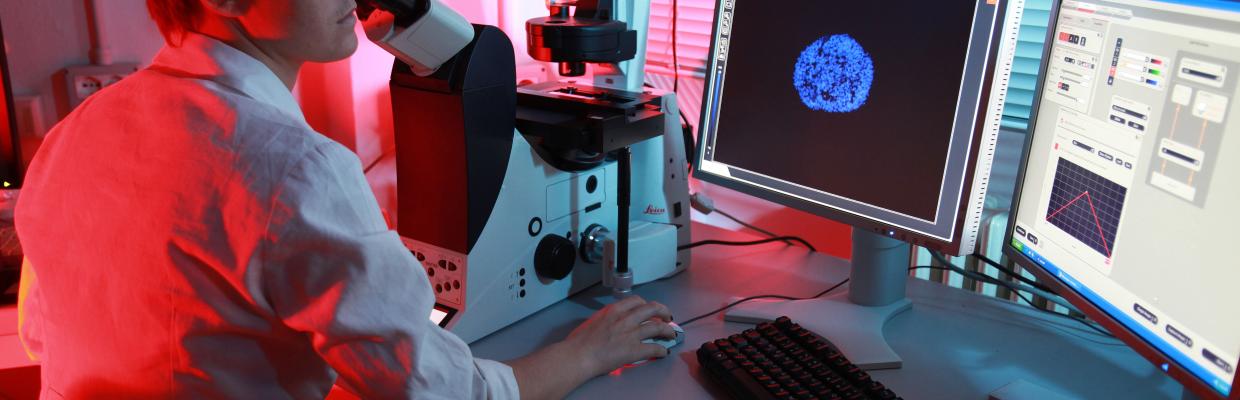
The BSc in Biological Sciences is built in accordance with the guidelines agreed and approved at national level by the CBUI (College of Biologists of Italian Universities) and is therefore one of the ?certified quality? study programs, both for employment and for further studies, as it guarantees the entry requirements for all the degree courses (MSc) in the LM-6 Biology class offered in Italy.
The BSc in Biological Sciences provides a solid preparation in basic mathematical, physical, statistical, computer, chemical and biological disciplines, supplemented by numerous characterising educational activities in the biological field that ensure multidisciplinary competences at the molecular, cellular and organismal level, also considering ecological and evolutionary aspects.
The specific educational objectives of the degree are to train graduates with an adequate interdisciplinary scientific background in the biological sciences, able to understand and interpret the main biological phenomena thanks to basic knowledge of mathematics, statistics, computer science, physics and chemistry; with a thorough theoretical knowledge of animal - including human - and plant biology and microbiology, addressing the study of living organisms at all levels of organisation and examining molecular, cellular, functional and environmental aspects; of the mechanisms of animal and plant reproduction and development; of the nature, transmission, expression and modification of hereditary material of the fundamental aspects of ecology, with regard to the presence and role of organisms and the interactions between the various components of ecosystems and the flows of matter and energy in the ecosphere; with a basic knowledge of the methodologies and technologies inherent to the relevant fields of biological investigation; with operational and applicative skills and abilities in the biological field, with particular reference to basic laboratory activities and the monitoring and control of biological, health and environmental parameters; with knowledge of the experimental scientific method and the ability to process and analyse experimental data; with skills for the communication and management of scientific information.
Graduates in Biological Sciences will be able to carry out technical-operational and professional support activities in the field of biology of animal and plant organisms and microorganisms (morphological/functional, chemical/biochemical, physiological, cellular/molecular, evolutionary, ecological/environmental aspects; mechanisms related to reproduction, development and heredity; relationships between living organisms; environmental and anthropic factors influencing their survival).
The graduate in Biological Sciences, in his function as biologist, has competences in animal and plant cell biology and biology of micro-organisms; in animal and plant systematics; in evolution; in ecology; in biological chemistry, molecular biology, genetics; in analytical techniques in the fields of genetics, histology, cytology, immunology, microbiology in man and animals; in analytical techniques in the fields of biochemistry and molecular biology; in analytical methodologies in the fields of ecology, biodiversity and its evolution and conservation, also in relation to the evaluation of the impact of the biological impact; in analytical techniques for quality control; in statistical and biostatistical analysis methods.
According to Presidential Decree 328/01, Biological Sciences graduates will be able to take the state examination for qualification as junior biologists and, if passed, obtain registration in the National Order of Biologists (section B). In order to achieve greater levels of responsibility, Biological Sciences graduates will be able to acquire further knowledge through access to Master's degree courses, activated both by the University of Milan and by other universities.
Employment opportunities:
- public and private laboratories for analysis, quality control, environmental protection, biotechnology in the biomedical, agri-food, zootechnical and floricultural fields
- freelancers or employees in working environments, such as the pharmaceutical, biochemical and food industries, requiring knowledge in the various fields of biology;
- institutions responsible for the protection of the environment and biodiversity, such as parks, museums, botanical gardens, biological, biochemical and environmental monitoring bodies;
- in the field of communication, dissemination and scientific information, scientific publishing in the field of biology.
Employment statistics (Almalaurea)
The admitted student will present a study plan including all the activities he/she intends to perform abroad, detailing the corresponding CFU: the number of proposed CFU should roughly correspond to those the student would achieve in the same time lapse remaining in his/her university. The study plan proposed by the student within the Erasmus+ program should be coherent with the Scienze Biologiche course and must be evaluated and approved by the Teaching Board. The Teaching Board, if necessary, will require the student to integrate the program of exams taken abroad. At the end of the Erasmus + program, according to the rules established by the Academic Senate, the approved exams will be recorded, possibly with the original denomination, as part of the student's curriculum upon conversion of the European Credit Transfer and Accumulation System (ECTS) into CFU. The contact person for the Biological Sciences area is prof.ssa Cristina Bonza ([email protected]).
Admission to the degree course in Biological Sciences is open to candidates in possession of a secondary school diploma or another qualification obtained abroad and recognised as suitable.
The knowledge required for admission is basic mathematics, physics, chemistry and science, as provided by secondary schools and will be verified by means of an entrance test, which is compulsory and selective. The knowledge required in relation to the preparation needed to take the entrance test is clearly stated on the website: http://www.cisiaonline.it/area-tematica-tolc-biologia/struttura-della-prova-e-syllabus.
Methods for verifying knowledge and personal preparation
For the academic year 2025/2026, the degree course in Biological Sciences is based on programmed access, in order to guarantee the quality of the teaching offer in relation to the available resources, and envisages the possibility of taking the TOLC-B (Test On Line CISIA [Consorzio Interuniversitario Sistemi Integrati per l'Accesso]) as an admission test, either remotely (TOLC@CASA mode) or in person (TOLC at the university), to be taken at all available TOLC centres, provided that they are carried out within the deadlines for each session, indicated in the admission notice. For first-year enrolment, 250 places are available. Applications for the TOLC must be made on the CISIA website (www.cisiaonline.it). The TOLC-B consists of the following sections: basic mathematics (20 questions - 50 minutes), biology (10 questions - 20 minutes), physics (10 questions - 20 minutes), chemistry (10 questions - 20 minutes). Each question has 5 possible answers, of which only one is correct. Score: +1 for each correct answer, -0.25 for each wrong answer, 0 for each answer not given. There is an additional English section in the TOLC, consisting of 30 questions to be completed in 15 minutes, the outcome of which does not count towards the test score.
The criterion on which the admission rankings will be based will be determined by the results of the test. The students who, having taken the TOLC-B test, will be enrolled in the selection for admission to the CdS in Biological Sciences will be placed in the merit list, formulated on the basis of the score in the test. Having been informed of the results, students who have been placed in the merit list will have to finalise their enrolment within the deadlines set out in the call for applications. For further details on the announcements, deadlines and admission procedures in the ranking list, please consult the page https://www.unimi.it/it/studiare/attend-a-course-of-graduation/enrol/enrol-a-first-graduation
Places available: 250 + 10 reserved for non-EU citizens + 10 reserved for students in the Marco Polo project
Call for applications
Please refer to the call for admission test dates and contents, and how to register.
Session: 1
Application for admission: from 12/03/2026 to 11/06/2026
Application for enrolment: from 18/06/2026 to 30/06/2026
Session: 2
Application for admission: from 02/07/2026 to 28/08/2026
Application for enrolment: from 17/09/2026 to 23/09/2026
Attachments and documents
Extension of Enrolments
From 25 September at 2:00 p.m., enrolments have been reopened and will remain open until all remaining places have been filled. Students who hold the required TOLC may enrol directly through the online enrolment service, even if they have not previously submitted an application for admission.
| Courses or activities | Max ECTS | Total hours | Language | SSD |
|---|---|---|---|---|
| Compulsory | ||||
| Calculus and Computer Laboratory | 9 | 90 | Italian | INFO-01/A MATH-01/A MATH-04/A |
| - Modulo: Laboratorio di informatica | 3 | 18 | INFO-01/A | |
| - Modulo: Matematica generale | 6 | 72 | MATH-01/A,MATH-04/A | |
| Cytology and Histology | 9 | 78 | Italian | BIOS-04/A |
| General Chemistry with Elements of Physical Chemistry | 6 | 56 | Italian | CHEM-02/A CHEM-03/A |
| Courses or activities | Max ECTS | Total hours | Language | SSD |
|---|---|---|---|---|
| Compulsory | ||||
| Organic Chemistry and Chemistry Laboratory | 9 | 104 | Italian | CHEM-03/A CHEM-05/A |
| - Modulo: Chimica organica | 6 | 56 | CHEM-05/A | |
| - Modulo: Laboratorio di chimica (con Prevenzione e Sicurezza) | 3 | 48 | CHEM-03/A,CHEM-05/A | |
| Physics, Physics Lab, Lab of Mathematical and Statistical Methodologies | 12 | 144 | Italian | MATH-03/B PHYS-05/B PHYS-06/A STAT-01/B |
| - Modulo: Fisica | 6 | 56 | PHYS-06/A | |
| - Modulo: Laboratorio di Fisica | 3 | 48 | PHYS-05/B | |
| - Modulo: Laboratorio di Metodi matematici e statistici | 3 | 40 | MATH-03/B,STAT-01/B | |
| Plant Biology and Systematics | 9 | 80 | Italian | BIOS-01/A BIOS-01/B |
| Courses or activities | Max ECTS | Total hours | Language | SSD |
|---|---|---|---|---|
| Compulsory | ||||
| Enghlish Assessment B1 | 3 | 0 | Italian | NN |
| Courses or activities | Max ECTS | Total hours | Language | SSD |
|---|---|---|---|---|
| Compulsory | ||||
| Animal Biology and Systematics | 9 | 80 | Italian | BIOS-03/A |
| Biochemistry | 9 | 80 | Italian | BIOS-07/A |
| Biological Evolution and History of Biology | 6 | 48 | Italian | PHIL-02/B |
| Optional | ||||
| Genetics | 9 | 80 | Italian | BIOS-14/A |
| Genetics | 9 | 80 | Italian | BIOS-14/A |
| Courses or activities | Max ECTS | Total hours | Language | SSD |
|---|---|---|---|---|
| Compulsory | ||||
| Comparative Anatomy | 6 | 52 | Italian | BIOS-04/A |
| Plant Physiology | 9 | 80 | Italian | BIOS-02/A |
| Optional | ||||
| Molecular Biology and Bioinformatics | 12 | 96 | Italian | BIOS-08/A |
| Molecular Biology and Bioinformatics | 12 | 96 | English | BIOS-08/A |
| Courses or activities | Max ECTS | Total hours | Language | Lesson period | SSD |
|---|---|---|---|---|---|
| Molecular Biology and Bioinformatics | 12 | 96 | English | Second semester | BIOS-08/A |
| Molecular Biology and Bioinformatics | 12 | 96 | Italian | Second semester | BIOS-08/A |
| Courses or activities | Max ECTS | Total hours | Language | SSD |
|---|---|---|---|---|
| Compulsory | ||||
| Developmental Biology | 6 | 48 | Italian | BIOS-01/A BIOS-04/A |
| Ecology | 9 | 80 | Italian | BIOS-05/A |
| Elements of Human Anatomy, Pharmacology and Immunology | 9 | 72 | Italian | BIOS-11/A BIOS-12/A MEDS-02/A |
| Optional | ||||
| Clinical Biochemistry | 6 | 48 | Italian | BIOS-09/A |
| Innovative Methods in Plant Biology | 6 | 56 | Italian | BIOS-01/A |
| Methods in Experimental Embryology | 6 | 48 | Italian | BIOS-04/A |
| Methods in Molecularbiology | 6 | 56 | Italian | BIOS-08/A |
| Courses or activities | Max ECTS | Total hours | Language | SSD |
|---|---|---|---|---|
| Compulsory | ||||
| General Microbiology | 9 | 80 | Italian | BIOS-15/A |
| General Physiology and Animal Physiology | 9 | 80 | Italian | BIOS-06/A |
| Optional | ||||
| Investigation Methodologies in Animal Cell Biology and Histology | 6 | 48 | Italian | BIOS-04/A BIOS-12/A BIOS-13/A |
| Methods in Applied Ecology | 6 | 48 | Italian | BIOS-05/A |
| Methods in Genetics and Human Genomics | 6 | 48 | Italian | BIOS-14/A |
| Methods in Pharmacology and Toxicology | 6 | 48 | Italian | BIOS-11/A |
| Plant Genomics Approaches to Adapt Plants to a Changing Climate and Environment | 6 | 56 | Italian | BIOS-14/A |
| Courses or activities | Max ECTS | Total hours | Language | SSD |
|---|---|---|---|---|
| Compulsory | ||||
| Internship in University Labs | 6 | 96 | Italian | NN |
| Final Exam | 3 | 0 | Italian | NN |
6 out of the 12 free choice CFU can be spent on internship activities of proven quality.
The Biology Academic Board will offer these courses:
| Courses or activities | Max ECTS | Total hours | Language | Lesson period | SSD |
|---|---|---|---|---|---|
| Clinical Biochemistry | 6 | 48 | Italian | First semester | BIOS-09/A |
| Innovative Methods in Plant Biology | 6 | 56 | Italian | First semester | BIOS-01/A |
| Methods in Experimental Embryology | 6 | 48 | Italian | First semester | BIOS-04/A |
| Methods in Molecularbiology | 6 | 56 | Italian | First semester | BIOS-08/A |
| Investigation Methodologies in Animal Cell Biology and Histology | 6 | 48 | Italian | Second semester | BIOS-04/A BIOS-12/A BIOS-13/A |
| Methods in Applied Ecology | 6 | 48 | Italian | Second semester | BIOS-05/A |
| Methods in Genetics and Human Genomics | 6 | 48 | Italian | Second semester | BIOS-14/A |
| Methods in Pharmacology and Toxicology | 6 | 48 | Italian | Second semester | BIOS-11/A |
| Plant Genomics Approaches to Adapt Plants to a Changing Climate and Environment | 6 | 56 | Italian | Second semester | BIOS-14/A |
- per sostenere l'esame di «Chimica Organica e Laboratorio di Chimica» è necessario avere superato l'esame di «Chimica Generale con Elementi di Chimica Fisica»
- per sostenere l'esame di «Chimica Biologica» è necessario aver superato l'esame di «Chimica Organica e Laboratorio di Chimica»
Inoltre, per sostenere gli esami del II anno è necessario aver superato i seguenti esami:
· «Matematica generale e Laboratorio di informatica»
· «Chimica Generale con Elementi di Chimica Fisica»
· «Citologia e Istologia»
Per sostenere gli esami del III anno è necessario aver superato tutti gli esami del I anno.
| Learning activity | Prescribed foundation courses |
|---|---|
| Animal Biology and Systematics | Calculus and Computer Laboratory (compulsory), Cytology and Histology (compulsory), General Chemistry with Elements of Physical Chemistry (compulsory) |
| Biochemistry | Calculus and Computer Laboratory (compulsory), Cytology and Histology (compulsory), General Chemistry with Elements of Physical Chemistry (compulsory), Organic Chemistry and Chemistry Laboratory (compulsory) |
| Biological Evolution and History of Biology | Calculus and Computer Laboratory (compulsory), Cytology and Histology (compulsory), General Chemistry with Elements of Physical Chemistry (compulsory) |
| Clinical Biochemistry | Calculus and Computer Laboratory (compulsory), Cytology and Histology (compulsory), Enghlish Assessment B1 (compulsory), General Chemistry with Elements of Physical Chemistry (compulsory), Organic Chemistry and Chemistry Laboratory (compulsory), Physics, Physics Lab, Lab of Mathematical and Statistical Methodologies (compulsory), Plant Biology and Systematics (compulsory) |
| Comparative Anatomy | Calculus and Computer Laboratory (compulsory), Cytology and Histology (compulsory), General Chemistry with Elements of Physical Chemistry (compulsory) |
| Developmental Biology | Calculus and Computer Laboratory (compulsory), Cytology and Histology (compulsory), Enghlish Assessment B1 (compulsory), General Chemistry with Elements of Physical Chemistry (compulsory), Organic Chemistry and Chemistry Laboratory (compulsory), Physics, Physics Lab, Lab of Mathematical and Statistical Methodologies (compulsory), Plant Biology and Systematics (compulsory) |
| Ecology | Calculus and Computer Laboratory (compulsory), Cytology and Histology (compulsory), Enghlish Assessment B1 (compulsory), General Chemistry with Elements of Physical Chemistry (compulsory), Organic Chemistry and Chemistry Laboratory (compulsory), Physics, Physics Lab, Lab of Mathematical and Statistical Methodologies (compulsory), Plant Biology and Systematics (compulsory) |
| Elements of Human Anatomy, Pharmacology and Immunology | Calculus and Computer Laboratory (compulsory), Cytology and Histology (compulsory), Enghlish Assessment B1 (compulsory), General Chemistry with Elements of Physical Chemistry (compulsory), Organic Chemistry and Chemistry Laboratory (compulsory), Physics, Physics Lab, Lab of Mathematical and Statistical Methodologies (compulsory), Plant Biology and Systematics (compulsory) |
| General Microbiology | Calculus and Computer Laboratory (compulsory), Cytology and Histology (compulsory), Enghlish Assessment B1 (compulsory), General Chemistry with Elements of Physical Chemistry (compulsory), Organic Chemistry and Chemistry Laboratory (compulsory), Physics, Physics Lab, Lab of Mathematical and Statistical Methodologies (compulsory), Plant Biology and Systematics (compulsory) |
| General Physiology and Animal Physiology | Calculus and Computer Laboratory (compulsory), Cytology and Histology (compulsory), Enghlish Assessment B1 (compulsory), General Chemistry with Elements of Physical Chemistry (compulsory), Organic Chemistry and Chemistry Laboratory (compulsory), Physics, Physics Lab, Lab of Mathematical and Statistical Methodologies (compulsory), Plant Biology and Systematics (compulsory) |
| Genetics | Calculus and Computer Laboratory (compulsory), Cytology and Histology (compulsory), General Chemistry with Elements of Physical Chemistry (compulsory) |
| Innovative Methods in Plant Biology | Calculus and Computer Laboratory (compulsory), Cytology and Histology (compulsory), Enghlish Assessment B1 (compulsory), General Chemistry with Elements of Physical Chemistry (compulsory), Organic Chemistry and Chemistry Laboratory (compulsory), Physics, Physics Lab, Lab of Mathematical and Statistical Methodologies (compulsory), Plant Biology and Systematics (compulsory) |
| Internship in University Labs | Calculus and Computer Laboratory (compulsory), Cytology and Histology (compulsory), Enghlish Assessment B1 (compulsory), General Chemistry with Elements of Physical Chemistry (compulsory), Organic Chemistry and Chemistry Laboratory (compulsory), Physics, Physics Lab, Lab of Mathematical and Statistical Methodologies (compulsory), Plant Biology and Systematics (compulsory) |
| Investigation Methodologies in Animal Cell Biology and Histology | Calculus and Computer Laboratory (compulsory), Cytology and Histology (compulsory), Enghlish Assessment B1 (compulsory), General Chemistry with Elements of Physical Chemistry (compulsory), Organic Chemistry and Chemistry Laboratory (compulsory), Physics, Physics Lab, Lab of Mathematical and Statistical Methodologies (compulsory), Plant Biology and Systematics (compulsory) |
| Methods in Applied Ecology | Calculus and Computer Laboratory (compulsory), Cytology and Histology (compulsory), Enghlish Assessment B1 (compulsory), General Chemistry with Elements of Physical Chemistry (compulsory), Organic Chemistry and Chemistry Laboratory (compulsory), Physics, Physics Lab, Lab of Mathematical and Statistical Methodologies (compulsory), Plant Biology and Systematics (compulsory) |
| Methods in Experimental Embryology | Calculus and Computer Laboratory (compulsory), Cytology and Histology (compulsory), Enghlish Assessment B1 (compulsory), General Chemistry with Elements of Physical Chemistry (compulsory), Organic Chemistry and Chemistry Laboratory (compulsory), Physics, Physics Lab, Lab of Mathematical and Statistical Methodologies (compulsory), Plant Biology and Systematics (compulsory) |
| Methods in Genetics and Human Genomics | Calculus and Computer Laboratory (compulsory), Cytology and Histology (compulsory), Enghlish Assessment B1 (compulsory), General Chemistry with Elements of Physical Chemistry (compulsory), Organic Chemistry and Chemistry Laboratory (compulsory), Physics, Physics Lab, Lab of Mathematical and Statistical Methodologies (compulsory), Plant Biology and Systematics (compulsory) |
| Methods in Molecularbiology | Calculus and Computer Laboratory (compulsory), Cytology and Histology (compulsory), Enghlish Assessment B1 (compulsory), General Chemistry with Elements of Physical Chemistry (compulsory), Organic Chemistry and Chemistry Laboratory (compulsory), Physics, Physics Lab, Lab of Mathematical and Statistical Methodologies (compulsory), Plant Biology and Systematics (compulsory) |
| Methods in Pharmacology and Toxicology | Calculus and Computer Laboratory (compulsory), Cytology and Histology (compulsory), Enghlish Assessment B1 (compulsory), General Chemistry with Elements of Physical Chemistry (compulsory), Organic Chemistry and Chemistry Laboratory (compulsory), Physics, Physics Lab, Lab of Mathematical and Statistical Methodologies (compulsory), Plant Biology and Systematics (compulsory) |
| Molecular Biology and Bioinformatics | Calculus and Computer Laboratory (compulsory), Cytology and Histology (compulsory), General Chemistry with Elements of Physical Chemistry (compulsory) |
| Organic Chemistry and Chemistry Laboratory | General Chemistry with Elements of Physical Chemistry (compulsory) |
| Plant Genomics Approaches to Adapt Plants to a Changing Climate and Environment | Calculus and Computer Laboratory (compulsory), Cytology and Histology (compulsory), Enghlish Assessment B1 (compulsory), General Chemistry with Elements of Physical Chemistry (compulsory), Organic Chemistry and Chemistry Laboratory (compulsory), Physics, Physics Lab, Lab of Mathematical and Statistical Methodologies (compulsory), Plant Biology and Systematics (compulsory) |
| Plant Physiology | Calculus and Computer Laboratory (compulsory), Cytology and Histology (compulsory), General Chemistry with Elements of Physical Chemistry (compulsory) |
Guidance:
Admission, ranking and enrolment
The Academic Services Office is located in the Department of Biosciences, Via Celoria, 26 - Milano (Tower C, ground Floor).
- Academic Services Office
Via Celoria, 26 (piano terra, torre C).
https://informastudenti.unimi.it/
[email protected]
Sportello su appuntamento, in modalità telematica o in presenza. Prenotazione dell'appuntamento via e‑mail: [email protected] - Student registrar
Via Celoria, 18
https://www.unimi.it/it/node/359/
Sportello online InformaStudenti: https://informastudenti.unimi.it/
+390250325032
https://www.unimi.it/it/node/360 - Representative for disability services and specific learning disabilities (appointed by the Academic Board):
Prof.ssa Diletta Dolfini
[email protected] - New student information center
Via Celoria, 26 (piano terra, torre C).
https://informastudenti.unimi.it/
[email protected]
Sportello su appuntamento, in modalità telematica o in presenza. Prenotazione dell'appuntamento via e‑mail: [email protected]
For students enrolled in Bachelor's, Master's and single-cycle degree programmes, tuition fees are to be paid in two instalments:
- the amount of the first instalment is the same for all students and is due upon enrolment
- the amount of the second instalment varies according to each student's ISEE University value and the degree programme in which they are enrolled
- for international students with income and assets abroad, the second instalment varies according to their country of origin.
Education incentive programmes and other benefits
The University offers scholarships, cafeterias, subsidised accommodation and other forms of financial support to students meeting specific economic and merit requirements.
More information