

Sustainable Agriculture
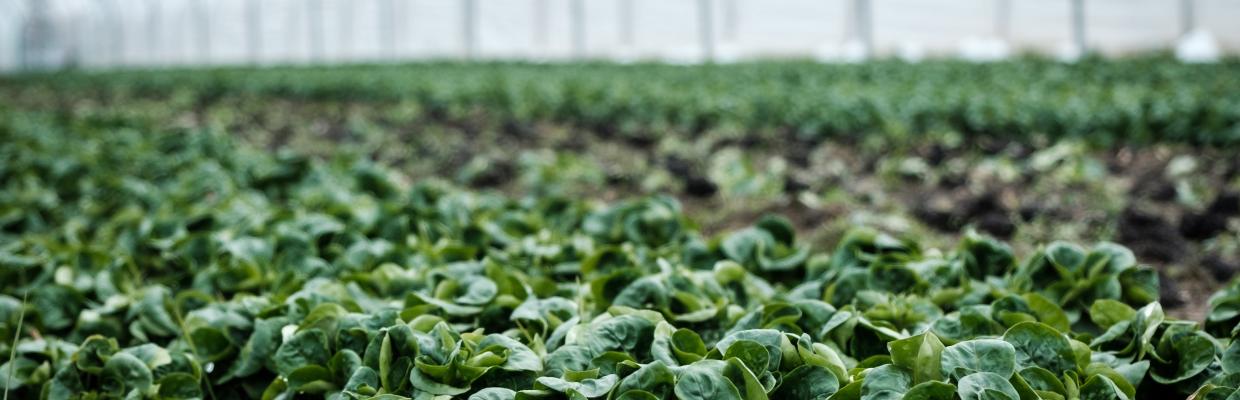
The received training provides a multidisciplinary preparation characterized by a high level of competence and consequently allows a high adaptability towards the world of work. The same training also represents an adequate basis for continuing the training path in a master's degree course.
The training aims to provide students with the knowledge and tools to design and manage production processes (plant and animal) that are compatible with the growing awareness that characterizes the consumer in terms of product quality and environmental sustainability, without neglecting economic sustainability.
Furthermore, the training is also oriented towards aspects not necessarily linked to primary production activities, such as the management of natural resources with particular reference to water and forestry, land management, management of public and private green areas, production of renewable energy, transformation and valorization of by-products in agriculture.
Among the training objectives, those relating to the acquisition of the concepts of bio-economy and circular economy are not secondary, in order to allow the graduate in Sustainable Agriculture to manage the entire production process and foreseeing or facilitating the use of by-products.
To achieve these objectives, the training path initially addresses the study of basic subjects, such as mathematics, physics, chemistry, biology, statistics and computer science. Subsequently, typical topics of agricultural sciences are addressed, providing knowledge on agro-ecosystems from a productive and sustainability perspective.
The in-depth study of chemical, biochemical and microbiological topics aims to provide tools for understanding the typical processes of plant and animal production.
The engineering disciplines (agricultural mechanics, agricultural hydraulics and rural constructions), and economics together with the previous ones, allow the graduate to be trained in the rational and sustainable use of technical means and techniques for managing the agricultural company.
The training continues with the in-depth study of specific topics, contained in dedicated training courses, in which further critical and applicative skills are developed.
The free-choice courses of the student will finally allow the training to be completed by also strengthening different skills, taking into account the student's aptitudes.
The student will achieve the training objectives through differentiated teaching methods. Depending on the training and professional characteristics, the teaching courses are divided into lectures, laboratory and field exercises, seminars on topics of specific interest, educational visits, and so on.
The student, in addition, will have to carry out a period of internship, externally to the Faculty (Institutions, Research Institutes, companies, public administration, third sector organizations, other Italian or foreign universities) or at a university laboratory, in order to acquire practical skills in a topic of the training course. The internship activity constitutes the subject of the final exam.
Function in a work context:
The graduate in Sustainable Agriculture carries out planning, management and executive functions in the agricultural, livestock and environmental sectors and in the supply chains connected to them. The graduate manages the main aspects of herbaceous and arboreal plant production (processing, fertilization, crop, defense, irrigation, harvesting) and animal production (breeding and feeding systems in compliance with animal welfare, management of housing and production structures and effluents) applying planning, management and executive knowledge to combine profitability needs with environmental sustainability and the quality of the products obtained.
The graduate supports the marketing actions of the products obtained from plant and animal production as well as the management of the marketing of the products.
The graduate actively participates in research and development actions related to the tools needed for plant production (fertilizers, pesticides, agricultural machinery) and animal production (feed, supplements, technological systems) and deals with their sale by exploiting the technical knowledge of the product.
The graduate participates in the development of agricultural businesses by providing technical assistance services to the agricultural company, both in the field of plant and animal production, according to the company's technical and administrative procedures.
In addition, the graduate also deals with aspects not directly linked to primary production activities, such as the management of natural resources, land management, the production of renewable energy, the transformation of products in the company and the management of by-products. He participates in environmental monitoring activities, in the implementation of projects for the recovery of polluted areas and in the management of plants for the transformation of biomass with a high environmental impact.
skills associated with the function:
The skills acquired during the course of studies, which will allow the above functions to be carried out, refer directly to the characterizing and related teachings of the course of study and specifically concern: cultivation techniques, agronomic techniques for the production and defense of plant crops, animal feeding and breeding techniques, technical and applicative knowledge of engineering disciplines relevant to the agricultural area (mechanics, agricultural machinery, construction and systems, hydraulic works), the principles of economics and the analytical bases for the economic management of the agricultural system also with technical functions of environmental protection, recovery and enhancement of natural resources.
employment opportunities:
The above functions will be carried out within:
? Agricultural companies, including those that provide environmental services.
? Agritourism companies and companies oriented towards the transformation and direct sale of their products.
? Public agencies for agriculture, land and the environment (e.g. Regions, Municipalities, Mountain Communities, Water Authorities, National and Regional Environmental Agencies, Land Reclamation and Irrigation Consortia, Mountain Catchment Basin Consortia, Parks and Protected Areas).
? Professional associations.
? International and non-governmental organizations involved in development projects in the agricultural field.
? Freelance professionals, individually or within professional firms operating in the field of agricultural, livestock and natural systems.
? Service companies and laboratories operating in the enhancement and protection of the environment and the territory, in environmental monitoring and recovery, in wastewater management, in environmental remediation, in the creation and maintenance of green areas and soil protection works and interventions.
? Companies providing services for agriculture and livestock (e.g. administrative assistance, agronomic consultancy, agromechanical companies).
? Companies supplying technical instruments for agriculture and livestock farming (e.g. fertilizers, pesticides, feed and food supplements).
? Companies supplying structures and systems for agriculture and livestock farming (e.g. irrigation systems, milking systems).
? Companies supplying agricultural machinery.
? Agricultural consortia, producer associations, trade associations, agricultural cooperatives.
? Companies processing, marketing and distributing agri-food products.
Employment statistics (Almalaurea)
Applicants to this degree programme must hold an upper secondary-school diploma or equivalent qualification obtained abroad, and adequate knowledge. In particular, candidates must have a good understanding of basic scientific subjects (mathematics, physics, chemistry, biology), as provided by upper-secondary school, as well as reasoning skills and written and oral presentation skills in Italian. The students' background will be assessed in accordance with academic regulations for the degree programme. Any additional learning requirements resulting from the aforementioned assessment must be met within the first year of the programme.
Admission assessment
Admission to this Bachelor's degree programme is open, subject to a mandatory, non-selective, assessment test before enrolment. The test will ascertain that the candidate meets admission requirements, i.e. knowledge of key science subjects as provided by upper secondary school, and an understanding of elementary logic. The test required for admission into the degree programme is TOLC-AV, an online test provided by the Consortium of InterUniversity Integrated Access Systems (CISIA - https://www.cisiaonline.it). For test topics and details, please review the page https://www.cisiaonline.it/en/area-tematica-tolc-agrariaveterinaria/struttura-della-prova-e-syllabus/ You may sit for the TOLC-AV test at the University of Milan or any other member university of CISIA. The calendar with available venues and dates is posted to the page https://tolc.cisiaonline.it/calendario.php?l=gb. Registration procedures and deadlines are set out in the call for applications posted to the page https://agricolturasostenibile.cdl.unimi.it/it/iscriversi The test results will be notified to each student individually, highlighting any additional learning requirements. To meet any additional learning requirements, the Faculty offers students remedial online courses and extracurricular tutoring at the beginning of classes. We strongly recommend that anyone with additional learning requirements use these services.
Admission of transfer or graduate students
Transfer students from a degree programme of the University of Milan, or another university, and graduate students will be waived from the test requirement only if admitted to years subsequent to Year I. To this end, they will have to submit aspecific request for prior assessment of their academic records using the online service as shown in the call for applications. These candidates must provide a full transcript of records (listing exams, subject areas, credits, grades) and attach the course syllabi. For more details and dates, please refer to the call for applications. Students admitted to the first year must take the test.
Additional learning requirements (OFA) and remedial activities
Students admitted to the course of study who do not achieve a score higher than 3 in the Mathematics section of the TOLC-AV are assigned additional learning obligations (OFA). Remedial activities will be organized for students with OFA (in the period October-December), both as online exercises on an e-learning platform and as discussion sessions with a tutor. After participating in remedial activities, new students will have to take a final assessment test. Mathematics OFA are prerequisites for all second- and third-year exams. For students who have not passed the OFA final test during the first year, passing the Mathematics exam is a prerequisite for all second- and third-year exams. Learn more at https://agricolturasostenibile.cdl.unimi.it/it/studiare/le-matricole.
Call for applications
Please refer to the call for admission test dates and contents, and how to register.
Application for enrolment: from 15/07/2026 to 12/03/2027
Attachments and documents
Please note: students holding a qualification obtained abroad
In order to complete their enrolment, students holding a qualification obtained abroad must submit the required documentation by 30 November 2026 through the Enrolment Document Integration Service https://studente.unimi.it/uploadDocumentiImmatricolazione
| Courses or activities | Max ECTS | Total hours | Language | SSD |
|---|---|---|---|---|
| Compulsory | ||||
| Fundamental Biology and Botanics for Agriculture | 12 | 108 | Italian | BIOS-01/A BIOS-02/A |
| General and Inorganic Chemistry | 6 | 56 | Italian | CHEM-03/A |
| Mathematics | 6 | 72 | Italian | MATH-04/A |
| Courses or activities | Max ECTS | Total hours | Language | SSD |
|---|---|---|---|---|
| Compulsory | ||||
| Basic Statistics with Computer Applications | 6 | 64 | Italian | NN |
| Fundamental Economics | 6 | 48 | Italian | AGRI-01/A |
| Organic Chemistry | 6 | 56 | Italian | CHEM-05/A |
| Physics | 6 | 64 | Italian | PHYS-06/A |
| Courses or activities | Max ECTS | Total hours | Language | SSD |
|---|---|---|---|---|
| Compulsory | ||||
| English Assessment B1 (3 ECTS) | 3 | 0 | English | NN |
| Courses or activities | Max ECTS | Total hours | Language | SSD |
|---|---|---|---|---|
| Compulsory | ||||
| Agricultural Genetics | 6 | 56 | Italian | AGRI-06/A |
| Microbiology | 6 | 56 | Italian | AGRI-08/A |
| Soil and Plant Science | 14 | 112 | Italian | AGRI-06/B |
| - Biochimica agraria e fisiologia delle piante coltivate | 8 | 64 | AGRI-06/B | |
| - Chimica del suolo | 6 | 48 | AGRI-06/B | |
| Courses or activities | Max ECTS | Total hours | Language | SSD |
|---|---|---|---|---|
| Compulsory | ||||
| Agricultural Hydraulics | 6 | 60 | Italian | AGRI-04/A |
| Agricultural Machinery | 6 | 64 | Italian | AGRI-04/B |
| Agronomy | 6 | 57 | Italian | AGRI-02/A |
| Animal Husbandry | 12 | 116 | Italian | AGRI-09/B AGRI-09/C MVET-01/A |
| Courses or activities | Max ECTS | Total hours | Language | SSD |
|---|---|---|---|---|
| Compulsory | ||||
| Stage | 6 | 0 | Italian | NN |
| Courses or activities | Max ECTS | Total hours | Language | SSD |
|---|---|---|---|---|
| Compulsory | ||||
| Fundamentals of Entomology and Plant Pathology | 8 | 72 | Italian | AGRI-05/A AGRI-05/B |
| Courses or activities | Max ECTS | Total hours | Language | SSD |
|---|---|---|---|---|
| Compulsory | ||||
| Agricultural, Agro-Food and Agro-Environmental Economics | 8 | 72 | Italian | AGRI-01/A |
| Farm Structures | 6 | 60 | Italian | AGRI-04/C |
| Optional | ||||
| Animal Production | 10 | 100 | Italian | AGRI-09/B AGRI-09/D |
| Floriculture and Turfgrasses | 6 | 52 | Italian | AGRI-02/B |
| Gis (Geographical Information System) for Rural Land | 4 | 56 | Italian | AGRI-04/C |
| Green Chemistry and Renewable Energy in Agriculture | 10 | 84 | Italian | AGRI-04/B AGRI-06/B |
| Interaction of Agrochemicals with the Environment | 10 | 88 | Italian | AGRI-06/A BIOS-05/A CHEM-05/A |
| Postharvest Physiology and Quality of Horticultural Commodities | 6 | 56 | Italian | AGRI-03/A |
| Survey, Map Drawing and Materials for Green Areas | 6 | 52 | Italian | AGRI-04/C |
| Sustainability and Enhancement of Sheep, Goat, Buffalo and Camelid Farming | 4 | 40 | Italian | AGRI-09/B AGRI-09/C |
| Technologies for Produce Processing | 10 | 96 | Italian | AGRI-07/A |
| Viticulture | 6 | 52 | Italian | AGRI-03/A |
| Courses or activities | Max ECTS | Total hours | Language | SSD |
|---|---|---|---|---|
| Compulsory | ||||
| Field Crops and Fruit Tree Production | 10 | 92 | Italian | AGRI-02/A AGRI-03/A |
| - Coltivazioni arboree | 5 | 48 | AGRI-03/A | |
| - Coltivazioni erbacee | 5 | 44 | AGRI-02/A | |
| Optional | ||||
| Animal Welfare and Extensive Husbandry System | 10 | 96 | Italian | AGRI-09/B AGRI-09/C |
| Beekeeping | 4 | 40 | Italian | AGRI-05/A |
| Biomass Valorisation and Emissions Reduction | 10 | 104 | Italian | AGRI-04/C AGRI-06/B |
| Farm Processing and Marketing of Agri-Food Products | 10 | 94 | Italian | AGRI-01/A AGRI-04/B AGRI-04/C |
| Farming in the Alps | 4 | 40 | Italian | AGRI-09/C |
| History of Agriculture | 4 | 32 | Italian | AGRI-01/A |
| Morphological Evaluation and Ethnology in Animal Production | 4 | 32 | Italian | AGRI-09/A |
| Nutrients Cycle in Soil-Plant Systems | 10 | 80 | Italian | AGRI-06/B AGRI-08/A |
| Ornamental Arboriculture and Urban Forestry | 6 | 60 | Italian | AGRI-03/A |
| Courses or activities | Max ECTS | Total hours | Language | SSD |
|---|---|---|---|---|
| Compulsory | ||||
| Final Exam | 3 | 0 | Italian | NN |
Agro-environmental track:
| Courses or activities | Max ECTS | Total hours | Language | Lesson period | SSD |
|---|---|---|---|---|---|
| Interaction of Agrochemicals with the Environment | 10 | 88 | Italian | First semester | AGRI-06/A BIOS-05/A CHEM-05/A |
| Nutrients Cycle in Soil-Plant Systems | 10 | 80 | Italian | Second semester | AGRI-06/B AGRI-08/A |
| Courses or activities | Max ECTS | Total hours | Language | Lesson period | SSD |
|---|---|---|---|---|---|
| Green Chemistry and Renewable Energy in Agriculture | 10 | 84 | Italian | First semester | AGRI-04/B AGRI-06/B |
| Biomass Valorisation and Emissions Reduction | 10 | 104 | Italian | Second semester | AGRI-04/C AGRI-06/B |
| Courses or activities | Max ECTS | Total hours | Language | Lesson period | SSD |
|---|---|---|---|---|---|
| Animal Production | 10 | 100 | Italian | First semester | AGRI-09/B AGRI-09/D |
| Animal Welfare and Extensive Husbandry System | 10 | 96 | Italian | Second semester | AGRI-09/B AGRI-09/C |
| Courses or activities | Max ECTS | Total hours | Language | Lesson period | SSD |
|---|---|---|---|---|---|
| Technologies for Produce Processing | 10 | 96 | Italian | First semester | AGRI-07/A |
| Farm Processing and Marketing of Agri-Food Products | 10 | 94 | Italian | Second semester | AGRI-01/A AGRI-04/B AGRI-04/C |
| Courses or activities | Max ECTS | Total hours | Language | Lesson period | SSD |
|---|---|---|---|---|---|
| Floriculture and Turfgrasses | 6 | 52 | Italian | First semester | AGRI-02/B |
| Gis (Geographical Information System) for Rural Land | 4 | 56 | Italian | First semester | AGRI-04/C |
| Postharvest Physiology and Quality of Horticultural Commodities | 6 | 56 | Italian | First semester | AGRI-03/A |
| Survey, Map Drawing and Materials for Green Areas | 6 | 52 | Italian | First semester | AGRI-04/C |
| Sustainability and Enhancement of Sheep, Goat, Buffalo and Camelid Farming | 4 | 40 | Italian | First semester | AGRI-09/B AGRI-09/C |
| Viticulture | 6 | 52 | Italian | First semester | AGRI-03/A |
| Beekeeping | 4 | 40 | Italian | Second semester | AGRI-05/A |
| Farming in the Alps | 4 | 40 | Italian | Second semester | AGRI-09/C |
| History of Agriculture | 4 | 32 | Italian | Second semester | AGRI-01/A |
| Morphological Evaluation and Ethnology in Animal Production | 4 | 32 | Italian | Second semester | AGRI-09/A |
| Ornamental Arboriculture and Urban Forestry | 6 | 60 | Italian | Second semester | AGRI-03/A |
Guidance:
Admission, ranking and enrolment
- Degree programme head
[email protected]
+390250316499 - Course management for the Faculty of Agricultural and Food Sciences (Science and Technology area)
via Celoria 2 - Milano Città Studi
https://informastudenti.unimi.it/saw/ess?AUTH=SAML
+390250316511
Orario di apertura al pubblico: lunedì dalle 10 alle 12 e dalle 14 alle 16 - Student registrar
via Celoria 18 - Milano Città Studi
https://www.unimi.it/it/node/359
+390250325032
https://www.unimi.it/it/node/360
For students enrolled in Bachelor's, Master's and single-cycle degree programmes, tuition fees are to be paid in two instalments:
- the amount of the first instalment is the same for all students and is due upon enrolment
- the amount of the second instalment varies according to each student's ISEE University value and the degree programme in which they are enrolled
- for international students with income and assets abroad, the second instalment varies according to their country of origin.
Education incentive programmes and other benefits
The University offers scholarships, cafeterias, subsidised accommodation and other forms of financial support to students meeting specific economic and merit requirements.
More information