

Molecular Biotechnology and Bioinformatics
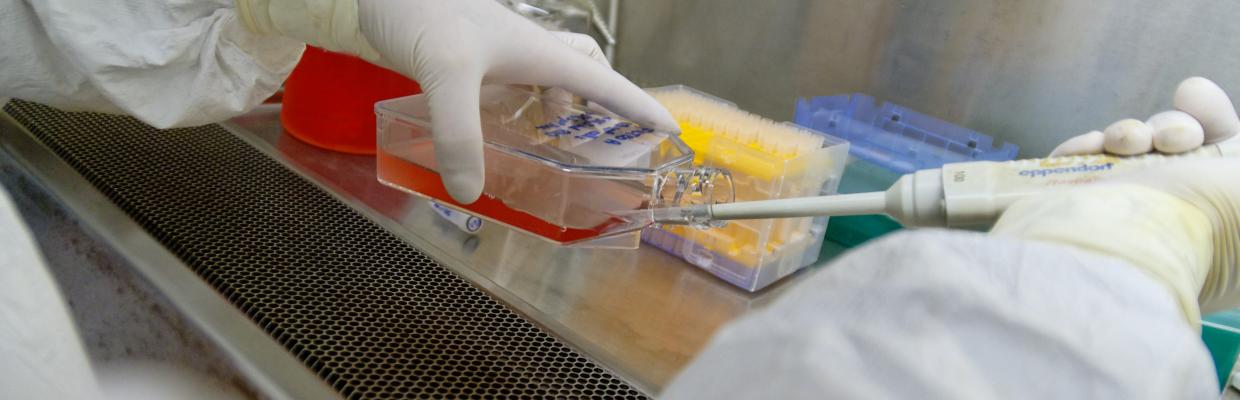
The program is delivered in English, providing graduates with a competitive edge in the global job market. It emphasizes critical application of the scientific method to biological systems, offering:
- A comprehensive understanding of the physical, chemical, structural, molecular, and cellular aspects of biological systems.
- Expertise in advanced analytical and bioinformatics methodologies for the analysis and integration of genomics, proteomics, and metabolomics data.
- Skills to design, improve, and implement biotechnological processes, services, and applications with an interdisciplinary approach.
This curriculum integrates core chemical, biological, and technological disciplines relevant to industrial biotechnology.
Related and complementary activities allow students to specialize in areas such as microbial, animal, and plant biotechnology.
In the first year, students will gain a strong theoretical and practical foundation in biotechnology core disciplines. In the first and second years, students can also tailor their learning experience through elective courses as well as develop soft skills and language competencies, aligning with their professional and academic goals.
A significant portion of the second year is dedicated to an experimental thesis leading to a final dissertation. Students will work in cutting-edge research laboratories, either at the university or within national or international public or private facilities. This hands-on experience enables students to apply their knowledge, refine their scientific investigation skills, and master modern analytical and instrumental techniques. The thesis process also enhances their abilities to analyze, process, and present scientific data effectively.
Graduates will be able to assume high-level responsibilities, managing the ethical, technical, and legal aspects of their work within their areas of expertise. The MB&B program's comprehensive training across a wide range of biotechnological disciplines also serves as a solid foundation for further academic pursuits, such as Ph.D. programs or other advanced degrees.
MB&B graduates can pursue careers in industries such as pharmaceuticals, chemicals, food production, environmental biotechnology, and biotechnology services. They will also be qualified to work in genomics and proteomics research laboratories, whether in public or private institutions. Relevant professions include biologist, biochemist, biophysicist, and biotechnologist, among others.
Employment statistics (Almalaurea)
The time spent abroad can be used to attend courses and take the relevant exams, thus earning credits towards the Master's degree, and to carry out the experimental project of the dissertation. Students admitted to the mobility programme must submit a study plan detailing the training activities they intend to undertake and the corresponding credits. The number of credits should, as far as possible, correspond to the number of credits that the student should acquire in a similar period at the home university. The proposed activities must be consistent with the objectives and content of the Master's programme.
The MB&B Student Mobility Committee must approve the study plan and/or request changes or additions. The MB&B Student Mobility Committee must approve the study plan and/or request changes or additions. At the end of the mobility programme, according to the guidelines of the University of Milan, the courses attended by the student (with a passed exam) will be recorded in his/her transcript, preferably with the original name and with the ECTS (European Credit Transfer and Accumulation System) and its conversion into CFU (usually 1 ECTS = 1 CFU). Students wishing to complete their dissertation abroad must have an internal supervisor (chosen from among the MB&B faculty) and the study plan must be approved by the MB&B Board.
The MB&B Master's degree is open to graduates of the Laurea Triennale of the L-2 class (Biotechnology) and the previous class 1 (Biotechnology). It is also open to students with a Laurea Triennale with a strong background (at least 60 University Credits (CFU)) in biotechnology-related subjects, including at least 36 CFU in biochemistry, molecular biology, genetics and microbiology; at least 10 CFU in mathematics, physics, computer science and statistics; at least 10 CFU in chemistry.
Students with a degree from a non-Italian institution:
Candidates must hold a bachelor's degree from an accredited university or college at the time of application and have a good knowledge in all the following areas: biochemistry, molecular biology, genetics and microbiology. Sufficient knowledge in the disciplines of mathematics, physics, chemistry, computer science, and statistics is also required. A commission, appointed by the Academic Board, is responsible for collegially analyzing the curriculum studiorum of applicants to verify that the minimum requirements for admission are met. If deemed necessary, the commission may integrate this documentary assessment with other forms of assessment, including interviews. The master's degree does not have a programmed number of students, with a maximum of 25 places reserved for non-EU students residing outside Italy.
In addition to the above curricular requirements, English language proficiency equivalent to or higher than level B2 of the Common European Framework of Reference for Languages (CEFR) is required.
Proficiency in English at a B2 level or higher per the Common European Framework of Reference for Languages (CEFR) is required for admission.
The B2-level requirement will be ascertained by the University Language Centre (SLAM) upon admission as follows:
- Language certificate of B2 or higher level issued no more than three years before the date of admission application. You will find the list of language certificates recognized by the University at: https://www.unimi.it/en/node/39322. The certificate must be uploaded when submitting the online application;
- English level achieved during a University of Milan degree programme and certified by the University Language Centre (SLAM) no more than four years before the date of admission application, including levels based on language certificates submitted by the applicant during their Bachelor's degree at the University of Milan. In this case the process is automatic, the applicant does not have to attach any certificates to the application;
- Entry test administrated by the University Language Centre (SLAM) according to the calendar published on the website: (https://www.unimi.it/en/node/39267/)
All those who fail to submit a valid certificate or do not meet the required proficiency level will be instructed during the admission procedure to take the Entry test.
Applicants who do not take or pass the Entry test will be required to obtain a language proficiency certificate recognized by the University (see https://www.unimi.it/en/node/39322) and deliver it to the SLAM via the InformaStudenti service by the deadline fixed for the master's programme (https://www.unimi.it/en/node/39267/).
Applicants who do not meet the requirement by said deadline will not be admitted to the master's degree programme and may not sit any further tests.
Eligibility assessment
The admission process includes an evaluation of the applicant's undergraduate curriculum by an Admissions Committee consisting of the Program Coordinator and one or more faculty members. The personal preparation is considered adequate if the score obtained in the BSc is higher than 88/110 or 23/30 as an average of all exam scores for students who have not yet obtained the BSc. The purpose of the examination is to determine whether the candidate has the necessary preparation in the basic subjects. If necessary, the Commission may require the candidate to integrate the information provided. Successful applicants will be notified of their eligibility and may proceed with enrollment in the Master's program.
For detailed information on the application process, please visit: https://www.unimi.it/en/study/bachelor-and-master-study/degree-programme-enrolment/enrolment-masters-programme/open-admission-master-programmes.
The Admissions Committee may request an interview or other forms of evaluation to further assess the applicant's qualifications. For non-EU applicants who require a visa, the application deadline is April 30, 2025, due to the visa processing time and the limited number of available places, as stipulated by current regulations.
Admission
Application for admission: from 22/01/2025 to 25/08/2025
Application for matriculation: from 02/04/2025 to 15/01/2026
Admissions A.Y. 2026/2027
Admission applications for Academic Year 2026/2027 are now open. Non-EU students visa applicants are required to apply for admission no later than 30 April 2026.
| Courses or activities | Max ECTS | Total hours | Language | SSD |
|---|---|---|---|---|
| Compulsory | ||||
| Biotechnological Products and Processes | 6 | 48 | English | CHIM/06 CHIM/11 |
| Functional Genomics and Bioinformatics | 10 | 88 | English | BIO/11 BIO/18 |
| Methods in Bioinformatics | 6 | 48 | English | INF/01 |
| Molecular and Cellular Microbiology | 6 | 48 | English | BIO/18 BIO/19 |
| Rational Design and Structural Characterization of Bioactive Molecules | 6 | 48 | English | CHIM/02 CHIM/06 |
| Optional | ||||
| Bioimaging | 6 | 56 | English | FIS/03 FIS/07 |
| Biotechnological and Molecular Strategies in the Control of Parasites and Vector-Borne Pathogens | 6 | 48 | English | VET/06 |
| Nanotechnology for Biomedical Applications and Biosensors | 6 | 48 | English | CHIM/01 CHIM/06 |
| Patenting and Technology Transfer | 6 | 64 | English | AGR/01 IUS/01 IUS/04 |
| Structural Bioinformatics | 6 | 56 | English | FIS/07 |
| Courses or activities | Max ECTS | Total hours | Language | SSD |
|---|---|---|---|---|
| Compulsory | ||||
| Advanced Molecular and Cellular Biotechnology | 10 | 80 | English | BIO/06 BIO/11 |
| Advanced Plant Cell Biotechnology | 6 | 48 | English | BIO/04 BIO/18 |
| Protein Engineering and Molecular Enzymology | 6 | 48 | English | BIO/10 |
| Optional | ||||
| Advanced Bioinformatics for Biotechnology | 6 | 48 | English | BIO/11 INF/01 |
| Macromolecular Structural Biology | 6 | 64 | English | BIO/10 |
| Molecular Breeding and Plant Genetics | 6 | 48 | English | AGR/07 BIO/18 |
| Courses or activities | Max ECTS | Total hours | Language | SSD |
|---|---|---|---|---|
| Optional | ||||
| Additional Language Skills: Italian (3 ECTS) | 3 | 0 | Italian | NN |
| Courses or activities | Max ECTS | Total hours | Language | Lesson period | SSD |
|---|---|---|---|---|---|
| Advanced Bioinformatics for Biotechnology | 6 | 48 | English | Second semester | BIO/11 INF/01 |
| Bioimaging | 6 | 56 | English | First semester | FIS/03 FIS/07 |
| Biotechnological and Molecular Strategies in the Control of Parasites and Vector-Borne Pathogens | 6 | 48 | English | First semester | VET/06 |
| Macromolecular Structural Biology | 6 | 64 | English | Second semester | BIO/10 |
| Molecular Breeding and Plant Genetics | 6 | 48 | English | Second semester | AGR/07 BIO/18 |
| Nanotechnology for Biomedical Applications and Biosensors | 6 | 48 | English | First semester | CHIM/01 CHIM/06 |
| Patenting and Technology Transfer | 6 | 64 | English | First semester | AGR/01 IUS/01 IUS/04 |
| Structural Bioinformatics | 6 | 56 | English | First semester | FIS/07 |
| Courses or activities | Max ECTS | Total hours | Language | SSD |
|---|---|---|---|---|
| Compulsory | ||||
| Laboratory Training | 7 | 0 | English | NN |
| Thesis Project and Final Dissertation | 30 | 0 | English | NN |
| Courses or activities | Max ECTS | Total hours | Language | SSD |
|---|---|---|---|---|
| Optional | ||||
| Other Training Activities | 3 | 0 | English | NN |
| Courses or activities | Max ECTS | Total hours | Language | Lesson period | SSD |
|---|---|---|---|---|---|
| Additional Language Skills: Italian (3 ECTS) | 3 | 0 | Italian | Open sessions | NN |
| Other Training Activities | 3 | 0 | English | Open sessions | NN |
- Academic Services Office
Milan - Via Celoria, 26
https://informastudenti.unimi.it/
By appointment - Student administrative office
Milan - Via Celoria, 18
https://www.unimi.it/en/study/student-services/welcome-desk-informastudenti/student-desks-locations-and-opening-hours
+390250325032
The front offices receive in the days and times indicated on the webpage - International Students Office - Welcome Desk
Milan - Via S. Sofia, 9/1
https://www.unimi.it/en/international/coming-abroad/international-students-office-welcome-desk - Industrial Biotechnology Academic Board
http://www.unimi.it/en/education/faculties-and-schools/science-and-technology/industrial-biotechnology - Boards
Prof. Veronica Gregis, Prof. David Horner (Erasmus); Prof. Carlo Camilloni, Prof. David Horner (Study mobility); Prof. Carlo Camilloni, Prof. Thomas Vaccari (Study Plan); Prof. Carlo Camilloni, Prof. Federico Zambelli (Admission). - Disability manager
Prof. Matteo Chiara - Deputy Head of Study Programme
Prof. Federico Zambelli
The tuition fees for students enrolled in Bachelor's, Master's and single-cycle degree programmes are divided into two instalments with different calculation methods and payment schedules:
- The amount of the first instalment is the same for all students
- The amount of the second instalment varies according to the ISEE University value, the degree programme and the student status (on track / off track for one year or off track for more than a year)
- An additional fee is due for online programmes
The University also offers:
- Concessions for students meeting high merit requirements
- Diversified tuition fees according to the student's home country for international students with assets/income abroad
- Concessions for international students with refugee status
Scholarships and benefits
The University provides a range of financial benefits to students meeting special requirements (merit, financial or personal conditions, international students).
Learn more
Guidance:
Admission, ranking and enrolment