

Valorization and Sustainable Development of Mountain Areas
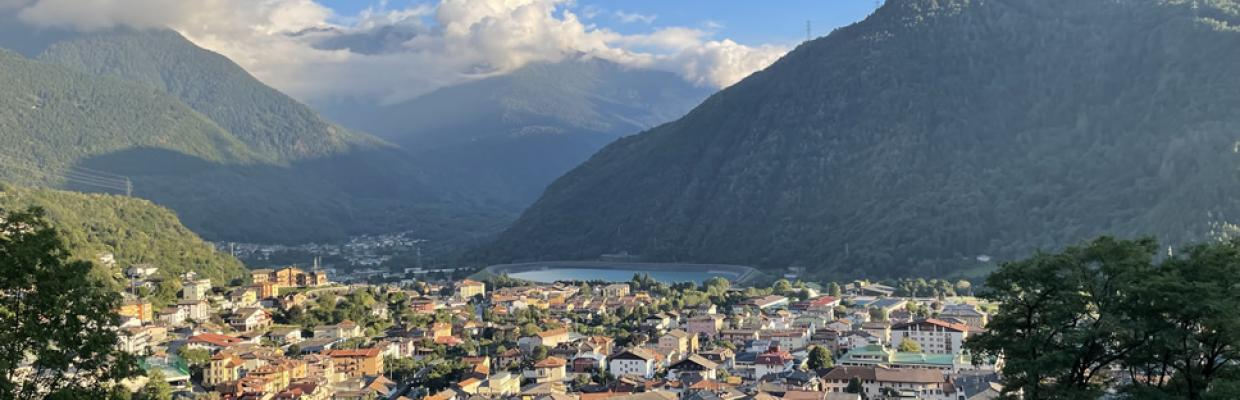
The master's degree program will allow graduates to acquire concrete knowledge, skills and abilities specific to the environmental characteristics of mountain agro-forest ecosystems, specific technologies and methods for monitoring and sustainable management of the mountain environment and its resources, and to optimize the services rendered (ecosystem services, tourism, etc.) and the products that can be obtained. Indeed, the training aims to promote the sustainable enhancement of the specific resources of mountain territories in strategic sectors for the economy such as tourism (e.g., planning and promotion of greenways and paths, dissemination/environmental education), energy from renewable sources, as well as (with regard to "bio-resources" and mountain agrobiodiversity) traditional local short supply chains (e.g. agritourism companies, catering, crafts, etc.) but also in typical industrial supply chains in various sectors such as agri-food, medicinal/health, nutraceutical, cosmetic, manufacturing (e.g. textile) biotechnology, or in the context of the bioeconomy and the circular economy. The specific knowledge, skills and competence of a historical-geographical, juridical-legislative and economic nature will allow the graduate to contribute to the development of business, marketing (product, service and territorial strategies) appropriate to the mountain context, both for the start-up of new businesses and for the planning and management of interventions in the context of programs and strategies for the development of these areas. Furthermore, the expert professional of the mountain territory knows how to use effective communication techniques and methodologies (transversal skills applicable across a range of sectors) including the most innovative digital technologies (web, social, etc.).
This is essential to effective interaction with service and innovation centres, between the mountain and urban, local and "global" scales, for continuous training, networking, technical-scientific dissemination and outreach, as well as the marketing of the territory and its products and services. The master's degree in VALORIZATION AND SUSTAINABLE DEVELOPMENT OF MOUNTAIN AREAS is characterized by unique elements with regard to training for the management and sustainable development of mountain territories, including international orientation (the inclusion of these territories in an international framework of dialogue is essential to their development) and multidisciplinarity. Another unique aspect is the logistical location of the course, which takes place entirely at the UNIMONT pole of the University of Milan, which has been active for 25 years at Edolo (a mountain municipality in the central Alps) exclusively dedicated to the development of mountain areas through teaching, research and third mission activities. The location of the centre favours teaching within the mountain environment and gives students the opportunity to experience, on a day-to-day basis, the characteristics of the territory that, as professionals, they will influence. However, from a methodological and operational point of view students are guaranteed an experience that is anything but "local", as UNIMONT is part of an "ecosystem" that includes the main sector stakeholders at regional, national and international levels, effectively connecting the local dimension with the supralocal, facilitating the processes of innovation, capacity building and empowerment of human capital essential for the enhancement of these territories. Therefore, the master's course is specific for mountain areas, includes multidisciplinary and the connection between the local and the "global" dimension.
Function in a work context:
Graduates in Valorization and Sustainable Development of Mountain Areas work for the valorization and sustainable development of mountain areas using innovative and specific scientific and technological methodologies and approaches with particular reference to:
- the analysis, monitoring, conservation, management and valorization of natural and agro-forestry resources (e.g. analysis and monitoring of mountain ecosystems, planning of forestry and silvicultural restoration interventions with conservation, protection and production functions; collaboration in the definition of natural resource management plans, valorization of agrobiodiversity, etc.);
- collaboration in the planning, implementation and promotion of products and/or services of economic and/or social value deriving from the environmental and agroforestry resources of mountain areas (e.g. planning and coordinating interdisciplinary interventions for the use, including tourism-recreational and educational, of the territory; enhancing and promoting the use of energy from renewable sources, with specific reference to local sources and the forest-wood-energy supply chain; collaborating in the definition of processes for the valorization of traditional and innovative agro-forestry production for the development of the circular economy and the bioeconomy, as well as contributing to sustainable management to implement ecosystem services in the mountain environment);
- the identification of strategies for the valorization of resources as regards specific policies and regulations for the governance and development of mountain areas;
- participation in the project management of projects for the valorization and development of mountain areas within local, regional, national, European and international cooperation programmes;
- the application of digital technologies and communication methods to networking and to the strategic valorization of environmental resources and products and services of mountain territories, as well as to the scientific dissemination of the results of projects and studies.
All these skills are linked to the ability to identify and interpret the specific legal, administrative, socio-economic and cultural framework of these territories, to the phenomena of ongoing climate and demographic change, and in the context of planning intervention for transition phases towards the definition of new models of sustainable development.
Skills associated with the function:
Graduates of the Master's Degree in Valorization and Sustainable Development of Mountain Areas are able to:
- recognize and evaluate the specific environmental, natural and agro-forestry resources of the mountains and the ecosystem services connected to them (production, protection, cultural services);
- evaluate the evolution and effects of climate and anthropogenic factors and changes on the natural and agro-forestry mountain environment, the main impacts generated and prevention, adaptation and/or mitigation strategies also through nature-based solutions.
- recognize and safeguard biodiversity heritage with specific intervention programmes, including educational-didactic ones, with particular reference to agro-biodiversity and forest biodiversity;
- apply scientific, technological and economic knowledge to promote valorization processes of traditional and/or innovative products from raw materials (e.g. bio-resources and agrobiodiversity) originating from natural and mountain agro-forestry ecosystems, interacting with specialists from different sectors in multidisciplinary work groups;
- identify calls for regional, national and European funding programmes for the development of mountain areas and collaborate in the planning and management of systemic intervention for valorization and development;
- use territorial information systems and the most innovative technological tools, advanced IT tools and remote sensing techniques, for territorial monitoring, management and planning, also for the purposes of land use (tourism, for example), the valorization of resources and of agricultural and forestry production, also in the field of renewable energy;
- apply specific knowledge regarding the economic and cultural environment in which companies and public and private entities operate, identifying appropriate strategies for the valorization of resources (bioeconomy, circular economy) also to support decision-making processes in governance, in the planning of intervention for the development of the territory and the valorization of products/services;
- apply specific knowledge regarding the legal-legislative framework from which policies, strategies, programs and regulations relating to the sustainable development of mountain areas derive, in planning sustainable development intervention and providing technical support to the management of the complexity of these areas;
- work in interdisciplinary and international groups;
- apply economic and marketing knowledge to promotion processes for territorial development (territorial marketing);
- apply specific technical knowledge to collaborate with professionals from sectors specialized in promoting the use of energy from local renewable sources, combining methods of economic sustainability assessment with methods of environmental impact quantification; apply knowledge related to the use of digital technologies and communication techniques for networking and effective interaction with service and innovation centers, valorization and strategic territorial marketing and technical-scientific training and dissemination.
Career opportunities:
Career opportunities include coordination roles and high responsibility in strategic sectors for sustainable development, environmental protection and valorization of mountain areas, in the fields of research, innovation, development, planning and management of complex environmental and agro-forestry systems. Graduates will be able to undertake freelance and consultancy activities, entrepreneurial activities, or work as employees in private or public, national or international companies at:
- technical-professional firms and forestry and environmental services and consultancy companies
- planning companies for territorial valorization and development;
- forestry consortia and companies;
- local action groups - GAL;
- consortia for the promotion of the territory and sustainable and environmental tourism;
- agro-forestry companies;
- consortia of agro-forestry producers;
- trade associations;
- parks and protected areas;
- municipalities, consortia of municipalities, provinces, regions, ministries;
- development agencies;
- foundations and NGOs;
- training and dissemination institutions and companies;
- forestry and environmental research and development bodies;
Master's degree graduates can work as freelancers as Doctors of Agronomy and Forestry, after passing the state exam and registering in the Register. They can access competitions for the recruitment of officers of the former State Forestry Corps and other Environmental Police Forces and for research doctorates in Italy (after passing the relevant competitions) or abroad (by passing specific selection procedures), or for a second-level master's degree.
Statistiche occupazionali (Almalaurea)
The participation of the UNIMONT pole in the principle networks of institutes and research centres active on interdisciplinary issues relating to the enhancement and sustainable development of mountain areas and their specifics (https://www.unimontagna.it/networking/livello-internazionale/), facilitates the interaction between students and the specific international "ecosystem" of innovation for mountain areas, increasing opportunities to gain specific experiences abroad at these institutions.
Graduates from classes other than those indicated above can also access the course, if they have acquired at least 45 credits (CFU) in the scientific-disciplinary sectors listed below, of which at least 12 credits (CFU) earned in biological and agroforestry and environmental disciplines:
- Mathematics, physics, chemistry, computer science and statistics
MAT/02 - Algebra, MAT/03 - Geometry, MAT/05 - Mathematical analysis, MAT/06 - Probability and statistics, MAT/08 - Numerical analysis, FIS/01 - Experimental physics, FIS /03 - Physics of matter, FIS/06 - Physics of the earth and the circumterrestrial medium, FIS/07 - Applied physics (to cultural heritage, the environment, biology and medicine), CHIM/01 - Analytical Chemistry, CHIM/03 - General and inorganic chemistry, CHIM/06 - Organic chemistry, CHIM/12 - Chemistry for the Environment and Cultural Heritage, INF/01 - Computer science, ING-INF/05 - Data processing systems information, SECS-S/01 - Statistics, SECS-S/05 - Social statistics
- Biological and agro-forestry and environmental disciplines
AGR/02 - Agronomy and field crops, AGR/03 - General arboriculture and tree cultivation, AGR/05 - Forest management and silviculture, AGR/14 - Pedology, AGR/15 - Food science and technology, AGR /16 - Agricultural microbiology, AGR/17 - General zootechnics and genetic improvement, AGR/19 - Special zootechnics, BIO/01 - General botany, BIO/03 Environmental and applied botany; BIO/05 - Zoology, BIO/07 - Ecology, BIO/19 - General microbiology, GEO/02 Stratigraphic and sedimentological geology, GEO/04 - Physical geography and geomorphology, GEO/05 - Applied geology , GEO/07 - Petrology and petrography
- Agricultural and forestry engineering and land planning disciplines
AGR/08 - Agricultural hydraulics and hydraulic-forestry management, AGR/10 - Rural buildings and agroforestry land planning, ICAR/06 - Topography and cartography, ICAR/20 - Urban planning and technique, ICAR/21 - Urban planning, ING-IND/09 - Systems for energy and the environment, ING-IND/22 - Science and technology of materials
- Socio-economic and legal disciplines
SPS/10 - Urban and environmental Sociology of the environment, M-GGR/01 - Geography, M-GGR/02 - Economic and political geography, AGR/01 - Rural economics and appraisal, SECS-P/01 - Political economics, SECS-P/02 - Economic policy, SECS-P/08 - Economics and business management-marketing, SECS-P/06 - Applied economics, SECS-P/12 History of Economics, IUS/03 - Agri-food law, IUS/14 - European Union law, IUS/09 - Public law, IUS/10 - Administrative law
Students without an Italian University degree
Those holding another qualification obtained abroad and recognized as suitable by the admission commission will also be able to access.
Admission procedure for all students
Admission requires verification of the curricular requirements specified above and of background knowledge. These checks are carried out by a Commission. If necessary, the Commission may ask the candidate to integrate the information provided.
Background knowledge will be assessed on the basis of the positive outcome of the main exams in the Academic Disciplines indicated as entry requirements. If this assessment reveals a lack of competences, the Commission will call the candidate for an interview. Candidates will be informed of the outcome of the procedure via the online admission application system (https://mountainside.cdl.unimi.it/en/enrolment)
Proficiency in English at a B2 level or higher, under the Common European Framework of Reference for Languages (CEFR), is required for admission.
The B2 level requirement will be assessed as follows:
- by submitting a Language certificate at or above B2, through the online application;
- during a specific admission interview.
Ammissione
Domanda di ammissione: dal 22/01/2025 al 31/10/2025
Domanda di immatricolazione: dal 02/04/2025 al 15/01/2026
Ammissioni A.A. 2026/2027
Sono aperte le domande di ammissione per l'Anno Accademico 2026/2027. Gli studenti non UE richiedenti visto possono presentare domanda di ammissione entro il 30 aprile 2026.
| Attività formative | Crediti massimi | Ore totali | Lingua | SSD |
|---|---|---|---|---|
| Obbligatorio | ||||
| Applied statistics for mountain agri-environmental analyses | 6 | 56 | Inglese | SECS-S/01 |
| Bioresources for innovation in mountain products | 12 | 114 | Inglese | AGR/16 CHIM/06 VET/04 |
| Environmental geology for mountain areas | 6 | 56 | Inglese | GEO/05 |
| Attività formative | Crediti massimi | Ore totali | Lingua | SSD |
|---|---|---|---|---|
| Obbligatorio | ||||
| European union law | 6 | 48 | Inglese | IUS/14 |
| Geographic and historical development of the mountain in the long run | 6 | 56 | Inglese | M-GGR/01 SECS-P/12 |
| Mountain ecosystems and biodiversity valorization | 12 | 112 | Inglese | AGR/19 BIO/03 |
| Sustainable management and bioeconomy of mountain forests | 8 | 80 | Inglese | AGR/05 |
| Attività formative | Crediti massimi | Ore totali | Lingua | SSD |
|---|---|---|---|---|
| Obbligatorio | ||||
| Economics, management and valorization of mountain goods and services | 8 | 72 | Inglese | AGR/01 |
| Renewable energy and mountain sustainable environment management | 6 | 56 | Inglese | AGR/09 |
| Attività formative | Crediti massimi | Ore totali | Lingua | SSD |
|---|---|---|---|---|
| Obbligatorio | ||||
| Infrastructures and landscape planning for sustainable tourism in mountain areas | 6 | 48 | Inglese | AGR/10 |
| Web communication theories and techniques | 6 | 48 | Inglese | SPS/08 |
| Attività formative | Crediti massimi | Ore totali | Lingua | SSD |
|---|---|---|---|---|
| Facoltativo | ||||
| Other training activities (1 ECTS) | 1 | 0 | Inglese | NN |
| Other training activities (4 ECTS) | 4 | 0 | Inglese | NN |
| Attività formative | Crediti massimi | Ore totali | Lingua | SSD |
|---|---|---|---|---|
| Obbligatorio | ||||
| Internship | 6 | 0 | Inglese | NN |
| Final exam | 20 | 0 | Inglese | NN |
| Attività formative | Crediti massimi | Ore totali | Lingua | SSD |
|---|---|---|---|---|
| Facoltativo | ||||
| Co-creation for policy: challenge-based learning and outdoor education as tools to connect people and places | 3 | 28 | Inglese | SPS/08 |
| Attività formative | Crediti massimi | Ore totali | Lingua | SSD |
|---|---|---|---|---|
| Facoltativo | ||||
| Current issues in mountain tourism management | 2 | 16 | Inglese | SECS-P/08 |
| Mountain biodiversity conservation and protected areas | 4 | 32 | Inglese | BIO/03 BIO/05 |
| Attività formative | Crediti massimi | Ore totali | Lingua | SSD |
|---|---|---|---|---|
| Facoltativo | ||||
| Additional language skills: italian (3 ECTS) | 3 | 0 | Italiano | NN |
These activities must appear in the study plan and are freely chosen by the student with the help of the tutor but must be approved by the Academic Board which judges their consistency with the master's course. The courses specifically activated by the Master's degree in Valorization and Sustainable Development of Mountain Areas are listed in the table below. See also the paragraph "Program structure - Study plan definition and submission for approval.
| Attività formative | Crediti massimi | Ore totali | Lingua | Periodo | SSD |
|---|---|---|---|---|---|
| Co-creation for policy: challenge-based learning and outdoor education as tools to connect people and places | 3 | 28 | Inglese | Primo semestre | SPS/08 |
| Current issues in mountain tourism management | 2 | 16 | Inglese | Secondo semestre | SECS-P/08 |
| Mountain biodiversity conservation and protected areas | 4 | 32 | Inglese | Secondo semestre | BIO/03 BIO/05 |
Those who do not hold an Italian high school diploma or degree can obtain 3 credits in Additional language skills: Italian by demonstrating A2 level in Italian per the Common European Framework of Reference for Languages (CEFR). This level can be assessed in one of the following ways:
- by submitting a certificate of A2 or higher level issued no more than three years prior to the date of submission. You will find the list of language certificates recognized by the University at: https://www.unimi.it/en/node/349/). The language certificate must be uploaded https://studente.unimi.it/uploadCertificazioniLingue;
- by an entry-level test administrated by SLAM that can be taken only once and is compulsory for all students who do not have a valid language certificate. Those who fail to reach A2 level will have to attend one or more than one 60-hour Italian course(s) geared to their level. Those who do not take the entry-level test or fail to pass the end-of-course test after six attempts will have to obtain language certification privately in order to earn the 3 credits of Additional language skills: Italian. As an alternative, they can modify their course programme by choosing a different elective.
| Attività formative | Crediti massimi | Ore totali | Lingua | Periodo | SSD |
|---|---|---|---|---|---|
| Additional language skills: italian (3 ECTS) | 3 | 0 | Italiano | Periodo non definito | NN |
| Other training activities (1 ECTS) | 1 | 0 | Inglese | Periodo non definito | NN |
| Other training activities (4 ECTS) | 4 | 0 | Inglese | Periodo non definito | NN |
- Secretariat of study programme
Via Morino 8, Edolo (BS)
[email protected]
+390250330500 - Didactic Secretariat of the Faculty of Agricultural and Food Sciences
via Celoria 2 - Milano Città Studi
Contacts: https://informastudenti.unimi.it/saw/ess?AUTH=SAML
+390250316511
Public opening hours: Monday from 10 am to 12 am and from 2 pm to 4 pm - Head of study programme
[email protected] - Student registrar
via Celoria 18 - Milano Città Studi
https://www.unimi.it/en/node/359
+390250325032
https://www.unimi.it/en/node/360 - SLD Tutor
Prof. Giulio Senes
[email protected]
Le tasse universitarie per gli studenti iscritti ai corsi di laurea, di laurea magistrale e a ciclo unico sono suddivise in due rate con modalità di calcolo e tempi di pagamento diversi:
- l'importo della prima rata è uguale per tutti
- l'importo della seconda rata varia in base al valore ISEE Università, al Corso di laurea di iscrizione e alla posizione (in corso/fuori corso da un anno oppure fuori corso da più di un anno).
- per i corsi on line è prevista una rata suppletiva.
Sono previste:
- agevolazioni per gli studenti con elevati requisiti di merito
- importi diversificati in base al Paese di provenienza per gli studenti internazionali con reddito e patrimonio all'estero
- agevolazioni per gli studenti internazionali con status di rifugiato
Altre agevolazioni
L’Ateneo fornisce agevolazioni economiche a favore dei propri studenti con requisiti particolari (merito, condizioni economiche o personali, studenti internazionali)
Maggiori informazioni
Orientamento:
Info su ammissioni e immatricolazioni
- Contatta le segreterie
- Sportello online InformaStudenti
- Studenti internazionali: welcome desk
- Studenti con disabilità
- Studenti con DSA