

Physics
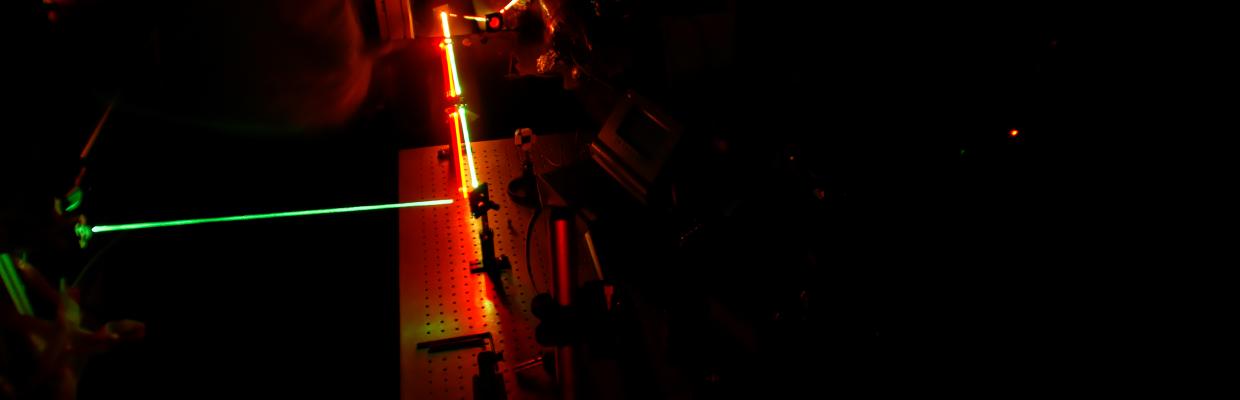
The primary objective of the Bachelor's Degree in Physics is to provide graduates with a solid foundation in basic physics, encompassing both classical and modern physics. The theoretical courses enable students to acquire an understanding of the fundamental concepts of physics, while laboratory courses provide knowledge of techniques and methodologies for data analysis in experimental settings.
Graduates will be able to apply the fundamental methods of scientific research to the modeling of complex systems, even in fields beyond physics. The program also provides knowledge of mathematical and computational tools that are essential for describing physical phenomena and their numerical modeling. All the basic physics knowledge and methodological tools gained by graduates will serve as a foundation for specialization in various branches of physics through a master's degree program and potentially a subsequent doctoral program. Additionally, these skills are valuable for those who choose to enter the job market directly.
The program features mandatory theoretical and experimental education across a broad spectrum, with a duration of three years, divided into semesters. In the first year, students acquire foundational knowledge in differential and integral calculus, algebra, geometry, computer science, and fundamental concepts of classical physics.
In the second year, students delve into core topics in classical and quantum physics, as well as their mathematical foundations. They also reinforce their knowledge of analysis and computer science.
In the third year, students consolidate their understanding of quantum physics and are introduced to modern physics, with topics such as nuclear and subnuclear physics and the structure of matter. They also acquire basic knowledge of chemistry.
The degree program prepares students for the profession of physicist.
Roles in the Workplace
The functions that graduates may perform in professional contexts include, but are not limited to:
- Scientific analysis and framing of measurable phenomena of interest.
- Design and development of simple prototypes.
- Efficient use and development of measurement instrumentation.
- Measurement of natural phenomena (e.g., radioactivity, electromagnetic fields).
- Data analysis, including statistical analysis (data scientist).
- Development of mathematical-statistical models across a broad spectrum of contexts (e.g., mechanics, finance, medicine).
- Organization and coordination of workgroups.
- Industrial process and quality control.
- Dissemination and promotion of scientific culture.
- Technical-scientific training for staff and/or external users.
- Design of innovative educational proposals.
- Preparation of scientific reports, books, essays, etc.
To achieve higher levels of responsibility in these functions, graduates may need to acquire additional skills by pursuing a master's degree, a first-level internship, or specific professional training.
Skills Associated with These Roles
During the degree program, physicists acquire competencies enabling them to either continue with advanced education or perform the professional functions listed above. These competencies are grounded in a robust scientific foundation and an open-minded approach, and include:
- Expertise in all aspects of classical and modern physics.
- Mathematical, statistical, and computational skills.
- Ability to stay updated, learn, and explore with an open mind.
- Proficiency in applying the scientific method.
- Leadership and the ability to coordinate, harmonize, and motivate team efforts.
- Skills in processing and interpreting statistical data based on physical theories or models.
- Competence in using and interfacing instrumentation with computers for optimized measurements.
- Effective communication on scientific topics, including proficiency in English.
________________________________________
Career Opportunities
While graduates typically continue their education in advanced studies, they may also pursue careers in industry, public institutions, or private organizations, working in structures such as:
- Research centers and laboratories.
- Hospitals and healthcare facilities using diagnostic, therapeutic, and radioprotection techniques.
- Astronomical observatories.
- Museums and other centers for scientific dissemination.
- Banks and insurance companies.
- Organizations focused on developing mathematical-statistical models of phenomena.
- Facilities for using and developing complex systems and instrumentation.
- Centers dedicated to the restoration of artistic heritage and environmental protection.
- Energy production plants (including nuclear power plants).
- International centers monitoring nuclear energy and enforcing nuclear weapons prohibitions.
- Facilities for data acquisition and processing.
Graduates interested in roles requiring additional training will pursue master's degrees, first-level professional master's programs, advanced work-training courses, or internships to acquire qualifications such as radiation protection expert.
Employment statistics (Almalaurea)
Third-year students may occasionally have the opportunity to conduct their thesis work abroad at prestigious research institutions, such as the CERN in Geneva or the GSI in Darmstadt, or at renowned foreign universities.
These opportunities are made possible within the framework of international collaborations associated with the research activities of the faculty.
Additionally, students may undertake internships as part of these international collaborations.
Qualifications and knowledge required for admission
Applicants to the Bachelor's degree programme in Physics must hold an upper secondary-school diploma or an equivalent qualification obtained abroad.
Admission to the programme is open, subject to a mandatory, non-selective assessment test before enrolment. The test is aimed at ascertaining the candidate's educational background, in terms of knowledge and understanding of the basic scientific disciplines, especially mathematics and elementary logic. The test syllabus is available at:
https://www.cisiaonline.it/en/area-tematica-tolc-scienze/struttura-della-prova-e-syllabus/
Admission assessment
Candidates are usually assessed through the TOLC CISIA Online Test, to be taken at the University of Milan or any other universities belonging to the Consortium of Inter-University Integrated Access Systems (CISIA). Students have to register for the TOLC test on the CISIA website (www.cisiaonline.it).
Admission of transfer or graduate students
Transfer students from a degree programme of the University of Milan, or another university, and graduate students will be waived from the test requirement only if they are admitted to years subsequent to the first.
For further details, please see the call for applications
Admission Test (TOLC) Requirements
To enroll in the Bachelor's Degree Program in Physics, students must take one of the following TOLC tests: TOLC-S or TOLC-I.
Students may enroll regardless of their test results.
· TOLC-S: Details about the test structure, topics covered, and other useful information are available at the following link:
https://www.cisiaonline.it/area-tematica-tolc-scienze/struttura-della-prova-e-sillabo/
· TOLC-I: Details about the test structure, topics covered, and other useful information are available at the following link:
https://www.cisiaonline.it/area-tematica-tolc-ingegneria/struttura-della-prova-e-sillabo/.
Each TOLC test includes an additional English section, consisting of 30 questions to be answered in 15 minutes. This section does not replace the for-credit English proficiency assessment required by the degree programme, but serves as a self-assessment tool for the student.
Other equivalent tests may be accepted on a case-by-case basis, with the prior approval of the Academic Board.
Additional learning requirements (OFA) and remedial activities
First-year students who have not achieved at least 10 points in the Mathematics module will have to fulfil additional learning requirements (OFA) for this subject within the first year of the programme.
Remedial activities and tests: students with additional learning requirements will have to carry out remedial activities in the period October-December, and then pass a test to prove they have filled their gaps. Otherwise, they will not be allowed to take any second-year exams before passing the Mechanics exam (https://fisica.cdl.unimi.it/it/studiare/le-matricole).
Test topics, registration procedures, dates, deadlines and other information are specified in the call for applications: https://fisica.cdl.unimi.it/it/iscriversi
Call for applications
Please refer to the call for admission test dates and contents, and how to register.
Application for enrolment: from 15/07/2026 to 30/09/2026
Please note: students holding a qualification obtained abroad
In order to complete their enrolment, students holding a qualification obtained abroad must submit the required documentation by 30 November 2026 through the Enrolment Document Integration Service https://studente.unimi.it/uploadDocumentiImmatricolazione
| Courses or activities | Max ECTS | Total hours | Language | SSD |
|---|---|---|---|---|
| Compulsory | ||||
| Physics Laboratory with Introduction to Statistics | 10 | 96 | Italian | PHYS-01/A PHYS-03/A |
| Courses or activities | Max ECTS | Total hours | Language | SSD |
|---|---|---|---|---|
| Compulsory | ||||
| Computer Science | 6 | 60 | Italian | INFO-01/A |
| Mathematical Analysis 1 | 8 | 80 | Italian | MATH-03/A |
| Mechanics | 8 | 84 | Italian | PHYS-01/A PHYS-03/A |
| Courses or activities | Max ECTS | Total hours | Language | SSD |
|---|---|---|---|---|
| Compulsory | ||||
| Geometry 1 | 7 | 64 | Italian | MATH-02/B |
| Mathematical Analysis 2 | 8 | 80 | Italian | MATH-03/A |
| Waves and Oscillations | 7 | 64 | Italian | PHYS-01/A PHYS-03/A |
| Courses or activities | Max ECTS | Total hours | Language | SSD |
|---|---|---|---|---|
| Compulsory | ||||
| English Assessment B1 (3 ECTS) | 3 | 0 | English | NN |
| Courses or activities | Max ECTS | Total hours | Language | SSD |
|---|---|---|---|---|
| Compulsory | ||||
| Electromagnetism | 15 | 140 | Italian | PHYS-01/A PHYS-03/A PHYS-06/A |
| Courses or activities | Max ECTS | Total hours | Language | SSD |
|---|---|---|---|---|
| Compulsory | ||||
| Classical Mechanics | 7 | 64 | Italian | MATH-04/A |
| Experimental Data Processing Laboratory | 6 | 60 | Italian | PHYS-01/A PHYS-03/A |
| Laboratory of Optics and Modern Physics | 6 | 66 | Italian | PHYS-01/A PHYS-03/A |
| Mathematical Analysis 3 | 6 | 56 | Italian | MATH-03/A |
| Courses or activities | Max ECTS | Total hours | Language | SSD |
|---|---|---|---|---|
| Compulsory | ||||
| Electronic Instrumentation Laboratory | 6 | 65 | Italian | PHYS-01/A PHYS-03/A |
| Mathematical Methods in Physics | 7 | 64 | Italian | PHYS-02/A |
| Quantum Phisycs 1 | 7 | 64 | Italian | PHYS-02/A PHYS-04/A |
| Thermodynamics | 6 | 56 | Italian | PHYS-01/A PHYS-03/A PHYS-06/A |
| Courses or activities | Max ECTS | Total hours | Language | SSD |
|---|---|---|---|---|
| Compulsory | ||||
| Introduction to Nuclear and Particle Physics | 9 | 80 | Italian | PHYS-01/A |
| Quantum Phisycs 2 | 8 | 76 | Italian | PHYS-02/A PHYS-04/A |
| Structure of Matter 1 | 9 | 88 | Italian | PHYS-03/A PHYS-04/A |
| Optional | ||||
| Electronics 1 | 6 | 48 | Italian | IINF-01/A PHYS-01/A |
| Electronics Laboratory | 6 | 66 | Italian | IINF-01/A PHYS-01/A |
| Introduction to Astrophysics | 6 | 48 | Italian | PHYS-05/A |
| Introduction to General Relativity | 6 | 48 | Italian | PHYS-02/A |
| Introduction to Statistical Physics | 6 | 48 | Italian | PHYS-02/A PHYS-04/A |
| Courses or activities | Max ECTS | Total hours | Language | SSD |
|---|---|---|---|---|
| Compulsory | ||||
| Chemistry 1 | 6 | 56 | Italian | CHEM-03/A |
| Optional | ||||
| Astronomy Lab | 6 | 66 | Italian | PHYS-05/A |
| Computational Physics Laboratory | 6 | 66 | Italian | PHYS-02/A PHYS-06/A |
| Condensed Matter Physics Laboratory | 6 | 66 | Italian | PHYS-01/A PHYS-03/A |
| Earth Physics Laboratory | 6 | 66 | Italian | PHYS-05/B PHYS-06/A |
| Gamma Spectroscopy Laboratory | 6 | 66 | Italian | PHYS-01/A |
| Introduction to Geophysics | 6 | 48 | Italian | GEOS-04/A GEOS-04/B GEOS-04/C |
| Introduction to Health and Medical Physics | 6 | 48 | Italian | PHYS-06/A |
| Introduction to Quantum Science and Technology | 6 | 48 | Italian | PHYS-04/A |
| Nuclear Physics Laboratory | 6 | 66 | Italian | PHYS-01/A |
| Numerical Simulation Laboratory | 6 | 60 | Italian | PHYS-02/A PHYS-04/A |
| Optics Laboratory | 6 | 66 | Italian | PHYS-01/A PHYS-03/A |
| Physics Laboratory for the Environment and Cultural Heritage | 6 | 66 | Italian | PHYS-06/A |
| Courses or activities | Max ECTS | Total hours | Language | SSD |
|---|---|---|---|---|
| Compulsory | ||||
| Final Exam | 7 | 0 | Italian | NN |
| Courses or activities | Max ECTS | Total hours | Language | Lesson period | SSD |
|---|---|---|---|---|---|
| Astronomy Lab | 6 | 66 | Italian | Second semester | PHYS-05/A |
| Computational Physics Laboratory | 6 | 66 | Italian | Second semester | PHYS-02/A PHYS-06/A |
| Condensed Matter Physics Laboratory | 6 | 66 | Italian | Second semester | PHYS-01/A PHYS-03/A |
| Earth Physics Laboratory | 6 | 66 | Italian | Second semester | PHYS-05/B PHYS-06/A |
| Electronics 1 | 6 | 48 | Italian | First semester | IINF-01/A PHYS-01/A |
| Electronics Laboratory | 6 | 66 | Italian | First semester | IINF-01/A PHYS-01/A |
| Gamma Spectroscopy Laboratory | 6 | 66 | Italian | Second semester | PHYS-01/A |
| Introduction to Astrophysics | 6 | 48 | Italian | First semester | PHYS-05/A |
| Introduction to General Relativity | 6 | 48 | Italian | First semester | PHYS-02/A |
| Introduction to Geophysics | 6 | 48 | Italian | Second semester | GEOS-04/A GEOS-04/B GEOS-04/C |
| Introduction to Health and Medical Physics | 6 | 48 | Italian | Second semester | PHYS-06/A |
| Introduction to Quantum Science and Technology | 6 | 48 | Italian | Second semester | PHYS-04/A |
| Introduction to Statistical Physics | 6 | 48 | Italian | First semester | PHYS-02/A PHYS-04/A |
| Nuclear Physics Laboratory | 6 | 66 | Italian | Second semester | PHYS-01/A |
| Numerical Simulation Laboratory | 6 | 60 | Italian | Second semester | PHYS-02/A PHYS-04/A |
| Optics Laboratory | 6 | 66 | Italian | Second semester | PHYS-01/A PHYS-03/A |
| Physics Laboratory for the Environment and Cultural Heritage | 6 | 66 | Italian | Second semester | PHYS-06/A |
The student must also acquire 12 CFU by freely choosing from all the courses offered by the University, provided that they are culturally consistent with their educational path and do not overlap in content with the already used fundamental and optional courses in the study plan. This choice also includes all the courses listed in the above table of Elective Activities.
| Learning activity | Prescribed foundation courses |
|---|---|
| Electromagnetism | Mechanics (compulsory) |
| Mathematical Analysis 2 | Mathematical Analysis 1 (compulsory) |
| Mathematical Analysis 3 | Mathematical Analysis 1 (compulsory), Mathematical Analysis 2 (compulsory) |
| Thermodynamics | Mechanics (compulsory) |
Guidance:
Admission, ranking and enrolment
- Matriculation
https://www.unimi.it/it/node/183 - Study Program Office
Via Celoria, 16 - 20133 Milano
https://informastudenti.unimi.it/saw/ess?AUTH=SAML
+3902.50317401 - Dissertation and Final Exam
L. Bonizzoni (Presidente), C. Benedetti, F. Camera, S. Carrazza, V. Liberali, D. Maino - Program Transfer
G. Maero, C. Barbieri, M. Genoni, S. Riboldi
[email protected] - Schedule of Classes
S. Bottoni, M. Gherardi - Specific Learning Disabilities
L. Carminati - TOLC test coordinator
L. Gariboldi - Laboratory Security
M. Potenza - Outreach
https://unimibox.unimi.it/index.php/s/d3z27gH8KLosixk - PLS Program Chair
M. Giliberti - Library
Via Celoria 18 - 20133 Milano
http://www.sba.unimi.it/Biblioteche/bicf/13453.html - Student Registrar
https://www.unimi.it/it/studiare/servizi-gli-studenti/segreterie-informastudenti
+390250325032
For students enrolled in Bachelor's, Master's and single-cycle degree programmes, tuition fees are to be paid in two instalments:
- the amount of the first instalment is the same for all students and is due upon enrolment
- the amount of the second instalment varies according to each student's ISEE University value and the degree programme in which they are enrolled
- for international students with income and assets abroad, the second instalment varies according to their country of origin.
Education incentive programmes and other benefits
The University offers scholarships, cafeterias, subsidised accommodation and other forms of financial support to students meeting specific economic and merit requirements.
More information