

Viticulture and Enology
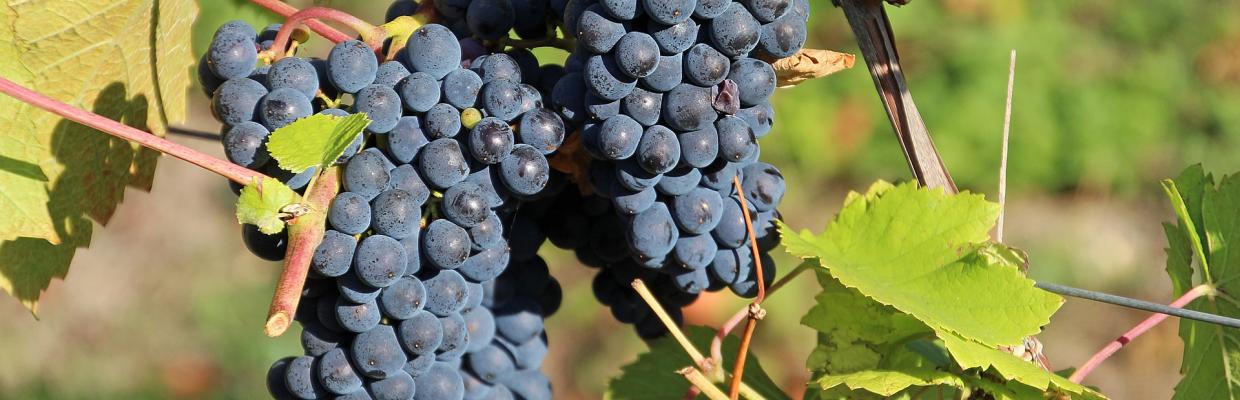
Graduates in Viticulture and Enology will, therefore, have an interdisciplinary education on the biological and technological principles related to the cultivation of vines and the production of wine and will be familiar with the political, economic, market and environmental context of the wine sector. The Degree Course in Viticulture and Enology provides interdisciplinary training on the biological and technological principles related to the cultivation of vines and the production of wine, providing professional competence to technicians destined to work in the viticulture, oenology and management sectors of wineries. The curriculum is based on a solid scientific and cultural education (with foundations in the biological, chemical and physical sciences) and on professionalizing courses, aimed at providing operational skills of an agro-technological and managerial nature.
The courses are aimed at deepening the scientific principles underlying the cultivation of vines and wine production, based on the biological, physical and chemical foundations necessary for their understanding. In this perspective, a particular style of winemaking, viticulture or a specific method of vineyard and cellar management is not emphasized, but it is preferred to opt for the achievement of a unifying methodological and scientific competence that can then favor the maturation of an independent vision and vocation.
Each student is however stimulated, through the complementary teaching offer, to deepen the most congenial applicative aspect, in the field of viticulture, rather than wine production, with particular reference to modern agronomic and vineyard protection problems related to climate change and environmental sustainability. These are flanked by aspects of the production chain of other alcoholic beverages of fermentative origin.
These same skills enable them to work as technical managers in production and commercial businesses that offer equipment, products, and services to the wine industry. They can also find employment within public administration, producer associations, and consortia, providing support and governance to the wine sector.
The technical expertise of Viticulture and Enology graduates allows them to support wineries as freelance professionals and to disseminate technical and scientific information through media channels.
Further career opportunities may include employment in the alcoholic beverage industry, particularly in breweries.
The course allows registration in the Order of Agronomists and Foresters in the junior section after passing the State exam.
Employment statistics (Almalaurea)
To be admitted to the degree course, it is necessary to have a high school diploma, or other recognized qualification, and adequate preparation in basic scientific disciplines (mathematics, chemistry, physics and biology), logical skills, an ability to express oneself orally and in writing without hesitation of errors, a good general culture.
Assessment of the personal qualification
The degree program is open to all. Five spots are available for first-year enrollment for non-EU students residing abroad and four spots are available for students enrolled in the Marco Polo Project.
Admission to the program is subject to a mandatory, but non-selective, knowledge assessment test prior to enrollment. This test assesses students' initial preparation in terms of knowledge requirements in basic scientific disciplines, with a level of depth equivalent to that derived from secondary school preparation, and their understanding of elementary logic.
The test required for admission to the degree program is the TOLC-AV, an online test administered by CISIA (Interuniversity Consortium for Integrated Access Systems - https://www.cisiaonline.it).
Test structure, topics, and other useful information: https://www.cisiaonline.it/area-tematica-tolc-agraria-veterinaria/struttura-della-prova-e-syllabus/
The TOLC-AV test can be taken at the University of Milan or any other CISIA member university. The calendar with available venues and dates is posted to the page https://tolc.cisiaonline.it/calendario.php . Registration procedures and deadlines are set out in the call for applications posted to the page: https://viticolturaenologia.cdl.unimi.it/it/iscriversi Only students high enough in the merit ranking will be eligible for enrolment.
Admission of transfer or graduate students
Transfer students from a degree programme of the University of Milan, or another university, and graduate students will be waived from the test requirement only if admitted to years subsequent to Year I. To this end, they will have to submit a specific request for prior assessment of their academic records using the online service as shown in the call for applications. These candidates must provide a full transcript of records (listing exams, subject areas, credits, grades) and attach the course syllabi. For more details and dates, please refer to the call for applications. Students admitted to the first year will be required to take the test and register for the call.
Additional learning requirements (OFA) and remedial activities
Admitted students who do not achieve a score higher than 3 in the Mathematics section of the TOLC-AV are assigned additional learning obligations (OFA). Remedial activities will be organized for students with OFA (in the period October-December), both as online exercises on an e-learning platform and as discussion sessions with a tutor. After participating in remedial activities, new students will have to take a final assessment test. Mathematics OFA are prerequisites for all second and third-year exams. For students who have not passed the OFA final test during the first year, passing the Mathematics exam is a prerequisite for all second- and third-year exams. Learn more at https://viticolturaenologia.cdl.unimi.it/it/studiare/le-matricole
Call for applications
Please refer to the call for admission test dates and contents, and how to register.
Application for enrolment: from 15/07/2026 to 12/03/2027
Attachments and documents
Please note: students holding a qualification obtained abroad
In order to complete their enrolment, students holding a qualification obtained abroad must submit the required documentation by 30 November 2026 through the Enrolment Document Integration Service https://studente.unimi.it/uploadDocumentiImmatricolazione
| Courses or activities | Max ECTS | Total hours | Language | SSD |
|---|---|---|---|---|
| Compulsory | ||||
| Elements of Economics | 6 | 64 | Italian | AGRI-01/A |
| General and Inorganic Chemistry | 6 | 60 | Italian | CHEM-03/A |
| Mathematics | 6 | 64 | Italian | MATH-03/A |
| Plant Biology | 8 | 64 | Italian | BIOS-01/A BIOS-01/C |
| Courses or activities | Max ECTS | Total hours | Language | SSD |
|---|---|---|---|---|
| Compulsory | ||||
| Agronomy | 6 | 56 | Italian | AGRI-02/A |
| Organic Chemistry | 6 | 56 | Italian | CHEM-05/A |
| Physics | 6 | 64 | Italian | PHYS-04/A PHYS-06/A |
| Courses or activities | Max ECTS | Total hours | Language | SSD |
|---|---|---|---|---|
| Compulsory | ||||
| English Assessment B1 (3 ECTS) | 3 | 0 | English | NN |
| Courses or activities | Max ECTS | Total hours | Language | SSD |
|---|---|---|---|---|
| Compulsory | ||||
| Enology 1 | 11 | 104 | Italian | AGRI-07/A |
| Courses or activities | Max ECTS | Total hours | Language | SSD |
|---|---|---|---|---|
| Compulsory | ||||
| Agricultural Chemistry | 10 | 80 | Italian | AGRI-06/B |
| - Biochimica e fisiologia vegetale | 6 | 48 | AGRI-06/B | |
| - Chimica del suolo | 4 | 32 | AGRI-06/B | |
| Enological and Fermentations Chemistry | 6 | 48 | Italian | CHEM-07/C |
| Microbiology | 6 | 56 | Italian | AGRI-08/A |
| Optional | ||||
| Applied Agrometeorology in a Changing Climate | 4 | 38 | Italian | AGRI-03/A |
| Cultivation of Plants for Beer, Liqueurs and Spirits Production | 4 | 32 | Italian | AGRI-02/B |
| Courses or activities | Max ECTS | Total hours | Language | SSD |
|---|---|---|---|---|
| Compulsory | ||||
| Biology and Genetics of Grapevines | 8 | 72 | Italian | AGRI-03/A |
| Computer Skills, Statistics and Data Management in the Winery | 9 | 88 | Italian | NN |
| Enochemical Analysis | 6 | 64 | Italian | AGRI-07/A |
| Optional | ||||
| Cereals for Malts and Other Semi-Finished Products Preparation | 4 | 32 | Italian | AGRI-07/A |
As part of the elective activities, students have the opportunity to complete a second internship, possibly at an external company, according to the procedures established by the University. In this case, the activities to be carried out during the internship will be under the direct responsibility of a university tutor and must not be considered a mere repetition of those completed during the first internship. The second internship will earn 4 credits.
| Courses or activities | Max ECTS | Total hours | Language | Lesson period | SSD |
|---|---|---|---|---|---|
| Applied Agrometeorology in a Changing Climate | 4 | 38 | Italian | First semester | AGRI-03/A |
| Cultivation of Plants for Beer, Liqueurs and Spirits Production | 4 | 32 | Italian | First semester | AGRI-02/B |
| Cereals for Malts and Other Semi-Finished Products Preparation | 4 | 32 | Italian | Second semester | AGRI-07/A |
| Courses or activities | Max ECTS | Total hours | Language | SSD |
|---|---|---|---|---|
| Compulsory | ||||
| Vineyard Protection | 11 | 104 | Italian | AGRI-05/A AGRI-05/B |
| - Entomologia | 5 | 48 | AGRI-05/A | |
| - Patologia vegetale | 6 | 56 | AGRI-05/B | |
| Viticultural and Enological Engineering | 11 | 112 | Italian | AGRI-04/B |
| Courses or activities | Max ECTS | Total hours | Language | SSD |
|---|---|---|---|---|
| Compulsory | ||||
| Enological Microbiology | 6 | 56 | Italian | AGRI-08/A |
| Management of Vinicultural Firm and Marketing Elements | 8 | 72 | Italian | AGRI-01/A |
| Optional | ||||
| Brewing and Spirits Technology | 4 | 32 | Italian | AGRI-07/A |
| Packaging for the Wine Industry | 4 | 32 | Italian | AGRI-07/A |
| Courses or activities | Max ECTS | Total hours | Language | SSD |
|---|---|---|---|---|
| Compulsory | ||||
| Enology 2 | 10 | 84 | Italian | AGRI-07/A |
| - Analisi sensoriale | 5 | 44 | AGRI-07/A | |
| - Tecnologie e processi enologici | 5 | 40 | AGRI-07/A | |
| Viticulture: Cultivation Techniques | 6 | 64 | Italian | AGRI-03/A |
| Optional | ||||
| Sustainable Management of Fungal Diseases of Grapevine | 4 | 40 | Italian | AGRI-05/B |
| Viticultural Practices | 4 | 64 | Italian | AGRI-03/A AGRI-04/B AGRI-05/B AGRI-07/A |
| Courses or activities | Max ECTS | Total hours | Language | SSD |
|---|---|---|---|---|
| Compulsory | ||||
| Stage | 10 | 0 | Italian | NN |
| Final Exam | 3 | 0 | Italian | NN |
As part of the elective activities, students have the opportunity to complete a second internship, possibly at an external company, according to the procedures established by the University. In this case, the activities to be carried out during the internship will be under the direct responsibility of a university tutor and must not be considered a mere repetition of those completed during the first internship. The second internship will earn 4 credits.
| Courses or activities | Max ECTS | Total hours | Language | Lesson period | SSD |
|---|---|---|---|---|---|
| Brewing and Spirits Technology | 4 | 32 | Italian | First semester | AGRI-07/A |
| Packaging for the Wine Industry | 4 | 32 | Italian | First semester | AGRI-07/A |
| Sustainable Management of Fungal Diseases of Grapevine | 4 | 40 | Italian | Second semester | AGRI-05/B |
| Viticultural Practices | 4 | 64 | Italian | Second semester | AGRI-03/A AGRI-04/B AGRI-05/B AGRI-07/A |
| Learning activity | Prescribed foundation courses |
|---|---|
| Agricultural Chemistry | Organic Chemistry (compulsory) |
| Biology and Genetics of Grapevines | Agricultural Chemistry (compulsory), Plant Biology (compulsory) |
| Enochemical Analysis | Organic Chemistry (compulsory) |
| Enological Microbiology | Microbiology (compulsory) |
| Enological and Fermentations Chemistry | Organic Chemistry (compulsory) |
| Enology 1 | Enological and Fermentations Chemistry (compulsory), Physics (compulsory) |
| Enology 2 | Enology 1 (compulsory) |
| Microbiology | Plant Biology (compulsory) |
| Organic Chemistry | General and Inorganic Chemistry (compulsory) |
| Viticulture: Cultivation Techniques | Agronomy (compulsory), Biology and Genetics of Grapevines (compulsory) |
Guidance:
Admission, ranking and enrolment
- Course management for the Faculty of Agricultural and Food Sciences (Science and Technology area)
via Celoria 2 - Milano Città Studi
https://informastudenti.unimi.it/saw/ess?AUTH=SAML
+390250316511
Orario di apertura al pubblico: lunedì dalle 10 alle 12 e dalle 14 alle 16 - Student registrar
via Celoria 18 - Milano Città Studi
https://www.unimi.it/it/node/359
+390250325032
https://www.unimi.it/it/node/360
For students enrolled in Bachelor's, Master's and single-cycle degree programmes, tuition fees are to be paid in two instalments:
- the amount of the first instalment is the same for all students and is due upon enrolment
- the amount of the second instalment varies according to each student's ISEE University value and the degree programme in which they are enrolled
- for international students with income and assets abroad, the second instalment varies according to their country of origin.
Education incentive programmes and other benefits
The University offers scholarships, cafeterias, subsidised accommodation and other forms of financial support to students meeting specific economic and merit requirements.
More information